Penelope J Corfield
  • HOME
    • Index to Blogs
    • Monthly Blogs
    • CONTACT
    • Key to Dancing Dates Film
  • CURRENT
    • President International Association C18 Studies
    • Lectures on offer
    • London University’s Long C18 History Seminar
    • Living in Battersea
    • Career at a Glance
    • PJC Publications
  • BRITISH HISTORY
    • Long C18 Overviews
    • Society & Culture
    • Town Life
    • Electoral History
    • Radical Poets
    • The Professions
    • Religion & Irreligion
  • GLOBAL
    • Urban History Through Time
    • C18 European History Overviews
    • Gender History
    • ‘Racial’ Classifications as Pseudo-Science
    • Responding to Climate Change
    • Advance of the International Sphere
  • TIME & HISTORY
    • Time & The Shape of History (2007)
    • Rethinking Historical Periodisation
    • Dimensions of The Long Term
    • Returning to Big History
  • HISTORY-MAKING
    • Why History Matters
    • History of History
    • Fellow Historians
    • Arts of Academic Assessment
    • Pleasures of Intellectual Life
  • REVIEWS
    • History Book Reviews
      • Social History
      • Approaches to History
      • Big History
    • Theatre Reviews
    • Civic/Political Commentaries
    • Personal Portraits
  • Menu Menu

Tag Archive for: reform

MONTHLY BLOG 162, HAPPY CANVASSING MEMORIES

1 June 2024/in Civics, Monthly Blog, Personal/by Penelope J. Corfield

If citing, please kindly acknowledge copyright © Penelope J. Corfield (2024)

Fig.1: Satire of Charles James Fox
(kneeling centre),
canvassing the Westminster parliamentary electors in 1784:
detail from an anonymous print, entitled
‘A New Way to Secure a Majority: Or, No Dirty Work Comes Amiss’ (1784).
Original in British Museum Dept. of Prints & Drawings, no: 1868,0808.5288.

Happy canvassing memories indeed! I no longer go out knocking on doorsteps – been there, done that, for many years, from the age of fifteen onwards! But, in this month of busy electioneering, when many of my friends are still on the stump, I can’t keep the memories at bay …

Political activists have a very mixed reputation, as has the political process itself.1 Door-to-door canvassers are sometimes seen as pests. Or as cravenly kow-towing to the voters. The image of Charles James Fox, the Whig reform candidate in Westminster election in 1784 (shown in Fig.1) pulls absolutely no punches. He is shown as literally arse-licking the voters. The shopkeepers and tradesmen, meanwhile, are lining up to receive his grovelling submission. (Either way, it worked. Fox won the seat, despite intense campaigning against him from the government, headed by Fox’s great political rival, the Younger Pitt).2

Well, needless to say, the canvassing that I have undertaken was always more dignified. Generally, I enjoyed the process. Rarely encountered voters who were rude or personally unpleasant. Often, it was just a case of ‘Will you be voting Labour?’ …, and, after the reply: ‘Oh thank you’ … or not as the case may have been.

Meanwhile, there were, from time to time, real doorstep debates. We canvassers are not supposed to linger but instead are required to press on relentlessly. But I enjoyed the rare chances for real conversations. Once as a student, when canvassing close to my parental home in Sidcup, I remember an impromptu doorstep encounter – discussing the pros and cons of comprehensive education with a genuinely questing voter, who was keen to get my views – and to share his. It was a stimulating exchange.

Later, on another occasion, in 2004, after the Anglo-American invasion of Iraq in 2003, a voter said curtly to me, on the doorstep, that all supporters of the Labour Party were war-criminals. Well, I could not let that pass unchallenged; and, although the leader of our canvassing team was urging me to move onwards, I remained for a good half an hour. We talked, at first fairly heatedly. but then more calmly. I did not myself support the invasion; but I reviewed the case for ousting Saddam Hussein; and I also talked about the immediacy of politics – the need for snap decisions; and the non-stop debates within as well as between the political parties.

By the end, the voter thanked me. She had not changed her mind – nor had I tried to change it for her. But she understood why I remained in the Labour Party – and she was glad that I’d stayed to talk through the issues.

Such moments made the whole procedure worthwhile. Rational democracy in action! And there have been plenty of other doorstep debates, though usually less basic than rebutting accusations of war-criminality.

Yet … I also learned that politics is not always about considered deliberations. There is scope too for quick and pointed repartee. Once, when first canvassing with my father in Sidcup, a voter asked on the doorstep with real anger in his voice: ‘What about the Labour Government’s failed groundnut scheme?’ 3 I then knew nothing of the issue (and cannot claim much expertise now!) Fortunately, my father was at a nearby doorstep. Quickly, I asked the voter to wait and ran over to consult my canvassing mentor. He said: ‘Go back and ask in reply: “What about Suez?”’4  I promptly did so. The voter stopped ranting and muttered ‘Oh yes, you’ve got a point there!’ He confirmed that he’d vote Labour – and I learned the value of smart repartee.

So there we are! In the big political battles, doorstep canvassers are mere foot-soldiers in the trenches. They know that. And the voters know it too. Yet, as already noted, these doorstep consultations are usually conducted politely. Voters may not want to see you at the moment that you call. But they do like to know that the political parties are out-and-about in the neighbourhood, talking to voters and picking up on local issues and casework. If there is no canvassing, there are liable to be complaints of: ‘We never see you!’ But they do often see Labour canvassers in Battersea, where I now live. It’s good for the voters; and educational for the canvassers too! ‘What about the groundnut scheme?’ … ‘Well, what about Suez?’ Long live doorstep democracy!

ENDNOTES:

1 See e.g. R. Behr, Politics – A Survivor’s Guide: How to Stay Involved without Getting Enraged (London, 2024).

2 For Charles James Fox (1749-1806), see L.G. Mitchell, Charles James Fox (Oxford, 1992); and for context, consult the impressive website on ‘Eighteenth-Century Political Participation and Electoral Culture’: https://ecppec.ncl.ac.uk.

3 For the Labour government’s project in Tanganyika (now Tanzania) the mid-1940s, see A. Wood, The Groundnut Affair (London, 1950); and N. Westcott, Imperialism and Development: The East African Groundnut Scheme and its Legacy (Woodbridge, 2020).

4 For the Anglo-French 1956 invasion of Egypt, see H. Thomas, The Suez Affair (London, 1967); S. Lucas, Britain and Suez: The Lion’s Last Roar (Manchester, 1996); and K. Kyle, Suez: Britain’s End of Empire in the Middle East (London, 2003).

For further discussion, see Twitter

To read other discussion-points, please click here

To download Monthly Blog 162 please click here
https://www.penelopejcorfield.com/wp-content/uploads/2024/06/162-1-Fox-canvassing-1784.jpg 863 1205 Penelope J. Corfield https://www.penelopejcorfield.com/wp-content/uploads/2020/12/P.J.C.png Penelope J. Corfield2024-06-01 16:09:482024-06-02 18:31:35MONTHLY BLOG 162, HAPPY CANVASSING MEMORIES

MONTHLY BLOG 161, DO LOCAL PEOPLE CARE ABOUT THE DIRE STATE OF WANDSWORTH PRISON?

3 May 2024/in Civics, Monthly Blog/by Penelope J. Corfield

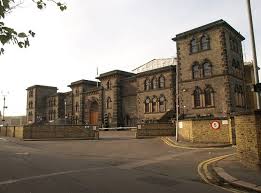
Exterior View of HM Wandsworth Prison from Heathfield Road
Source: Wikipedia

Do local people care about the dire state of Wandsworth Prison, as currently reported by reliable sources? Yes, they do. Perhaps surprisingly, but certainly encouragingly, they do.

On Wednesday 10 April 2024, I attended an evening meeting at St Anne’s Church Wandsworth, called by a concerned group of local Quakers and others who were launching their Wandsworth Prison Improvement Campaign.1 The capacious venue was packed. We did not have an official register of attendance; but my own head-count made it at least 250 people. Mainly middle-aged; but with a scattering of youngsters too. All listening intently.

We heard testimonies from prison reform campaigners, the former prison chaplain, former inmates, and the relatives of people currently serving time within the Prison. It is one of the largest in the country. It was opened in 1851, initially as the Surrey House of Correction, designed to hold some 700 prisoners. In 2023 it was estimated to be holding double that – between 1,300 and 1,500 inmates, including a number of individuals who are only on remand. The guilty and the innocent alike are housed in cells that were built for one inmate and now serve two. Rats and other vermin are rife.

Moreover, because of current staff shortages, those within spend much of the time locked up in their small cells, without opportunities for exercise, recreation or socialising with anyone other than their cell-mate. Little wonder that drug abuse is reportedly rife.2 Little wonder too that incidents of violence, in the form of inmate attacks upon one another and upon staff, are reportedly rising.3 In addition, there are growing numbers of prisoners with mental health problems – and an escalating shortage of (poorly paid) staff.

The packed audience was clearly uncomfortable at some of the information provided. And also indignant. But what impressed me was the positive mood of determination, rather than a collective and hopeless despondency. People were all asking: what can we do? The answer is that we must all, in our different ways, try to shine a light onto the closed prison. It is part of our neighbourhood. It employs people who are our neighbours. A proportion of the inmates are no doubt our local neighbours too (though prisoners are also moved round the country depending upon the availability of cells to be filled). And prisoners, having served their time, also return to the communities in which we all live.

Many small acts of lobbying, writing to our MPs, attending protest meetings, spreading the word, etc. will add up to something rather more than the sum of lots of individual actions.

So overall, the evening was one that conveyed appalling and distressing information, but also one that inspired those present with civic determination to campaign for change. Great! The mood at the first anti-slavery rallies in the 1790s must have been rather similar.4 We need a national conversation about the role of prisons – and, importantly, about safe alternatives to prisons – and the vital need to rehabilitate rather than brutalise offenders, who are all fellow citizens.

Small pebbles thrown into a pond can make major waves! Good luck to the Wandsworth Prison Improvement Campaign! Its website gives helpful advice on how best to lobby MP and prison ministers. Feeling civic (as I am)? Throw a pebble and help to get urgently needed and seriously real reform.

ENDNOTES:

1 For details see https://www.wandsworthprisoncampaign.co.uk/.

2 Report on BBC News 7 Sept. 2023, ‘Wandsworth Prison Life: Decay, Drugs and Drudgery’.  For context, see too https://en.wikipedia.org/wiki/HM_Prison_Wandsworth.

3 An Independent Monitoring Board was reported in Evening Standard 11 Oct. 2023, as finding conditions in the prison ‘inhumane’ and the resulting environment ‘unsafe’ for both guards and prisoners: https://www.standard.co.uk/news/london/wandsworth-prison-conditions-independent-monitoring-board-report-b1112696.html.

4 See e.g. Z. Gifford, Thomas Clarkson and the Campaign against Slavery (1996); C. Midgley, Women against Slavery: The British Campaigns, 1780-1870 (1992); and J.R. Oldfield, Popular Politics and British Anti-Slavery: The Mobilisation of Public Opinion against the Slave Trade, 1787-1807 (1998).

For further discussion, see Twitter

To read other discussion-points, please click here

To download Monthly Blog 161 please click here

https://www.penelopejcorfield.com/wp-content/uploads/2024/05/Exterior-of-Wandsworth-Prison.jpeg 193 261 Penelope J. Corfield https://www.penelopejcorfield.com/wp-content/uploads/2020/12/P.J.C.png Penelope J. Corfield2024-05-03 23:08:412024-06-02 16:10:18MONTHLY BLOG 161, DO LOCAL PEOPLE CARE ABOUT THE DIRE STATE OF WANDSWORTH PRISON?

MONTHLY BLOG 11, WHERE IS THE POLITICAL LEFT TODAY?

1 August 2011/in Civics, Monthly Blog/by Penelope J. Corfield

If citing, please kindly acknowledge copyright © Penelope J. Corfield (2011)

WHERE IS THE POLITICAL LEFT TODAY?1
august001

2
Today’s political scene is a blurred rainbow. Gone are the old simplicities – if they were ever that simple – when one reactionary party of tradition and privilege (the Right) was confronted by one progressive party of reform and egalitarianism (the Left).

A heartfelt cry for ‘social justice’ still has resonance. But how does that translate into politics, as opposed to single-issue campaigning? It’s always easier to know what is not wanted than to know what to put in its place. And even harder to know how to achieve the alternative.

Claims for progressive thought today are found in the Green Party, generating red-greenery. Ditto among some Liberal Democrats, whose social democratic component came from Labour: the result, red-orange (alongside orange-blue). Some Tories also use community-based language, as in the red-blue thought of Phillip Blond.3 And campaigners within Labour today advocate a return to localism and mutualism:4 a blue-red vision.

That latter position recalls Christopher Logue’s 1966 poem, with its only partly tongue-in-cheek conclusion: ‘I shall vote labour because/ deep in my heart/ I am a conservative’.5

So what now? Of course, there are other possibilities for direct action outside the conventional political parties, such as via the Transition Network.6 But we can all rethink. For Labour activists, some of the big questions relate to its underlying political philosophy.

One issue is Labour’s attitude to the state, and specifically to central government. Although part of the movement historically sprang from local unions, cooperatives and mutuals, there has also been throughout the twentieth century a push towards centralisation. (The same pressures also operated upon the Conservative party in power). Control of the levers of central government seems necessary as a means of introducing change.

On the other hand, centralised control, introduced to remedy injustices, can work against itself, as novelists like George Orwell and Arthur Koestler have urgently warned.7 Excess centralisation risks cutting national politicians off from their roots. And, even more importantly, it risks alienating the masses, to and for whom policies are enacted at a distance.

Furthermore, in a development that is post-Orwellian but often carries Orwellian connotations, the growth of an adjunct state of regulatory quangos (which has happened under both Conservatives and Labour in the later twentieth century) is also intervening extensively between the state and its citizens.8 This development also risks introducing another source of political alienation at many levels in society and of diminished social trust.

Consequently, how to recombine the local and the central is one resonant question for today – a question which does not require yet another ‘top-down’ answer.

A second question asks not just about the mechanisms for promoting change but about the presumed beneficiaries. Who are the underdogs in society today whose cause(s) should be prioritised by progressive politics? Without a realistic set of answers, national politicians end up inventing policies in the name of abstractions (‘choice’ ‘competition’) – and often contradicting themselves, as one hand undoes what the other hand achieves.

In fact, there is not one universal victim whose wrongs stand proxy for all others. Complex urban/industrial societies generate very complex social relationships. There are divisions and conflicts at all levels, as well as cooperation and solidarity. One person’s underdog might be another person’s oppressor. An exploited and impoverished husband might beat his wife and children. A subjugated wife might submit her daughters to genital circumcision.

Divisive issues are often triggered by religion; ethnicity; immigration; gender relations; age; and lifestyles. Economic conflicts may also arise between different groups among the working class, as the trade union movement is well aware. Well-paid ‘labour aristocrats’ may not feel solidarity with the low-paid. The poor in employment may resent the unemployed poor. And vice versa. The unemployed may resent those in employment – and be divided

What is to be done? Again, the answers need realistic debates. Not just top-down pronouncements. Not just competitions to discover who is the ‘most victimised’. Novels and especially plays, with multiple voices in a compressed scenario, are good vehicles to explore these themes. But either way, progressive change and social cooperation will require good local governance (not another top-down reorganisation) as well as the contribution of the central state. To repeat: Social justice is not just one THING. It’s a process.

1 With thanks to all those who attended the Battersea Labour Party’s reading-group on Wednesday 19 July 2011 for a vigorous debate on this question; and to Tony Belton for a robustly critical reading of my first draft.

2 Blurred Rainbow 2 by Amazing-Love: from amazing-love.deviantart.com (downloaded 30 July 2011).

3 See Phillip Blond, Red Toryism (2010).

4 See Maurice Glasman, Jonathan Rutherford, Marc Stears and Stuart White (eds), The Labour Tradition and the Politics of Paradox: The Oxford/London Seminars, 2010/11 (2011).

5 Christopher Logue, ‘I Shall Vote Labour Because …’ (1966).

6 This network ‘supports community-led responses to climate change and shrinking supplies of cheap energy, building resilience and happiness’: see www.transition.network.org.

7 See esp. George Orwell, Nineteen-Eighty-Four (1948); Arthur Koestler, Darkness at Noon (1940).

8 For a helpful overview, see Carsten Greve, Matthew Flinders, and Sandra Van Thiel, ‘Quangos – What’s in a Name? Defining Quangos from a Comparative Perspective’, Governance, 12 (1999), pp. 129–46.

For further discussion, see Twitter

To read other discussion-points, please click here

To download Monthly Blog 11 please click here

https://www.penelopejcorfield.com/wp-content/uploads/2011/08/august001.jpg 199 264 Penelope J. Corfield https://www.penelopejcorfield.com/wp-content/uploads/2020/12/P.J.C.png Penelope J. Corfield2011-08-01 12:00:292021-01-12 18:54:28MONTHLY BLOG 11, WHERE IS THE POLITICAL LEFT TODAY?
Search Search

Monthly Blogs

  • MONTHLY BLOG 184, THE MOON – FAMILIAR FRIEND OR LONELY STRANGER? 2 April 2026
  • MONTHLY BLOG 183, HICKORY DICKORY DOCK! IN MEMORY OF MY LATE BROTHER JULIAN, OUR HAPPY CHILDHOOD TOGETHER, AND HIS LIFELONG SENSE OF DROLL HUMOUR 1 March 2026
  • MONTHLY BLOG 182, TO LAUGH OR CRY? RESPONDING TO ACADEMIC CRITICISMS 2 February 2026
  • MONTHLY BLOG 181, A YEAR OF POEMS 3 January 2026
  • MONTHLY BLOG 180, TIME & INSPIRATION 1 December 2025
  • MONTHLY BLOG 179, IDENTIFYING DIFFERENT ERAS OF TIME: POTENTIAL & PITFALLS … 1 November 2025
  • MONTHLY BLOG 178, THINKING THROUGH TIME AT ARTHUR’S STONE IN HEREFORDSHIRE 1 October 2025
  • MONTHLY BLOG 177, SONGS ABOUT TIME 3 September 2025

Categories

  • 2026 – Year of Poetry
  • Autobiography
  • Civics
  • Current Affairs
  • Family Memories
  • History
  • Monthly Blog
  • Notices
  • Personal
  • Reviews
  • Skills
  • Time

Archives

Tags

academics agenda ancestry battersea britain christianity continuity degree diagenesis dialectical discussion education eighteenth century ethnicity Georgian government historian historians history humanities humans knowledge labour labour party language London metamorphosis paradigm shift Penelope J Corfield poet policy politicians politics professor research students teachers time traditions transformation universities university vocational voters writing

Penelope J. Corfield

Penelope J. Corfield is a historian, lecturer and education consultant. She recently served as the President of the International Society for Eighteenth-Century Studies (ISECS).

Recent Posts

  • MONTHLY BLOG 184, THE MOON – FAMILIAR FRIEND OR LONELY STRANGER? 2 April 2026
  • MONTHLY BLOG 183, HICKORY DICKORY DOCK! IN MEMORY OF MY LATE BROTHER JULIAN, OUR HAPPY CHILDHOOD TOGETHER, AND HIS LIFELONG SENSE OF DROLL HUMOUR 1 March 2026

CONTACT

Penelope J. Corfield Historian
contact me here

SEARCH THIS SITE

Search Search

SHARE THIS

QUICK LINKS

© Copyright - Penelope J Corfield 2026. All rights reserved. | Dancing Dates Film by Edwina Hannam | Site by Starling Design
  • Link to X
  • Link to Rss this site
  • Link to Mail
Scroll to top Scroll to top Scroll to top

This site uses cookies. By continuing to browse the site, you are agreeing to our use of cookies.

OKLearn more

Cookie and Privacy Settings


How we use cookies

We may request cookies to be set on your device. We use cookies to let us know when you visit our websites, how you interact with us, to enrich your user experience, and to customize your relationship with our website.

Click on the different category headings to find out more. You can also change some of your preferences. Note that blocking some types of cookies may impact your experience on our websites and the services we are able to offer.

Essential Website Cookies

These cookies are strictly necessary to provide you with services available through our website and to use some of its features.

Because these cookies are strictly necessary to deliver the website, refusing them will have impact how our site functions. You always can block or delete cookies by changing your browser settings and force blocking all cookies on this website. But this will always prompt you to accept/refuse cookies when revisiting our site.

We fully respect if you want to refuse cookies but to avoid asking you again and again kindly allow us to store a cookie for that. You are free to opt out any time or opt in for other cookies to get a better experience. If you refuse cookies we will remove all set cookies in our domain.

We provide you with a list of stored cookies on your computer in our domain so you can check what we stored. Due to security reasons we are not able to show or modify cookies from other domains. You can check these in your browser security settings.

Google Analytics Cookies

These cookies collect information that is used either in aggregate form to help us understand how our website is being used or how effective our marketing campaigns are, or to help us customize our website and application for you in order to enhance your experience.

If you do not want that we track your visit to our site you can disable tracking in your browser here:

Other external services

We also use different external services like Google Webfonts, Google Maps, and external Video providers. Since these providers may collect personal data like your IP address we allow you to block them here. Please be aware that this might heavily reduce the functionality and appearance of our site. Changes will take effect once you reload the page.

Google Webfont Settings:

Google Map Settings:

Google reCaptcha Settings:

Vimeo and Youtube video embeds:

Other cookies

The following cookies are also needed - You can choose if you want to allow them:

Accept settingsHide notification only