
Penelope J Corfield
  • HOME
    • Index to Blogs
    • Monthly Blogs
    • CONTACT
    • Key to Dancing Dates Film
  • CURRENT
    • President International Association C18 Studies
    • Lectures on offer
    • London University’s Long C18 History Seminar
    • Living in Battersea
    • Career at a Glance
    • PJC Publications
  • BRITISH HISTORY
    • Long C18 Overviews
    • Society & Culture
    • Town Life
    • Electoral History
    • Radical Poets
    • The Professions
    • Religion & Irreligion
  • GLOBAL
    • Urban History Through Time
    • C18 European History Overviews
    • Gender History
    • ‘Racial’ Classifications as Pseudo-Science
    • Responding to Climate Change
    • Advance of the International Sphere
  • TIME & HISTORY
    • Time & The Shape of History (2007)
    • Rethinking Historical Periodisation
    • Dimensions of The Long Term
    • Returning to Big History
  • HISTORY-MAKING
    • Why History Matters
    • History of History
    • Fellow Historians
    • Arts of Academic Assessment
    • Pleasures of Intellectual Life
  • REVIEWS
    • History Book Reviews
      • Social History
      • Approaches to History
      • Big History
    • Theatre Reviews
    • Civic/Political Commentaries
    • Personal Portraits
  • Menu Menu

Tag Archive for: Alphonse Karr

MONTHLY BLOG 2, WHY IS THE FORMIDABLE POWER OF CONTINUITY SO OFTEN OVERLOOKED?

1 November 2010/in History, Monthly Blog/by Penelope J. Corfield

If citing, please kindly acknowledge copyright © Penelope J. Corfield (2010)

My discussion-points aim to alternate between big themes relating to Education and big themes relating to Interpreting History. So, since the October debate highlighted the current mania for wrongly prizing Skills over Knowledge (instead the two go integrally together), this November discussion-point takes a different tack, in order to ask Why is the Formidable Power of Continuity so often Overlooked?

One central point of definition needs to be made immediately. ‘Continuity’ is not the same as ‘Conservatism’ as a political philosophy. It is true that the latter ideology does gain much support by appealing to many people’s desire for the former. But it is equally clear that Conservatives in power may also have their own highly interventionist programmes.

To take a current example, the UK’s Conservative-Liberal Coalition has launched radical cuts in welfare spending as well as drastic institutional reorganisations, in order to ‘roll back the state’. But government is not an ‘intruder’ from an alien world. Its mechanisms have been developed (or, to its critics, overdeveloped) over many years by many governments. So the state and society are closely meshed – not only via institutions, laws and tax systems but also via people’s daily expectations, customary routines and a range of differing vested interests.

As a result – interestingly – one of many factors ranged against the current government’s plans will be the force of Continuity, also known as tradition or, unkindly, ‘inertia’. Its power may appear in many guises, from outright resistance to more-or-less concealed foot-dragging.

Furthermore, Continuity also works unexpectedly by twisting apparent innovations back into ‘more of the same’. An awareness of such slipperiness prompted a famous snappy dictum from a French journalist, named Alphonse Karr (see below). He viewed the string of abortive revolutions across Europe in 1848 and concluded pensively that ‘The more things change, the more they stay the same’. [Plus ça change, plus c’est la même chose].
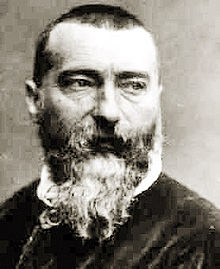
Alphonse_KarrOf course, Karr was not completely right. Changes undoubtedly do happen, both gradually and dramatically. But they are always tempered by the power of Continuity. In fact, innovations may fail or prove to be counterproductive – either because opponents consciously strive to circumvent change – or because the innovations are imperfectly planned and/or implemented – or because the innovations have anyway little intrinsic chance of success.

An example was the policy of Prohibition in the USA in 1920, when the 18th Amendment to prevent the sale, manufacture and transportation of alcohol eventually failed. (Prohibition was repealed in 1933). On the other hand, controls or even bans on disputed drugs can work when public opinion is broadly supportive. The gradual demise of cigarette smoking in many Western countries is a counter-example to the case of alcohol.

Where do the forces of Continuity come from? Some are embedded within from time-invariant features of the universe, like the laws of physics, which are constants. These features hold the world together stably from moment to moment. Even within the turbulence of quantum physics, there is one tiny invariant facture, known as Plank’s Constant, which operates as a marker, against which other changes can be measured. But other elements of Continuity come from human societies, in the form of traditions, customs, and habitual expectations. These also can and do change. But much persists, as it would be too exhausting and confusing if everyone altered everything in their lives from moment to moment.

So, lastly, why are the forces of Continuity so strangely overlooked? The answer is that Continuity acts as the universe’s ‘default system’, which is simply taken for granted. It is so constant and so ubiquitous that it becomes invisible. Next time that you do something automatically, without thinking about it, you are enacting Continuity. It’s not the only force in the world – and it’s by no means all-powerful. But it’s more important than is often realised – and it operates not only throughout the wider world but also within you.

For further discussion, see Twitter

To read other discussion-points, please click here

To download Monthly Blog 2 please click here

https://www.penelopejcorfield.com/wp-content/uploads/2010/11/Alphonse_Karr.jpg 269 220 Penelope J. Corfield https://www.penelopejcorfield.com/wp-content/uploads/2020/12/P.J.C.png Penelope J. Corfield2010-11-01 12:00:072021-01-12 18:54:31MONTHLY BLOG 2, WHY IS THE FORMIDABLE POWER OF CONTINUITY SO OFTEN OVERLOOKED?
Search Search

Monthly Blogs

  • MONTHLY BLOG 184, THE MOON – FAMILIAR FRIEND OR LONELY STRANGER? 2 April 2026
  • MONTHLY BLOG 183, HICKORY DICKORY DOCK! IN MEMORY OF MY LATE BROTHER JULIAN, OUR HAPPY CHILDHOOD TOGETHER, AND HIS LIFELONG SENSE OF DROLL HUMOUR 1 March 2026
  • MONTHLY BLOG 182, TO LAUGH OR CRY? RESPONDING TO ACADEMIC CRITICISMS 2 February 2026
  • MONTHLY BLOG 181, A YEAR OF POEMS 3 January 2026
  • MONTHLY BLOG 180, TIME & INSPIRATION 1 December 2025
  • MONTHLY BLOG 179, IDENTIFYING DIFFERENT ERAS OF TIME: POTENTIAL & PITFALLS … 1 November 2025
  • MONTHLY BLOG 178, THINKING THROUGH TIME AT ARTHUR’S STONE IN HEREFORDSHIRE 1 October 2025
  • MONTHLY BLOG 177, SONGS ABOUT TIME 3 September 2025

Categories

  • 2026 – Year of Poetry
  • Autobiography
  • Civics
  • Current Affairs
  • Family Memories
  • History
  • Monthly Blog
  • Notices
  • Personal
  • Reviews
  • Skills
  • Time

Archives

Tags

academics agenda ancestry battersea britain christianity continuity degree diagenesis dialectical discussion education eighteenth century ethnicity Georgian government historian historians history humanities humans knowledge labour labour party language London metamorphosis paradigm shift Penelope J Corfield poet policy politicians politics professor research students teachers time traditions transformation universities university vocational voters writing

Penelope J. Corfield

Penelope J. Corfield is a historian, lecturer and education consultant. She recently served as the President of the International Society for Eighteenth-Century Studies (ISECS).

Recent Posts

  • MONTHLY BLOG 184, THE MOON – FAMILIAR FRIEND OR LONELY STRANGER? 2 April 2026
  • MONTHLY BLOG 183, HICKORY DICKORY DOCK! IN MEMORY OF MY LATE BROTHER JULIAN, OUR HAPPY CHILDHOOD TOGETHER, AND HIS LIFELONG SENSE OF DROLL HUMOUR 1 March 2026

CONTACT

Penelope J. Corfield Historian
contact me here

SEARCH THIS SITE

Search Search

SHARE THIS

QUICK LINKS

© Copyright - Penelope J Corfield 2026. All rights reserved. | Dancing Dates Film by Edwina Hannam | Site by Starling Design
  • Link to X
  • Link to Rss this site
  • Link to Mail
Scroll to top Scroll to top Scroll to top

This site uses cookies. By continuing to browse the site, you are agreeing to our use of cookies.

OKLearn more

Cookie and Privacy Settings


How we use cookies

We may request cookies to be set on your device. We use cookies to let us know when you visit our websites, how you interact with us, to enrich your user experience, and to customize your relationship with our website.

Click on the different category headings to find out more. You can also change some of your preferences. Note that blocking some types of cookies may impact your experience on our websites and the services we are able to offer.

Essential Website Cookies

These cookies are strictly necessary to provide you with services available through our website and to use some of its features.

Because these cookies are strictly necessary to deliver the website, refusing them will have impact how our site functions. You always can block or delete cookies by changing your browser settings and force blocking all cookies on this website. But this will always prompt you to accept/refuse cookies when revisiting our site.

We fully respect if you want to refuse cookies but to avoid asking you again and again kindly allow us to store a cookie for that. You are free to opt out any time or opt in for other cookies to get a better experience. If you refuse cookies we will remove all set cookies in our domain.

We provide you with a list of stored cookies on your computer in our domain so you can check what we stored. Due to security reasons we are not able to show or modify cookies from other domains. You can check these in your browser security settings.

Google Analytics Cookies

These cookies collect information that is used either in aggregate form to help us understand how our website is being used or how effective our marketing campaigns are, or to help us customize our website and application for you in order to enhance your experience.

If you do not want that we track your visit to our site you can disable tracking in your browser here:

Other external services

We also use different external services like Google Webfonts, Google Maps, and external Video providers. Since these providers may collect personal data like your IP address we allow you to block them here. Please be aware that this might heavily reduce the functionality and appearance of our site. Changes will take effect once you reload the page.

Google Webfont Settings:

Google Map Settings:

Google reCaptcha Settings:

Vimeo and Youtube video embeds:

Other cookies

The following cookies are also needed - You can choose if you want to allow them:

Accept settingsHide notification only