
MONTHLY BLOG 9, WHAT HAS GONE WRONG WITH THE AUDIT CULTURE?
If citing, please kindly acknowledge copyright © Penelope J. Corfield (2011)
 As the sorry tale of FIFA currently implies, oligarchies without external audit and accountability sooner or later get corrupted. So there was a serious principle as well as praxis behind the late Labour Government’s extension of the audit culture to so many aspects of public administration.
The result was a state of close watchfulness. And the government, relying upon good intentions and a mountain of audited data, used the mantra of ‘accountability’ to micro-manage swathes of local government and public administration by setting targets and penalising those who fell behind.
Excluded from the process was the economy, which was left to ‘light touch’ state regulation and to commercial auditors. The result was paradoxical. It was the economy, and particularly the financial sector, which turned out to need more attention. Yet, conversely, the target culture was overdone. There was no happy balance, either in economic or social governance.
Labour’s targets included supervising the professions, which since the early nineteenth century had evolved the ethos of professional self-regulation under parliamentary sanction. Labour also emulated the previous Tory administrations under Thatcher and Major by increasingly subjecting local government to central direction. The traditional partners in the country’s governance, with their own democratic mandate, were undermined. Not surprisingly, turnouts in local elections began to fall, although a stubborn percentage of the electorate do continue to support the historic pluralism of the British system.
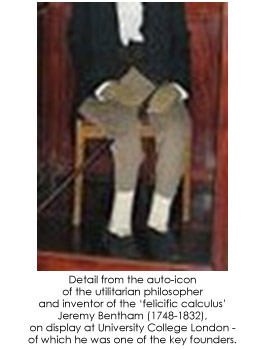
Many earnest New Labour supporters have repeated to me their favoured mantra: ‘If you can’t measure something, you can’t manage it’. The argument seems yet another extension of the dire posthumous influence of Jeremy Bentham, who thought that the essence of government was calculation. But the measurement mantra needs critical questioning. It seems to make sense but actually doesn’t.
For a start, successful (and indeed failed) managements in earlier times have long preceded the mass supply of measured and audited data. Good information certainly provides a sound basis. But the art of management requires more than that – including qualities such as leadership, enthusiasm, wise policies, sensitivity to context and public opinion, and the capacity to forge a team.
Furthermore, the proposition can also be faulted by noting that today’s massive supply of information has not obviated many cases of weak or poor management. ‘Drowning in data’ can even be a prime cause of failure.
 Alternatively, the quest for measured information can insensibly become itself a substitute for effective management. The false impression is gained that managers can organise everything if only they have a large enough database. That way, vast sums of money are wasted only to find that giant systems don’t work.
So it is worth repeating every time that: ‘Data is only as good as the people using the data’. And, especially: ‘Information is not knowledge’. Advanced management means being able to cope with things that cannot easily be quantified and with the moving processes of real life.
Too much of the audit-and-target culture becomes excessively directive from on high. Assessors assume ever greater importance, thus generating a new technocratic elite which creates yet one more tier of apparent authority between the citizens and the state. Auditors are greeted with outward servility but secret resentment. Their often subjective judgements, once pronounced, are turned into apparently objective outcomes without any easy check upon their own performance. Auditors become a new vested interest in their own right, hence colluding with power and tending instead to pick upon the weak.
Service providers who are subject to constant and often subjective measurement and invigilation feel resentment and alienation. Rational people are pressurised to work towards the targets, since tangible rewards for their business (and sometimes for individuals personally) depend upon meeting the targets. That applies whether the targets are well chosen or not. All too often, the measurements seem to take priority over the services being measured. The number of exam passes seems more important than the content of what is taught and examined. Through-put of hospital patients seems more significant than the nature of the healthcare provided.
In these circumstances, public service threatens to become a risk-averse culture of diligent and generally joyless conformism. Professional knowledge and initiative seems to be undervalued and undermined. As a result, individual enthusiasm and commitment risks being lost. People’s moods are often unproductive, ranging from anger to bitterness or cynicism and/or (in some cases) to destabilising fear.
There is every incentive for service providers to massage the figures, if they can, in the interest of their services. And in certain circumstances, the stage is set for collusion. When providers are marked by clients who depend on good reports from the providers, implicit deals may be struck: good marks in return for good reports.
Hostility to this ethos contributed to the fall of New Labour, not least by alienating the professionals who traditionally formed an important constituency for Labour. These people will not, however, be appeased by the Coalition. Its reforms of the audit culture are very hit-and-miss. Indeed the Coalition is even more hostile to public service providers than was New Labour. The current Tory preference is for contracting out services to commercial businesses and charities – all bodies that need more public scrutiny than they currently get. Some private-sector scandals have already emerged. More are bound to follow.
What is to be done? The route of endless centrally-directed audit-plus-targets undermines the public sector and creates a top-heavy state. We need scrutiny. But audit should not be turned into an extra layer of management by another guise. Instead, we need due proportionality, accepting common sense, understanding local variations, allowing for operational discretion, and extending true participation by both providers and clients. Let’s keep the long arms of Jeremy Bentham under control. We have to do more than count!
For further discussion, see Twitter
To read other discussion-points, please click here
To download Monthly Blog 9 please click here