
Penelope J Corfield
  • HOME
    • Index to Blogs
    • Monthly Blogs
    • CONTACT
    • Key to Dancing Dates Film
  • CURRENT
    • President International Association C18 Studies
    • Lectures on offer
    • London University’s Long C18 History Seminar
    • Living in Battersea
    • Career at a Glance
    • PJC Publications
  • BRITISH HISTORY
    • Long C18 Overviews
    • Society & Culture
    • Town Life
    • Electoral History
    • Radical Poets
    • The Professions
    • Religion & Irreligion
  • GLOBAL
    • Urban History Through Time
    • C18 European History Overviews
    • Gender History
    • ‘Racial’ Classifications as Pseudo-Science
    • Responding to Climate Change
    • Advance of the International Sphere
  • TIME & HISTORY
    • Time & The Shape of History (2007)
    • Rethinking Historical Periodisation
    • Dimensions of The Long Term
    • Returning to Big History
  • HISTORY-MAKING
    • Why History Matters
    • History of History
    • Fellow Historians
    • Arts of Academic Assessment
    • Pleasures of Intellectual Life
  • REVIEWS
    • History Book Reviews
      • Social History
      • Approaches to History
      • Big History
    • Theatre Reviews
    • Civic/Political Commentaries
    • Personal Portraits
  • Menu Menu

Tag Archive for: clocks

MONTHLY BLOG 183, HICKORY DICKORY DOCK! IN MEMORY OF MY LATE BROTHER JULIAN, OUR HAPPY CHILDHOOD TOGETHER, AND HIS LIFELONG SENSE OF DROLL HUMOUR

1 March 2026/in 2026 - Year of Poetry, Family Memories, Monthly Blog/by Penelope J. Corfield

If citing, please kindly acknowledge copyright © Penelope J. Corfield (2026)
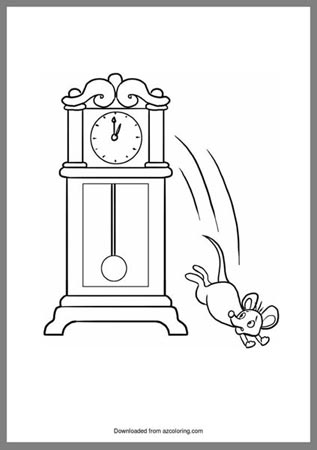
Fig.1. ‘Hickory Dickory Dock!’ – classic nursery rhyme:

‘Hickory Dickory Dock!
The mouse ran up the clock.
The clock struck one!
The mouse ran down …
Hickory Dickory Dock!’

Hickory Dickory Dock! My late brother, Julian Corfield, who died on 1 January 2026 at the age of 77, loved clocks. So this is the rhyme that I choose to introduce my memories of him – not that I ever remember seeing a mouse on any of his clocks. (But that’s borrowing too much from Julian’s own literalism! … It’s totally childish song that infallibly reminds me of our happy childhood together).

Julian, also known as Jules, Julo, and (when we were very young) as Julie, was immensely consistent throughout his life. He was serious-minded, clever, meticulous, and focused. He loved mathematics, chess and precise music (eg. anything by Bach). He was personally reserved and reticent; and, as an adult, he spent long times on his own, content with his own company. At the same time, Jules was also kind, considerate, decent-minded, gentle, and caring. He worked well with others, and enjoyed the companionship of his colleagues and former students at the School where he taught maths; his friends in his chess club; his fellow workers in the charity Southend Age Concern; and his neighbours in St John’s Court.1

Above all, too, Julian had a droll and dry sense of humour, which initially could take people by surprise. He did not look like the sort of person who was constantly cracking jokes. (And his jokes were certainly not bawdy. Nor were they sardonic or hostile). But Jules could always see the funny side of life’s ups and downs – and manage to laugh, however dryly. He also loved shared jokes and shared catch-phrases, at which he could laugh knowingly with others.

My own shared joke-phrase with him was ‘Pawn to King4’, which is a classic opening move in chess.  Goodness knowns when and how this little sort-of-joke originated, But it remained our little joke-phrase. Therefore, whenever I phoned him, I would greet him: ‘Hello, Jules: Pawn to King4’, so that he knew immediately which sister was now plaguing him. And whenever, by phone or mail, I varied this phrase, by suggesting some other opening gambit, then Jules would instantly tell me, or send me an email, to let me know how much danger my pawn was in – and how many moves it would take for him to check-mate me. (I’m not a chess-player myself but I quickly learned which opening moves to avoid!)

One thing that always impressed me was how well Jules got on with the brother who came between the two of us in age. He was Adrian, usually known as Ady, who, sadly, died at the age of 44. The two of them could not have been more different. Adrian was out-going, gregarious, hating to be alone. Jules was the reverse. Adrian was very clever, but slapdash and casual about any task he was set. Julian – also very clever – was totally meticulous about everything he did. Adrian, as an adult, had a sequence of feisty girl-friends; and he loved passionately. By contrast, Julian was celibate by choice.

Yet, as kids, the two brothers – just two years apart by age – always got on very well and played happily together. Perhaps they appreciated their mutual ‘otherness’. As they got older, Julian did seek his own quiet space, away from Adrian, who was always restless and ‘on the go’. Yet that did not detract from their mutual affection, which was based on long familiarity. And certainly, when we heard of Ady’s death, Julian displayed the greatest distress and anguish that I have ever seen from him, throughout his life. (I was also distraught – and we shared our grief together).

Fig.2

A fine recent photo of
Julian Corfield (2025),
shared with the Corfield family by
a young Southend friend,
Olivia Holbrook-Morris

A final anecdote, which became a family classic. Jules, by the way, always disputed the details of this story. But I was a witness and I’m pretty confident that it’s correct. The context was an early morning Sunday ritual, when we kids went into the parental bedroom and shared a family snuggle, all of us together in or on the big bed. These were always happy times for us all. Our father made up amusing stories to recount to us; and he played silly games with us, such as tossing us up and down in the blankets. Meanwhile, our mother smiled benignly, and enjoyed the pot of tea that I (as the oldest child) brought up for them, as soon as I was old enough to be entrusted with the task. It was her special Sunday morning treat. Usually, she was the busy one, rushing around to look after us all. But on Sunday mornings, she savoured her tea in bed, whilst all the family sat close by, smiling at her!

Anyway, at some point on one Sunday morning our father asked Julian if he would turn on the taps to run him a bath. Julian unhesitatingly left for the nearby bathroom and came back reporting that he had obeyed. It was a big, deep, old-fashioned bathtub that would not fill instantly. So some slow moments passed before our father asked Julian to check whether the bathtub was full. He came back, saying: No. Two further trips followed, each time Julian returning with another negative verdict.

Finally, our exasperated father asked just how much water was in the both?. None replied Julian. And when the paterfamilias gave every sign of exploding with incredulity and wrath, Julian explained, simply: ‘Well, you said: turn on the taps! You didn’t say: put the plug in’.

What a triumph for Julian’s literalism! Was he doing it because that is how he copes with the world? Or was he being sly, in effect teaching our father the perils of not being fully explicit? Julian was aged about nine or ten at the time. I am sure that he was just being himself – that is, totally literal-minded – and certainly not consciously seeking to annoy. That was not his style! Eventually, our father, who was usually quick to laugh, was persuaded to see the funny side … and the story became a family classic. What’s more, it remains a testament to the quietly quirky individualism that Julian maintained, unbrokenly, all his life! Julian Corfield: RIP. [And Pawn to K4].

ENDNOTES:

1 It’s a great pleasure to acknowledge here the warmth and positive input from the fifty or so friends from Southend, who came to our local commemoration of Julian’s life. The event was held on Saturday 7 February 2026, at the Westcliff Hotel, Westcliff Parade, Southend. We started with an informal buffet lunch and then proceeded to an Open Session, when anyone who wished was welcome to stand up and share with us their thoughts and feelings about Julian. There was absolutely no shortage of speakers. And the outcome was truly moving. There was no doubt that we were all talking about the same unassuming, modest person, who was so widely loved and appreciated. He was a reticent person. But Julian lived not in isolation but within many networks of true friendships.

For further discussion, see Twitter

To read other discussion-points, please click here

To download Monthly Blog 183 please click here
https://www.penelopejcorfield.com/wp-content/uploads/2026/03/BLOG-183-1-2.jpg 300 300 Penelope J. Corfield https://www.penelopejcorfield.com/wp-content/uploads/2020/12/P.J.C.png Penelope J. Corfield2026-03-01 18:35:042026-03-02 19:55:37MONTHLY BLOG 183, HICKORY DICKORY DOCK! IN MEMORY OF MY LATE BROTHER JULIAN, OUR HAPPY CHILDHOOD TOGETHER, AND HIS LIFELONG SENSE OF DROLL HUMOUR

MONTHLY BLOG 173, IS THERE A MESSAGE TO BE LEARNED FROM THE MANY SAYINGS ABOUT TIME??

1 May 2025/in Monthly Blog, Time/by Penelope J. Corfield

If citing, please kindly acknowledge copyright © Penelope J. Corfield (2025)

Copyright © Shutterstock 2025

‘Time and tide wait for no man’. ‘Time flies’. ‘Lost time is never found again’. ‘Time is of the essence’. ‘Every second counts’. ‘Do not put off to tomorrow what you can do today.’ ‘You may delay, but Time will not’ …

Wait a moment! Is there some message here? Sayings about Time abound; and they are mostly designed to make everyone aware that Time is fleeting by, moment by inexorable moment. Shakespeare (who else?) had a good phrase for it. Ever-speeding temporality is characterised as ‘cormorant, devouring Time’.

No use answering with rival dicta, such as ‘Time drags’; ‘Time crawls’; ‘Time lasts for ever’. Such alternative views don’t cut the mustard in Time-conscious urbanised societies, where clocks, watches and digital time-pieces abound and where life is closely timetabled.

Over very many generations, human have worked at measuring the passage of Time – and at communicating the result to the surrounding population. Clocks chime; church-bells ring; alarms go off noisily.

Many are the wise pronouncements that also confirm the immense value of fleeting temporality. ‘Time is the most valuable resource, given to everyone’. It is simultaneously a ‘grand Instructor’; the ‘greatest innovator’; the ‘greatest physician’. No surprise that it is also ‘precious’. Moreover, it can also act as an ‘avenger’ and a ‘reaper’. It has god-like powers.

Therefore there are numerous sayings that advise people to use their time well. ‘Take Time by the forelock’, runs one ancient adage. ‘Better three hours too soon than a minute too late’ (Shakespeare again). ‘Time is the coin of your life. It is the only coin you have – and only you can determine how it will be spent.  Be careful lest you let other people spend it for you!’ Classically, too: ‘Time is money’. Manage it wisely. Indeed, ‘until we can manage Time, we can manage nothing else’. And some quotations are pessimistic. ‘Time is what we want most but use worst!’

So can we get a grip on this elusive, powerful and at times chameleon-like cosmic phenomenon? It’s a great challenge, renewed daily. And the outcome? Well, another saying gives the best answer:‘Only Time will tell’.

ENDNOTES:
1 Another BLOG in my 2025 series, to mark publication of  PJC, Time-Space: We Are All in it Together (Austin Macauley: London, 2025).

For further discussion, see Twitter

To read other discussion-points, please click here

To download Monthly Blog 173 please click here

https://www.penelopejcorfield.com/wp-content/uploads/2025/05/173.1-Clock-and-question-exclamation-marks.jpeg 233 216 Penelope J. Corfield https://www.penelopejcorfield.com/wp-content/uploads/2020/12/P.J.C.png Penelope J. Corfield2025-05-01 18:05:352025-05-02 16:01:20MONTHLY BLOG 173, IS THERE A MESSAGE TO BE LEARNED FROM THE MANY SAYINGS ABOUT TIME??

MONTHLY BLOG 171, WHY ARE THERE NO GREAT JOKES ABOUT TIME??

5 March 2025/in Monthly Blog, Time/by Penelope J. Corfield

If citing, please kindly acknowledge copyright © Penelope J. Corfield (2025)


Well, why are there no great jokes about Time?1 There are quite a few jokes about clocks and watches. They are not particularly funny … but they are certainly worth a gentle smile … like the following:

What kind of bugs live in clocks? Answer: Ticks!

Or how about this one: What do you say when you wear your watch on an aeroplane? Answer: Time flies!

 Or how about this comedic question: What’s the problem with eating a clock? Response: Well, it’s very time-consuming!

All the same, those jokes are really about variants of time-keeping and time-measurement.2 They may produce a smile or groan, in mock tribute to a bad joke. None, however, are designed to make people laugh and simultaneously think about the nature of temporality itself.

Time is far too huge, abstract, all-powerful and unstoppable to be amenable to local and immediate joking.

It’s a bit like trying to laugh about God. (If depicted, both the ‘Holy Father’ and ‘Old Father Time’ are characteristically shown as venerable old men, with long white beards, who are far too august, wise, and all-powerful to be easily teased). Thus there are lots of jokes (some of them offensive) about rival religious groups and practices, as well as about various spiritual leaders. But there are not so many quips about divine power in the abstract. Still, here’s one mini-story which made me smile:

An atheist scientist confronted God, saying; ‘We have figured out how to make a man’. God replied: ‘Okay – let me see you do it’. The scientist bent down and scooped up some earth. ‘Oh no’, objected God: ‘You must first make your own dirt’. 

 Asking about jokes makes one think about the purpose of comedy and making other people laugh. It’s a very human form of interaction. That is, quite a number of other mammalian species make sounds that are indicative of mirth. They do that typically in play and (in some cases) when being tickled. Furthermore, there have also been cases of orangutans in zoos, who have laughed mightily at magic tricks, performed before them by humans. Highly encouraging to magicians!3

No other species, however, use language to communicate humour, in the way that humans do. True, our humour does not always succeed. There are cultural and other variants that affect the reception of jokes and other forms of comedy. Nonetheless, humans use humour to laugh at the unexpected, to highlight the incongruous, to satirise one another, and to generate bonding through shared laughter.4

So humans laugh together. But not much about Time, or – more accurately – not much about the Time-Space continuum which frames the cosmos. It thus frames all human life and all humour too. Yet it’s just too vast and universal to be locally funny. That said, here is a final sally to raise a smile: Why did the crocodile eat the clock? Answer: To kill Time! [And did it succeed? No chance!]

ENDNOTES:

1 Expanding further upon discussions in PJC, Time-Space: We Are All in It Together (London, 2025).

2 For further examples, see J. Nasser, It’s About Time: An (Almost) Complete List of Time Jokes (2013).

3 See https://en.wikipedia.org/wiki/Laughter_in_animals (viewed 27 Feb. 2025)

4 See variously: J. Morreall (ed.), The Philosophy of Laughter and Humour (New York, 1986); T. Garfitt and others (eds), The Anatomy of Laughter (Abingdon, 2005); R.A. Martin, The Psychology of Humour: An Integrative Approach (Cambridge, Mass., 2006); and E. Weitz, The Cambridge Introduction to Comedy (Cambridge, 2009).

For further discussion, see Twitter

To read other discussion-points, please click here

To download Monthly Blog 171 please click here

https://www.penelopejcorfield.com/wp-content/uploads/2025/03/Why-are-there-no-great-jokes-about-time.jpg 268 268 Penelope J. Corfield https://www.penelopejcorfield.com/wp-content/uploads/2020/12/P.J.C.png Penelope J. Corfield2025-03-05 17:22:292025-03-06 15:13:15MONTHLY BLOG 171, WHY ARE THERE NO GREAT JOKES ABOUT TIME??
Search Search

Monthly Blogs

  • MONTHLY BLOG 184, THE MOON – FAMILIAR FRIEND OR LONELY STRANGER? 2 April 2026
  • MONTHLY BLOG 183, HICKORY DICKORY DOCK! IN MEMORY OF MY LATE BROTHER JULIAN, OUR HAPPY CHILDHOOD TOGETHER, AND HIS LIFELONG SENSE OF DROLL HUMOUR 1 March 2026
  • MONTHLY BLOG 182, TO LAUGH OR CRY? RESPONDING TO ACADEMIC CRITICISMS 2 February 2026
  • MONTHLY BLOG 181, A YEAR OF POEMS 3 January 2026
  • MONTHLY BLOG 180, TIME & INSPIRATION 1 December 2025
  • MONTHLY BLOG 179, IDENTIFYING DIFFERENT ERAS OF TIME: POTENTIAL & PITFALLS … 1 November 2025
  • MONTHLY BLOG 178, THINKING THROUGH TIME AT ARTHUR’S STONE IN HEREFORDSHIRE 1 October 2025
  • MONTHLY BLOG 177, SONGS ABOUT TIME 3 September 2025

Categories

  • 2026 – Year of Poetry
  • Autobiography
  • Civics
  • Current Affairs
  • Family Memories
  • History
  • Monthly Blog
  • Notices
  • Personal
  • Reviews
  • Skills
  • Time

Archives

Tags

academics agenda ancestry battersea britain christianity continuity degree diagenesis dialectical discussion education eighteenth century ethnicity Georgian government historian historians history humanities humans knowledge labour labour party language London metamorphosis paradigm shift Penelope J Corfield poet policy politicians politics professor research students teachers time traditions transformation universities university vocational voters writing

Penelope J. Corfield

Penelope J. Corfield is a historian, lecturer and education consultant. She recently served as the President of the International Society for Eighteenth-Century Studies (ISECS).

Recent Posts

  • MONTHLY BLOG 184, THE MOON – FAMILIAR FRIEND OR LONELY STRANGER? 2 April 2026
  • MONTHLY BLOG 183, HICKORY DICKORY DOCK! IN MEMORY OF MY LATE BROTHER JULIAN, OUR HAPPY CHILDHOOD TOGETHER, AND HIS LIFELONG SENSE OF DROLL HUMOUR 1 March 2026

CONTACT

Penelope J. Corfield Historian
contact me here

SEARCH THIS SITE

Search Search

SHARE THIS

QUICK LINKS

© Copyright - Penelope J Corfield 2026. All rights reserved. | Dancing Dates Film by Edwina Hannam | Site by Starling Design
  • Link to X
  • Link to Rss this site
  • Link to Mail
Scroll to top Scroll to top Scroll to top

This site uses cookies. By continuing to browse the site, you are agreeing to our use of cookies.

OKLearn more

Cookie and Privacy Settings


How we use cookies

We may request cookies to be set on your device. We use cookies to let us know when you visit our websites, how you interact with us, to enrich your user experience, and to customize your relationship with our website.

Click on the different category headings to find out more. You can also change some of your preferences. Note that blocking some types of cookies may impact your experience on our websites and the services we are able to offer.

Essential Website Cookies

These cookies are strictly necessary to provide you with services available through our website and to use some of its features.

Because these cookies are strictly necessary to deliver the website, refusing them will have impact how our site functions. You always can block or delete cookies by changing your browser settings and force blocking all cookies on this website. But this will always prompt you to accept/refuse cookies when revisiting our site.

We fully respect if you want to refuse cookies but to avoid asking you again and again kindly allow us to store a cookie for that. You are free to opt out any time or opt in for other cookies to get a better experience. If you refuse cookies we will remove all set cookies in our domain.

We provide you with a list of stored cookies on your computer in our domain so you can check what we stored. Due to security reasons we are not able to show or modify cookies from other domains. You can check these in your browser security settings.

Google Analytics Cookies

These cookies collect information that is used either in aggregate form to help us understand how our website is being used or how effective our marketing campaigns are, or to help us customize our website and application for you in order to enhance your experience.

If you do not want that we track your visit to our site you can disable tracking in your browser here:

Other external services

We also use different external services like Google Webfonts, Google Maps, and external Video providers. Since these providers may collect personal data like your IP address we allow you to block them here. Please be aware that this might heavily reduce the functionality and appearance of our site. Changes will take effect once you reload the page.

Google Webfont Settings:

Google Map Settings:

Google reCaptcha Settings:

Vimeo and Youtube video embeds:

Other cookies

The following cookies are also needed - You can choose if you want to allow them:

Accept settingsHide notification only