
Penelope J Corfield
  • HOME
    • Index to Blogs
    • Monthly Blogs
    • CONTACT
    • Key to Dancing Dates Film
  • CURRENT
    • President International Association C18 Studies
    • Lectures on offer
    • London University’s Long C18 History Seminar
    • Living in Battersea
    • Career at a Glance
    • PJC Publications
  • BRITISH HISTORY
    • Long C18 Overviews
    • Society & Culture
    • Town Life
    • Electoral History
    • Radical Poets
    • The Professions
    • Religion & Irreligion
  • GLOBAL
    • Urban History Through Time
    • C18 European History Overviews
    • Gender History
    • ‘Racial’ Classifications as Pseudo-Science
    • Responding to Climate Change
    • Advance of the International Sphere
  • TIME & HISTORY
    • Time & The Shape of History (2007)
    • Rethinking Historical Periodisation
    • Dimensions of The Long Term
    • Returning to Big History
  • HISTORY-MAKING
    • Why History Matters
    • History of History
    • Fellow Historians
    • Arts of Academic Assessment
    • Pleasures of Intellectual Life
  • REVIEWS
    • History Book Reviews
      • Social History
      • Approaches to History
      • Big History
    • Theatre Reviews
    • Civic/Political Commentaries
    • Personal Portraits
  • Menu Menu

Tag Archive for: communication

MONTHLY BLOG 126, Does classifying people in terms of their ‘Identity’ have parallels with racist thought? Answer: No; Yes; and ultimately, No.

1 June 2021/in Civics, Monthly Blog/by Penelope J. Corfield

If citing, please kindly acknowledge copyright © Penelope J. Corfield (2021)
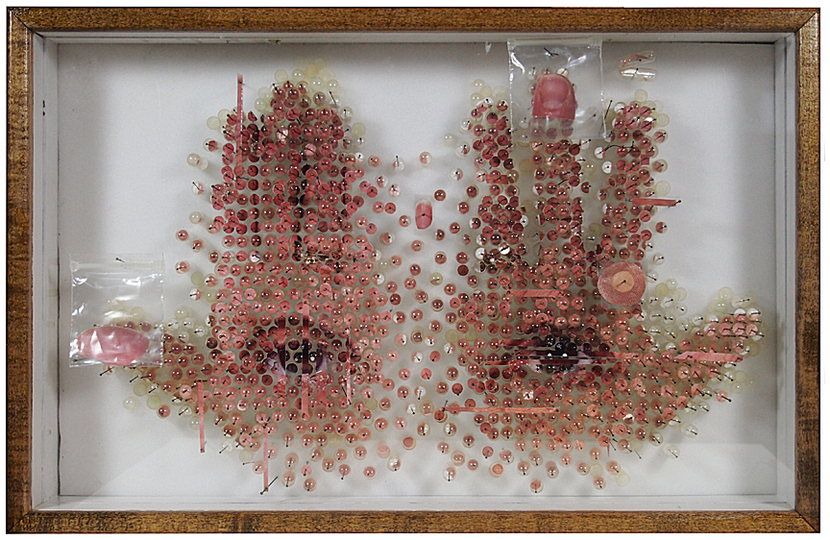
Specimen HC1
© Michael Mapes (2013)

It’s impossible to think without employing some elements of generalisation. (Is it? Yes: pure mental pointillisme, cogitating in fragmentary details, would not work. Thoughts have to be organised). And summary statements about fellow human beings always entail some element of classification. (Do they? Yes, individuals are more than the sum of their bits of flesh and bones. Each one is a person, with a personality, a consciousness, a name, perhaps a national identity number – all different ways of summarising a living being). Generalisations are therefore invaluable, whilst always open to challenge.

Yet are all forms of classification the same? Is aggregative thought not only inevitable but similarly patterned, whatever the chosen criteria? Or, to take a more precise example from interpersonal relationships, does classifying a person by their own chosen ethnic identity entail the same thought processes as classifying them in terms of oppressive racial hierarchies?

Immediately the answer to the core question (are all forms of classification the same?) is No. If individuals chose to embrace an ethnic identity, that process can be strong and empowering. Instead of being labelled by others, perhaps with pejorative connotations, then people can reject an old-style racial hierarchy that places (say) one skin-colour at the top of the social heap, and another at the foot. They can simply say: ‘Yes: that is who I am; and I exult in the fact. My life – and the life of all others like me – matters.’  It is a great antidote to years of racial hatred and oppressions.

At the same time, however, there are risks in that approach. One is the obvious one, which is often noted. White supremacists can use the same formula, claiming their group superiority. And they can then campaign aggressively against all who look ‘different’ and are deemed (by them) be in ‘inferior’. In other words, oppressors can use the same appeal to the validity of group affiliation as can their victims.

There are other difficulties too. So reverting to the core question (how similar are systems of classification?) it can be argued that: yes, assessing people by ethnic identity often turns out, in practice, to be based upon superficial judgments, founded not upon people’s actual ethnic history (often very complex) but upon their looks and, especially, their skin colours. External looks are taken as shorthand for much more. As a result, assumptions about identities can be as over-simplified as those that allocate people into separate ‘races’. Moreover, reliance upon looks can lead to hurtful situations. Sometimes individuals who believe themselves to have one particular ethnic affinity can be disconcerted by finding that others decline to accept them into one particular ‘tribe’, purely because their looks don’t approximate to required visual stereotype. For example, some who self-identify as ‘black’ are rejected as ‘not black enough’.

Finally, however, again reverting to the core question: No. Identity politics are not as socially pernicious and scientifically wrong-headed as are racial politics.1 ‘Identities’ are fluid and can be multiple. They are organised around many varied criteria: religion, politics, culture, gender, sexuality, nationality, sporting loyalties, and so forth. People have a choice as to whether they associate with any particular affinity group – and, having chosen, they can also regulate the strength of their loyalties. These things are not set in stone. Again, taking an example from biological inheritance, people with dark skins do not have to self-identify as ‘black’. They may have some other, overriding loyalty, such as to a given religion or nationality, which takes precedence in their consciousness.

But there is a more fundamental point, as well. Identities are not ideologically organised into the equivalent of racial hierarchies, whereby one group is taken as perennially ‘superior’ to another. Some individuals may believe that they and their fellows are the ‘top dogs’. And group identities can encourage tribal rivalries. But such tensions are not the same as an inflexible racial hierarchy. Instead, diverse and self-chosen ‘identities’ are a step towards rejecting old-style racism. They move society away from in-built hierarchies towards a plurality of equal roles.

It is important to be clear, however, that there is a risk that classifications of people in terms of identity might become as schematic, superficial and, at times, hurtful as are classifications in terms of so-called ‘race’. Individuals may like to choose; but society makes assumptions too.

The general moral is that classifications are unavoidable. But they always need to be checked and rechecked for plausibility. Too many exceptions at the margins suggest that the core categories are too porous to be convincing. Moreover, classification systems are not made by individuals in isolation. Communication is a social art. Society therefore joins in human classification. Which means that the process of identifying others always requires vigilance, to ensure that, while old inequalities are removed, new ones aren’t accidentally generated instead. Building human siblinghood among Planet Earth’s 7.9 billion people (the estimated 2021 head-count) is a mighty challenge but a good – and essential – one.

ENDNOTES:

1 For the huge literature on the intrinsic instability of racial classifications, see K.F. Dyer, The Biology of Racial Integration (Bristol, 1974); and A. Montagu, Man’s Most Dangerous Myth: The Fallacy of Race (New York, 2001 edn). It is worth noting, however, that beliefs in separate races within the one human race are highly tenacious: see also A. Saini, Superior: The Return of Race Science (2019). For further PJC meditations on these themes, see also within PJC website: Global Themes/ 4,4,1 ‘It’s Time to Update the Language of “Race”’, BLOG/36 (Dec. 2013); and 4.4.4 ‘Why is the Language of “Race” holding on for so long, when it’s Based on a Pseudo-Science?’ BLOG/ 38 (Feb. 2014).

For further discussion, see Twitter

To read other discussion-points, please click here

To download Monthly Blog 126 please click here

https://www.penelopejcorfield.com/wp-content/uploads/2021/06/126.1-MICHAEL-MAPES-SPECIMENS.jpg 540 830 Penelope J. Corfield https://www.penelopejcorfield.com/wp-content/uploads/2020/12/P.J.C.png Penelope J. Corfield2021-06-01 12:44:312021-06-04 19:01:55MONTHLY BLOG 126, Does classifying people in terms of their ‘Identity’ have parallels with racist thought? Answer: No; Yes; and ultimately, No.
Search Search

Monthly Blogs

  • MONTHLY BLOG 184, THE MOON – FAMILIAR FRIEND OR LONELY STRANGER? 2 April 2026
  • MONTHLY BLOG 183, HICKORY DICKORY DOCK! IN MEMORY OF MY LATE BROTHER JULIAN, OUR HAPPY CHILDHOOD TOGETHER, AND HIS LIFELONG SENSE OF DROLL HUMOUR 1 March 2026
  • MONTHLY BLOG 182, TO LAUGH OR CRY? RESPONDING TO ACADEMIC CRITICISMS 2 February 2026
  • MONTHLY BLOG 181, A YEAR OF POEMS 3 January 2026
  • MONTHLY BLOG 180, TIME & INSPIRATION 1 December 2025
  • MONTHLY BLOG 179, IDENTIFYING DIFFERENT ERAS OF TIME: POTENTIAL & PITFALLS … 1 November 2025
  • MONTHLY BLOG 178, THINKING THROUGH TIME AT ARTHUR’S STONE IN HEREFORDSHIRE 1 October 2025
  • MONTHLY BLOG 177, SONGS ABOUT TIME 3 September 2025

Categories

  • 2026 – Year of Poetry
  • Autobiography
  • Civics
  • Current Affairs
  • Family Memories
  • History
  • Monthly Blog
  • Notices
  • Personal
  • Reviews
  • Skills
  • Time

Archives

Tags

academics agenda ancestry battersea britain christianity continuity degree diagenesis dialectical discussion education eighteenth century ethnicity Georgian government historian historians history humanities humans knowledge labour labour party language London metamorphosis paradigm shift Penelope J Corfield poet policy politicians politics professor research students teachers time traditions transformation universities university vocational voters writing

Penelope J. Corfield

Penelope J. Corfield is a historian, lecturer and education consultant. She recently served as the President of the International Society for Eighteenth-Century Studies (ISECS).

Recent Posts

  • MONTHLY BLOG 184, THE MOON – FAMILIAR FRIEND OR LONELY STRANGER? 2 April 2026
  • MONTHLY BLOG 183, HICKORY DICKORY DOCK! IN MEMORY OF MY LATE BROTHER JULIAN, OUR HAPPY CHILDHOOD TOGETHER, AND HIS LIFELONG SENSE OF DROLL HUMOUR 1 March 2026

CONTACT

Penelope J. Corfield Historian
contact me here

SEARCH THIS SITE

Search Search

SHARE THIS

QUICK LINKS

© Copyright - Penelope J Corfield 2026. All rights reserved. | Dancing Dates Film by Edwina Hannam | Site by Starling Design
  • Link to X
  • Link to Rss this site
  • Link to Mail
Scroll to top Scroll to top Scroll to top

This site uses cookies. By continuing to browse the site, you are agreeing to our use of cookies.

OKLearn more

Cookie and Privacy Settings


How we use cookies

We may request cookies to be set on your device. We use cookies to let us know when you visit our websites, how you interact with us, to enrich your user experience, and to customize your relationship with our website.

Click on the different category headings to find out more. You can also change some of your preferences. Note that blocking some types of cookies may impact your experience on our websites and the services we are able to offer.

Essential Website Cookies

These cookies are strictly necessary to provide you with services available through our website and to use some of its features.

Because these cookies are strictly necessary to deliver the website, refusing them will have impact how our site functions. You always can block or delete cookies by changing your browser settings and force blocking all cookies on this website. But this will always prompt you to accept/refuse cookies when revisiting our site.

We fully respect if you want to refuse cookies but to avoid asking you again and again kindly allow us to store a cookie for that. You are free to opt out any time or opt in for other cookies to get a better experience. If you refuse cookies we will remove all set cookies in our domain.

We provide you with a list of stored cookies on your computer in our domain so you can check what we stored. Due to security reasons we are not able to show or modify cookies from other domains. You can check these in your browser security settings.

Google Analytics Cookies

These cookies collect information that is used either in aggregate form to help us understand how our website is being used or how effective our marketing campaigns are, or to help us customize our website and application for you in order to enhance your experience.

If you do not want that we track your visit to our site you can disable tracking in your browser here:

Other external services

We also use different external services like Google Webfonts, Google Maps, and external Video providers. Since these providers may collect personal data like your IP address we allow you to block them here. Please be aware that this might heavily reduce the functionality and appearance of our site. Changes will take effect once you reload the page.

Google Webfont Settings:

Google Map Settings:

Google reCaptcha Settings:

Vimeo and Youtube video embeds:

Other cookies

The following cookies are also needed - You can choose if you want to allow them:

Accept settingsHide notification only