

MONTHLY BLOG 80, WRITING ANONYMOUS ACADEMIC ASSESSMENTS
If citing, please kindly acknowledge copyright © Penelope J. Corfield (2017)
(*) This BLOG will be partnered
in September 2017 by a matching BLOG
on ‘Responding to Anonymous Academic Assessments’

Writing anonymously encourages a certain acidity to emerge. Instead of the conventional politeness (‘Does my bum look big in this?’ No … not really’), it seems at first that the unvarnished truth will break through (‘Yes, it does’). In fact, however, there are multiple reservations to be made about that first rush of apparent candour. It’s very like the caveats that need to be made to that drinker’s favourite maxim: ‘in vino veritas’. Well, yes, sometimes. But there is also scope for exaggeration, melodrama, and error, as well as anger, bile, and crudity, within every alcohol-fuelled tirade.
The psychological mechanism of anonymous writing is ‘release’ – release from the conventions of politeness and, especially when writing in a hurry, release from the normal constraints of prudence. It’s like a rush of blood to the head. And it can easily become addictive. Probably a considerable proportion of people who unleash a tide of vitriol anonymously via the new social media surprise even themselves by their ferocity and lack of inhibition. Thus when confronted with the real person behind their on-line target, a number of Twitter trolls have apologised abashedly.1 These anonymous critics have been living in a little bubble of self-created alternative reality. The power of expressing anger-at-a-distance, from a position of apparent immunity, seems hard to resist. It’s as though thousands of previously unknown madcap Mr Hydes have been electronically released from within thousands of normally conventional Dr Jekylls. Yet, as in Stevenson’s fable, the split isn’t real. Jekyll and Hyde are one, each persona having responsibility for the other.2
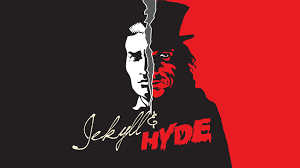
Happily, very few academics have divided personalities that would score very highly on the Jeykll/Hyde range. Or at least they restrain themselves from going ape in their capacity as examiners. That’s no doubt because they are thoroughly trained in a degree of self-control through their regular experience of anonymous assessment. These days, it’s usual for the names of examiners to be anonymised, as are the examination scripts which they mark. That is rightly done in order to avoid cronyism, favouritism, and unconscious biases.
And in cases where the examiners’ identities are known (for example when marking small specialist courses), it’s usual for scripts to be double-marked, before the two examiners meet to decide upon a joint mark – all subject to the controlling overview of a third external examiner (from another academic institution or at least another department), who is available to decide if the examiners can’t agree. Examinations are thus safeguarded against the handiwork of an impetuously unbalanced Mr Hyde.
It’s more tempting to let rip, however, when making individual anonymous assessments, for example when reviewing manuscripts for academic journals, or for publishers, or for the award of academic prizes/grants. There’s a whole behind-the-scenes world of what is known as ‘peer review’. Editors or publishers or prize-givers can make preliminary assessments of work submitted to them. There’s a lot of initial weeding. Yet they need specialist help to assess specialist research, especially in highly technical subjects. That’s where the anonymous assessors come in. Almost all academics spend a considerable amount of time on this sort of technical labour, often without any extra fee. It’s done pro bono, for the wider good of scholarship. Assessors are prodded with a series of questions: is this work original? is it properly substantiated? what changes are needed to make it publishable? But, at the same time, assessors are invited to write with freedom, hence risking a rush of blood to the head.
Interestingly, many early book reviews were written anonymously. The sting of a hostile notice was worsened by the author’s ignorance of the perpetrator of the barb. In the early nineteenth century, for example, when the astringent Edinburgh Review paid very high fees (up to 20 guineas a sheet) for strong opinions, one eminent literary victim characterised the journal’s anonymous reviewers as the ‘bloodhounds of Arthur’s Seat’.3
Since then, the fashion has swung decisively in favour of signed reviews when those appear in public. These days, academic authors who have laboured to draft an earnest encomium or a pointed critique need to get acknowledgment for their work, to show that they are not slacking. For many years, the major redoubt of anonymous reviews was the Times Literary Supplement (launched in 1902). An insider-academic game was trying to guess who had written which waspish put-down. I remember that, whenever anything particularly acerbic appeared, senior Oxford dons would murmur knowingly ‘Ah, Hugh Trevor-Roper again’,4 even if it wasn’t. Students were often impressed, while laughing secretly at all the fuss. In fact, the pages of the TLS were rarely dripping in authorial blood; and, when reviewer anonymity was dropped from 1974 onwards, the journal sailed onwards serenely without much change in tone.
That leaves anonymous assessment as the chief remaining terrain for academics to pontificate without acknowledging their handiwork. Supreme power at last? But no. Behind-the-scenes assessments are delivered within a range of unstated conventions requiring academic fairness and balanced judgment – especially when bearing in mind that all seeking to publish in a peer-reviewed outlet are equally liable themselves to be at the receiving end of one or more anonymous assessments. (See my next BLOG).
For me, writing such verdicts constitutes a specialist form of conversation-at-a-distance. Thus anonymous assessments are usually brisk and direct. There’s no need for the normal interpersonal courtesies of a face-to-face encounter. (Often indeed the original author’s name has also been anonymised). So there is no need for shared enquiries about mutual health and wellbeing. But the one-way conversation still entails the assumption that ideas have to be explained clearly to a willing listener. In the event of disagreement, it’s not enough to write: ‘Rubbish!’ Instead, it’s necessary to spell out why particular arguments and/or evidence fail to convince. Assessors are also invited to correct outright errors; and, if a piece of research is only marginally publishable, to provide suggestions for required revisions.
As those requirements imply, it’s much the easiest and quickest to express total praise. It then takes longer to reject a piece outright, because the reasons for rejection have to be fully elucidated. But the longest and trickiest task is to assess research that’s on the margins of being publishable. It’s helpful to strike an initially positive note, appreciating the choice of topic and the effort undertaken. Yet the negatives have to be explained frankly too, complete with constructive advice on transforming negatives into positives. That’s a challenging task to undertake at a distance, without being able to discuss the details with the recipients. (I knew one hyper-sensitive colleague who was so annoyed by one anonymous critique that she refused to revise and resubmit a potentially important essay, on the grounds that the editors were wasting her time by deferring to such an idiotic and ill-informed assessor.)
Overall, the initial attractions of anonymity quickly disappear. Whatever the medium, communications don’t take place in a vacuum. They have social/legal/cultural contexts and they have consequences. So whenever I tap my keyboard, the best short motto remains the one that I and a group of frank-speaking friends chose for ourselves, one merry evening years ago: truth, yes; but, fundamentally, Truth with Tact. Note: Not tact instead of truth; but both. Fusion rather than Jekyll/Hyde-type fission.

1 For an example, see Daily Mail on-line, ‘Shamed Twitter Troll makes Humbling Apology Live on TV to Professional Boxer he Abused for Eight Months after the Fighter Tracked him Down’, 14 March 2013: http://www.dailymail.co.uk/news/article-2293235/Curtis-Woodhouse-Shamed-Twitter-troll-James-OBrien-makes-humbling-apology-live-TV-professional-boxer.html
2 R.L. Stevenson, The Strange Case of Dr Jekyll and My Hyde (1886).
3 R. Watson, The Literature of Scotland, Vol. 1: The Middle Ages to the Nineteenth Century (Basingstoke, 2006), p. 253.
4 For H. Trevor-Roper (1914-2003), historian, polemicist and sometime anonymous author, see A. Sisman, Hugh Trevor-Roper: The Biography (2010).
For further discussion, see Twitter
To read other discussion-points, please click here
To download Monthly Blog 80 please click here