
Penelope J Corfield
  • HOME
    • Index to Blogs
    • Monthly Blogs
    • CONTACT
    • Key to Dancing Dates Film
  • CURRENT
    • President International Association C18 Studies
    • Lectures on offer
    • London University’s Long C18 History Seminar
    • Living in Battersea
    • Career at a Glance
    • PJC Publications
  • BRITISH HISTORY
    • Long C18 Overviews
    • Society & Culture
    • Town Life
    • Electoral History
    • Radical Poets
    • The Professions
    • Religion & Irreligion
  • GLOBAL
    • Urban History Through Time
    • C18 European History Overviews
    • Gender History
    • ‘Racial’ Classifications as Pseudo-Science
    • Responding to Climate Change
    • Advance of the International Sphere
  • TIME & HISTORY
    • Time & The Shape of History (2007)
    • Rethinking Historical Periodisation
    • Dimensions of The Long Term
    • Returning to Big History
  • HISTORY-MAKING
    • Why History Matters
    • History of History
    • Fellow Historians
    • Arts of Academic Assessment
    • Pleasures of Intellectual Life
  • REVIEWS
    • History Book Reviews
      • Social History
      • Approaches to History
      • Big History
    • Theatre Reviews
    • Civic/Political Commentaries
    • Personal Portraits
  • Menu Menu

Tag Archive for: LSE

MONTHLY BLOG 182, TO LAUGH OR CRY? RESPONDING TO ACADEMIC CRITICISMS

2 February 2026/in 2026 - Year of Poetry, Monthly Blog/by Penelope J. Corfield

If citing, please kindly acknowledge copyright © Penelope J. Corfield (2026)
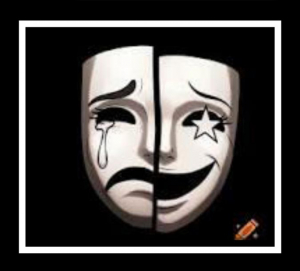
Fig.1. Laugh or Cry – song lyrics by Roger Taylor (1981):

‘You just gotta laugh or cry
Right till the day you die.
Just open up your heart,
Or open up your eyes …
Laugh or cry!’

A few days ago, I had the strange experience of hearing my life’s work dissected by a panel of critical experts, in front of a large and knowledgeable audience, and in my presence. I was part thrilled, part gobsmacked. The speakers were excellent – incisive and thoughtful. Hearing my work put into the historical context of the evolution of History as a research subject was also salutary.

The whole experience has given me much to think about. One striking theme is the relationship of academics to debate and criticism. Of course, the world of academe is not the only one that thrives upon continual arguments. Politicians, for example, have to become quickly accustomed to debates on all sides. They regularly argue not only with rivals in other political parties but also with colleagues within their own. And they may too be assailed on all sides by the general public.

So academics are not unique. But they have an interesting double relationship with assessment. They themselves are constant assessors. They regularly have piles of students’ essays to mark, as well as occasional examination scripts. Many academics also review new books, whether in published journals or in confidential pre-publication assessments for publishers. The task requires giving an objective summary of each book’s contents plus a favourable or critical response, as appropriate. And it goes on: when listening to lectures, academics try to be ready with at least one pertinent question – again, favourable or hostile, according to taste.

Simultaneously, however, academics are also on the receiving end of a constant stream of criticism. If they seek to publish a book or an essay (and the pressures to publish are these days very great), academics get a double whammy of debate. Before a book or essay is accepted for publication, it goes to anonymous readers (usually fellow academics) for prior assessment. Then, once past that potential barrier, published books and essays are often publicly reviewed in print – sometimes by more than one critical colleague. Such assessments can again be either favourable or hostile. And the barrage of responses can continue for a long period.

Meanwhile, all academics are subject to yearly internal reviews. Many institutions regularly survey student opinion about the skills and abilities of their lecturers. And academic promotion generally depends upon getting good reports not only for teaching but also for publishing well-received books and essays in sufficient quantity.

Without doubt, the old days of the doddering don, who did absolutely nothing whilst enjoying the status of being an eminent professor, have long gone.

As a result, academics live in a permanent atmosphere of potential criticism – which they both give and receive. It all helps to brace the intellect. Indeed, really good criticism can ultimately be very helpful – particularly it if arrives before the research work in question has got into print. An accurate critique, phrased tactfully, allows academics to clarify and/or to sharpen the expression of their thoughts; to remove inconsistencies; to strengthen (or perhaps to adapt) their arguments; and, if need be, to insert a rousing defence of their case against fundamental objections.

In all, to repeat a phrase: it’s bracing. Whether a given individual’s response is to laugh or to cry is a matter for personal judgment. Pointed criticisms, if they are really spot-on, can be taken badly. Colleagues sometimes cry or sulk; and refuse to continue with any further revisions of their work. (Mistakenly).

Anonymous criticisms in particular are supposed to be worded kindly, even if critically. Every now and then, however, assessors get carried away by the cloak of anonymity. They launch into personal attacks, alongside the criticisms. But all assessments, whether anonymous or otherwise, are supposed to be couched in impartial and objective terms. So if, every now and then, someone takes unfair advantage of the system of anonymity, much the best response is to ignore it completely. Laugh it off!

(By the way, anyone seeking an audit of their own personal behaviour should talk to a frank but trusty friend, who can deliver home truths constructively).

All in all, living in a bracing barrage of potential criticism is something that I personally enjoy. As a research student, I was influenced by two doughty arguers. One was the social/cultural historian, E.P, Thompson;1 and the other my PhD supervisor at the LSE, F.J. Fisher, who was an expert in London economic history.2

With each one of these two masters of dialectics, I engaged in lengthy and searching debates. And, gradually, I learned to hold my own – though I don’t think that, in either case, I ever delivered an intellectually knock-out blow.

To laugh or cry at pointed criticisms? First of all, don’t cry. It drives one into loops of negativism and does not improve the work in question. So laugh instead. Laugh because someone cared sufficiently to engage with your work. And, simultaneously, don’t ignore the criticisms. They may not always be right. But they challenge the recipients to assess for themselves. Then, if needed, corrections can be made. And, if corrections are not needed, then a rousing defence of the core argument can be inserted instead. Academic debates can be both fun and fruitful. Laugh loudly; and keep the debates going – without personal abuse – but with the critical intellect fully engaged!

ENDNOTES:

1 See P.J.C., ‘E.P. Thompson, The Historian\: An Appreciation’, first pub. in New Left Review, 201 (1993), pp. 10-17; and in slightly amplified text (2018) in PJC website: https://www.penelopejcorfield.com/history-making/fellow-historians/6.3.5 PDF45.

2 See P.J.C., ‘F.J. Fisher (1908-88) and the Dialectic of Economic History’, first pub. in P.J. Corfield and N.B. Harte (eds), London and the English Economy, 1500-1700: Essays by F.J. Fisher (London, 1990), pp. 3-22; and in shorter and punchier text (2018) in PJC website: https://www.penelopejcorfield.com/history-making/fellow-historians/6.3.1 PDF46.

For further discussion, see Twitter

To read other discussion-points, please click here

To download Monthly Blog 182 please click here

https://www.penelopejcorfield.com/wp-content/uploads/2026/02/BLOG-182-n.1-HALF-CRYING-HALF-LAUGHING.jpg 608 674 Penelope J. Corfield https://www.penelopejcorfield.com/wp-content/uploads/2020/12/P.J.C.png Penelope J. Corfield2026-02-02 13:21:382026-03-02 19:57:01MONTHLY BLOG 182, TO LAUGH OR CRY? RESPONDING TO ACADEMIC CRITICISMS

MONTHLY BLOG 15, TWO HISTORIANS WHO INFLUENCED ME

1 December 2011/in Autobiography, Monthly Blog/by Penelope J. Corfield

If citing, please kindly acknowledge copyright © Penelope J. Corfield (2011)

Thinking of influences, two very different historians influenced me not only through their originality but through their intellectual ‘bite’. They were nothing if not challenging. In that they were very alike, although otherwise they were very different.

I tend to think of them as polar opposites: one representing the critical intellect and the other the creative intellect. In fact, however, that extreme contrast is unfair. Both men combined both qualities and both produced path-breaking historical studies. But they presented themselves to the world and to their students in different ways.

Actually I was formally taught only by one of them. He was F.J. Fisher (1908-88), universally known as Jack.1 He supervised my doctorate at the LSE. ‘Formal’ tutoring, however, was very far from Jack’s style. Often we walked round and round Lincoln’s Inn Fields (close to the LSE), sometimes for hours – talking about history and breaking off from time to time for a coffee or a drink.

Jack was a meta-critic, of great insight. He quickly moved from the immediate question in hand to the deeper implications of any intellectual position. ‘Your problem is this …’, he would commence, before peeling back layers and layers of argument. Another of his favourite ploys, used in public to deceive the unwary, was ‘I know nothing about this but …’, before posing a devastating question or deep observation. At the same time, he relished quick wit and intellectual banter. As a result, he was often surrounded by a crowd of people, laughing.

Above all, Jack Fisher was always ready to challenge any possible viewpoint. Indeed, his readiness to attack made him feared by some, including by a surprising number of senior historians. But while Jack was tough, he was also relatively kinder to beginners than he ever was to eminent scholars, when they came to lecture at LSE. In fact, he viewed it as part of his task to try to cut visiting grandees down to size, so that the students should learn to be critics rather than supine followers of ‘great men’.

Unsurprisingly, Jack rarely gave praise. But when he once said that something I’d done was ‘not bad’, I was much pleased. The result was a stimulating and enjoyable education not only in history but also in the art of thinking.

Jack Fisher was a miniaturist, writing a small number of lucid essays – not long books. That could not have been more different from the other historian who influenced me: E.P. (Edward) Thompson (1924-93). He wrote voluminously, elegantly, wordily, creatively, often amazingly. Never to other people’s deadlines, as is revealed in the most recent study of his oeuvre.2 Yet he produced books both long and short, essays and later commentaries on his own essays, historical studies, polemical tracts on current politics, theoretical interventions within the Marxist intellectual tradition(s), and countless long and informative letters, as well as poetry, and a novel.

Of course, he too was a critic. Edward Thompson was both sharp and robust in discussion and at times immensely polemical among his fellow left-wingers. Many experienced his volcanic wrath. Indeed some of his friendships were halted over political differences. His remarkable letters were also ready to rebuke, when he felt a rebuke was due, although their flowing pages might well continue with a torrent of wit and information alongside the chastisement.

It was this torrential outflow of ideas that made Edward Thompson represent for me the creative intellect, fusing ideas from sociology, anthropology, literature and history.3 I was never one of his students. Instead I met him socially, through his wife Dorothy Thompson, who was in the History Department at Birmingham University, where I was learning to teach on the job. At parties and gatherings, the Thompsons were enlivening and magnetic – and very far from didactic. But every time we met, I always got something new about which to cogitate.

In part, that was because Edward Thompson was himself in constant intellectual transition. He broke from the rigidities of the British Communist Party in 1956, after the failure of internal attempts at reform by himself and many fellow-historians including Christopher Hill. And then, slowly and agonisingly, Edward receded from strict Marxism. Instead, he strove to create his own humanist Marxism, but without falling entirely out of the Marxist embrace. Over time, however, that struggle became more difficult. He recoiled not only from the brutalities of communist regimes, perpetrated in the name of Karl Marx, but also from schematic intellectual edifices, such as the structuralist Marxism of Althusser, against whom Thompson polemicised in startling but effective style.

Overall, Edward’s utter seriousness in his commitment was compelling. He wanted to find a systematic answer – unlike Jack Fisher, who was not worried at its lack. So the travails of the left often made Edward deeply depressed. Yet his flow of wit, erudition, personal kindness and charm, plus intellectual creativity, never ceased.4

I consider myself lucky to have met both men. I don’t follow either in their views, but I do try to combine their creativity with their critical mode. The one time they both met in my presence (which was probably the one time overall that they met) was when Edward Thompson came to lecture at the LSE in the late 1960s. Crowds turned out to hear him. And they got a treat – an early version of his influential lecture, steeped in anthropology as well as history, entitled ‘The Moral Economy of the English Crowd’.5 In the discussion after the talk, Jack had the best of it. Wittily, he queried just how ‘moral’ the crowds were, when they rioted in protest at high food prices. Were they justly defending the communal welfare of the masses? Or were they, when they tried to stop grain from leaving their own areas, defending their sectional interest as one group of workers against those of other workers elsewhere? Was it ‘moral’ class solidarity? or a case of much-less-moral though readily understandable ‘I’m all right, Jack’? At the time, Edward Thompson laughed and said that he’d answer that in writing. But when he published the article, to much fame and controversy, he stuck unhesitatingly with the concept of the ‘moral’ crowd.

In a sense, they both gained. Edward Thompson succeeded in getting historians to take food riots seriously, refuting the assumption that the brutish masses reacted with knee-jerk violence whenever food prices soared. Human responses to economic crisis are far more complex, both in the eighteenth century and as we are witnessing today. But Jack was also right in that Thompson’s views would generate scholarly criticisms, from all points on the historiographical spectrum.

A final point. Neither man would fit into today’s academic world of continual assessment. Jack Fisher wrote far too little, for regular assessment purposes, though what he did write was vintage quality. Edward Thompson wrote too voluminously and eclectically, with many glittering jewels amidst much vivid polemics, without meeting deadlines – being an old-style ‘man of letters’ and not a career Prof. But so much the worse for today’s world of academic assessment. They were great historians, who don’t fit into any mould.

1 For further details and a collection of Jack Fisher’s path-breaking essays, see P.J. Corfield, ‘F.J. Fisher and the Dialectic of Economic History’, in P.J. Corfield and N.B. Harte (eds), F.J. Fisher: London the English Economy, 1500-1700 (1990), pp. 3-22.

2 See Scott Hamilton, The Crisis of Theory: E.P. Thompson, The New Left, and Postwar British Politics (Manchester, 2011), reviewed by P.J.C. in electronic Reviews in History: IHR London – featured review no 1137 (29 Sept. 2011): see website www.history.ac.uk/reviews/review/1137. Another helpful overview is provided Bryan D. Palmer, Objections and Oppositions: The Histories and Politics of E.P. Thompson (1994).

3 For further details, see P.J. Corfield, ‘E.P.Thompson, Historian: An Appreciation’, New Left Review, 201 (1993), pp. 10-17.

4 For a quick introduction, see Dorothy Thompson (ed.), The Essential E.P. Thompson (New York, 2001).

5 E.P. Thompson, ‘The Moral Economy of the English Crowd in the Eighteenth Century’, Past & Present, 50 (1971), pp. 76-136; repr. in his Customs in Common (1991), pp. 185-258, with his response to the debates in ‘The Moral Economy Reviewed’, ibid., pp. 259-351.

For further discussion, see Twitter

To read other discussion-points, please click here

To download Monthly Blog 15 please click here

https://www.penelopejcorfield.com/wp-content/uploads/2020/12/P.J.C.png 0 0 Penelope J. Corfield https://www.penelopejcorfield.com/wp-content/uploads/2020/12/P.J.C.png Penelope J. Corfield2011-12-01 12:00:152021-01-12 18:54:28MONTHLY BLOG 15, TWO HISTORIANS WHO INFLUENCED ME
Search Search

Monthly Blogs

  • MONTHLY BLOG 184, THE MOON – FAMILIAR FRIEND OR LONELY STRANGER? 2 April 2026
  • MONTHLY BLOG 183, HICKORY DICKORY DOCK! IN MEMORY OF MY LATE BROTHER JULIAN, OUR HAPPY CHILDHOOD TOGETHER, AND HIS LIFELONG SENSE OF DROLL HUMOUR 1 March 2026
  • MONTHLY BLOG 182, TO LAUGH OR CRY? RESPONDING TO ACADEMIC CRITICISMS 2 February 2026
  • MONTHLY BLOG 181, A YEAR OF POEMS 3 January 2026
  • MONTHLY BLOG 180, TIME & INSPIRATION 1 December 2025
  • MONTHLY BLOG 179, IDENTIFYING DIFFERENT ERAS OF TIME: POTENTIAL & PITFALLS … 1 November 2025
  • MONTHLY BLOG 178, THINKING THROUGH TIME AT ARTHUR’S STONE IN HEREFORDSHIRE 1 October 2025
  • MONTHLY BLOG 177, SONGS ABOUT TIME 3 September 2025

Categories

  • 2026 – Year of Poetry
  • Autobiography
  • Civics
  • Current Affairs
  • Family Memories
  • History
  • Monthly Blog
  • Notices
  • Personal
  • Reviews
  • Skills
  • Time

Archives

Tags

academics agenda ancestry battersea britain christianity continuity degree diagenesis dialectical discussion education eighteenth century ethnicity Georgian government historian historians history humanities humans knowledge labour labour party language London metamorphosis paradigm shift Penelope J Corfield poet policy politicians politics professor research students teachers time traditions transformation universities university vocational voters writing

Penelope J. Corfield

Penelope J. Corfield is a historian, lecturer and education consultant. She recently served as the President of the International Society for Eighteenth-Century Studies (ISECS).

Recent Posts

  • MONTHLY BLOG 184, THE MOON – FAMILIAR FRIEND OR LONELY STRANGER? 2 April 2026
  • MONTHLY BLOG 183, HICKORY DICKORY DOCK! IN MEMORY OF MY LATE BROTHER JULIAN, OUR HAPPY CHILDHOOD TOGETHER, AND HIS LIFELONG SENSE OF DROLL HUMOUR 1 March 2026

CONTACT

Penelope J. Corfield Historian
contact me here

SEARCH THIS SITE

Search Search

SHARE THIS

QUICK LINKS

© Copyright - Penelope J Corfield 2026. All rights reserved. | Dancing Dates Film by Edwina Hannam | Site by Starling Design
  • Link to X
  • Link to Rss this site
  • Link to Mail
Scroll to top Scroll to top Scroll to top

This site uses cookies. By continuing to browse the site, you are agreeing to our use of cookies.

OKLearn more

Cookie and Privacy Settings


How we use cookies

We may request cookies to be set on your device. We use cookies to let us know when you visit our websites, how you interact with us, to enrich your user experience, and to customize your relationship with our website.

Click on the different category headings to find out more. You can also change some of your preferences. Note that blocking some types of cookies may impact your experience on our websites and the services we are able to offer.

Essential Website Cookies

These cookies are strictly necessary to provide you with services available through our website and to use some of its features.

Because these cookies are strictly necessary to deliver the website, refusing them will have impact how our site functions. You always can block or delete cookies by changing your browser settings and force blocking all cookies on this website. But this will always prompt you to accept/refuse cookies when revisiting our site.

We fully respect if you want to refuse cookies but to avoid asking you again and again kindly allow us to store a cookie for that. You are free to opt out any time or opt in for other cookies to get a better experience. If you refuse cookies we will remove all set cookies in our domain.

We provide you with a list of stored cookies on your computer in our domain so you can check what we stored. Due to security reasons we are not able to show or modify cookies from other domains. You can check these in your browser security settings.

Google Analytics Cookies

These cookies collect information that is used either in aggregate form to help us understand how our website is being used or how effective our marketing campaigns are, or to help us customize our website and application for you in order to enhance your experience.

If you do not want that we track your visit to our site you can disable tracking in your browser here:

Other external services

We also use different external services like Google Webfonts, Google Maps, and external Video providers. Since these providers may collect personal data like your IP address we allow you to block them here. Please be aware that this might heavily reduce the functionality and appearance of our site. Changes will take effect once you reload the page.

Google Webfont Settings:

Google Map Settings:

Google reCaptcha Settings:

Vimeo and Youtube video embeds:

Other cookies

The following cookies are also needed - You can choose if you want to allow them:

Accept settingsHide notification only