
Penelope J Corfield
  • HOME
    • Index to Blogs
    • Monthly Blogs
    • CONTACT
    • Key to Dancing Dates Film
  • CURRENT
    • President International Association C18 Studies
    • Lectures on offer
    • London University’s Long C18 History Seminar
    • Living in Battersea
    • Career at a Glance
    • PJC Publications
  • BRITISH HISTORY
    • Long C18 Overviews
    • Society & Culture
    • Town Life
    • Electoral History
    • Radical Poets
    • The Professions
    • Religion & Irreligion
  • GLOBAL
    • Urban History Through Time
    • C18 European History Overviews
    • Gender History
    • ‘Racial’ Classifications as Pseudo-Science
    • Responding to Climate Change
    • Advance of the International Sphere
  • TIME & HISTORY
    • Time & The Shape of History (2007)
    • Rethinking Historical Periodisation
    • Dimensions of The Long Term
    • Returning to Big History
  • HISTORY-MAKING
    • Why History Matters
    • History of History
    • Fellow Historians
    • Arts of Academic Assessment
    • Pleasures of Intellectual Life
  • REVIEWS
    • History Book Reviews
      • Social History
      • Approaches to History
      • Big History
    • Theatre Reviews
    • Civic/Political Commentaries
    • Personal Portraits
  • Menu Menu

Tag Archive for: past events

MONTHLY BLOG 179, IDENTIFYING DIFFERENT ERAS OF TIME: POTENTIAL & PITFALLS …

1 November 2025/in Monthly Blog, Time/by Penelope J. Corfield

If citing, please kindly acknowledge copyright © Penelope J. Corfield1 (2025)

Dandelion in the wind @ Shutterstock 2025

There is a perennial conflict between, on the one hand, looking at history in terms of specific periods (for example: ‘ancient’, ‘medieval’, ‘modern’) and, on the other, trying to interpret past events without using any of these pre-set concepts. To lump or to split?

The advantage of pre-set periods is partly descriptive. It is much more economical to write ‘in medieval England’ than it is to write ‘in England during the years from the fifth century AD to the later fifteenth century’.

But, once the deed is done, and centuries of history are clumped together, questions instantly multiply: Was there one medieval period? (Scholars disagree). If so, are those the right dates for it? Why is it sometimes divided into the ‘Low Middle Ages’ and the ‘High Middle Ages’? Is the concept basically fractured?

Moreover, if it is one period, then what are its major characteristics? Is the medieval era one of chronic ignorance and backwardness? Or it is a vanished era of romance and chivalry? Or, perhaps, neither of those options? What other alternatives are there??2 And did the wider sequence of stages within which it is allegedly embedded really exist either?3

Yet without any aggregative terms for big periods of time, then historical accounts risk becoming an undifferentiated list of ‘one damned thing after another’ – with the emphasis on the adjective ‘damned’.

Attitudes among historians often shift between doubt and grand certainties. In the nineteenth century, at least for many in the West, history was seen as an unstoppable ‘March of Progress’.4 And some still cling to that vision today.

Meanwhile, for Marxists, history proceeded not by slow evolution but by dramatic leaps. The inevitable class struggle generated many stormy internal tensions that each time led to a revolutionary breakdown, after which a new stage of history emerged, only to be followed by a further revolutionary breakdown, and the advent of a ‘higher’ stage of history. Thus ‘feudalism’ would be followed by ‘capitalism’, to be followed by ‘communism’.5 But neither ‘Progress’ nor the ‘Marxist dialectic’ has worked out precisely as foretold.

In Western intellectual circles in the 1980s and 1990s, doubt rather than certainty became the new mood-music (although of course, there were always dissentient voices). Above all, theorists of ‘postmodernism’ became influential among many disillusioned left-wingers. This viewpoint extended the stages of history from ‘feudal’ to ‘modern’ to ‘postmodern’. And the postmodern stance stressed the problematic nature of all knowledge about the past.

One central tenet of this attitude was an ‘incredulity towards meta-narratives’, as proclaimed by the French social philosopher Jean-François Lyotard.6 Grand sweeping stories about the march of history were at a discount. Time’s arrow did not point in any specific direction, it seemed. It was not sure where it was going.

Taking scepticism yet further, the French philosopher and literary destructionist, Jacques Derrida, asserted that temporality itself has no independent reality. For him, time is a concept which ‘belongs entirely to metaphysics’. (And, clearly, that formulation was not meant as a compliment). Instead, an a-temporal spatiality prevails throughout the cosmos.7

Postmodernist super-scepticism, however, was closely followed by a justified intellectual recoil. Historians, while these days tending to reject schematic grand narratives, have not gone to the other extreme. They do not accept that the past has no meaning, or that studies of history are purely subjective.8

Paradoxically, the postmodernists’ claim – that an old era of so-called confident ‘modernity’ has been superseded by a new age of sceptical ‘postmodernity’ –  does in itself assert that the course of history can be deciphered. In other words, their critique of meta-narratives did not inhibit them from producing an alternative meta-narrative of their own.

Times have moved on. Some writers boldly assert the ‘end of postmodernism’ and define the new era as ‘Post-Postmodern’.9 Others ask sceptically whether such an era was ever really there at all?10

Belief in the heresy of ‘time denial’ was never espoused by more than a tiny minority of philosophers and physicists. History as a subject of study remains immensely popular and important.

Therefore historians around the world continue these research and debates. They seek long-term interpretations that avoid over-simplification and embrace complexity – but that are, simultaneously, not so complex that no meaning can be extracted from the torrent of detail. There are specific periods of history that have a distinctive identity – but there are also long-term evolutionary trends as well as deep continuities, that extend through millennia. The whole mix is as complex as life. It’s also important and endlessly instructive. As a result, it’s fascinating and sometimes infuriating! Come and research the past (choosing any time-period, long or short) and join the non-stop debates! Time-space: it’s what we all live in!

ENDNOTES:

1 Contributing to PJC’s year of Time-BLOGS (2025). For more, see too P.J. Corfield, Time and the Shape of History (2007); and idem, Time-Space: We Are All in it Together (2025).

2 See N. Cantor, Inventing the Middle Ages: The Lives, Works and Ideas of the Great Medievalists of the Twentieth Century (1991); and A. Murray, ‘Should the Middle Ages be Abolished?’ in Essays in Medieval Studies, 21 (2004), pp. 1–22.

3 See esp. P.J. Corfield, ‘POST-Medievalism/Modernity/Postmodernity?’ Rethinking History, Vol. 14 (2010), pp. 379-404. Also available via PJC website, www.penelopejcorfield.co.uk/what_is_history?/Pdf20.

4 See J.B. Bury, The Idea of Progress: An Enquiry into its Origin and Growth (1921); C. Lasch, The True and Only Heaven: Progress and its Critics (1991); G.A. Almond and others, Progress and its Discontents (2022).

5 See variously T.B. Bottomore, Karl Marx (1956); idem (ed.), Modern Interpretations of Marx (1981); D. Conway, A Farewell to Marx: An Outline and Appraisal of his Theories (1987); J.H. Moore (ed.), Legacies of the Collapse of Marxism (1995); G. Therborn, From Marxism to Post-Marxism? (2010).

6 See J-F. Lyotard, The Postmodern Condition: A Report on Knowledge, transl. by G. Bennington and B. Massumi (1979); M. Drolet (ed.), The Postmodernism Reader: Foundational Texts (2004); and popularisation of these arguments in D. Harvey, The Condition of Postmodernity: An Enquiry into the Origins of Cultural Change (1989); F. Jameson, Postmodernism: The Cultural Logic of Late Capitalism (1991); and H. Bertens, The Idea of the Postmodern: A History (1995).

7 See J. Hodge, Derrida on Time (2007); and, as an example of the debates, J.M. Lehmann, Deconstructing Derrida: A Post-Poststructuralist Critique (1993).

8 For a variety of historians’ responses, see R. Evans, In Defence of History (1997); F. Spier, Big History and the Future of Humanity (2010); D. Armitage and J. Guldi, The History Manifesto (2014).

9 For examples, see A. Kirby, ‘The Death of Postmodernism and Beyond’, Philosophy Now, Vol. 58 (2006); J.T. Nealon, Post-Postmodernism: Or, the Cultural Logic of Just-in-Time Capitalism (2012); B. Kuzniarz, Farewell to Postmodernism: Social Theories of the Late Left (2015); A. Gibbons, ‘Postmodernism is Dead. What Comes Next?’ Times Literary Supplement, 14 June 2017.

10 See e.g. S. Redhead, We Have Never Been Postmodern: Theory at the Speed of Light (2011); R. Kramer, Are we Postmodern Yet? And Were We Ever? (2019).

For further discussion, see Twitter

To read other discussion-points, please click here

To download Monthly Blog 179 please click here

https://www.penelopejcorfield.com/wp-content/uploads/2025/11/179.1-dandelion-e1762099434201.jpg 479 800 Penelope J. Corfield https://www.penelopejcorfield.com/wp-content/uploads/2020/12/P.J.C.png Penelope J. Corfield2025-11-01 18:33:432025-12-02 23:58:13MONTHLY BLOG 179, IDENTIFYING DIFFERENT ERAS OF TIME: POTENTIAL & PITFALLS …

MONTHLY BLOG 113, LIGHT FROM THE LAMP OF EXPERIENCE

1 May 2020/in History, Monthly Blog/by Penelope J. Corfield

If citing, please kindly acknowledge copyright © Penelope J. Corfield (2020)

Fig.1, A hand-held eighteenth-century lantern, its lighted candle providing an immediate pool of light.

‘The Lamp of Experience’ is a marvellous phrase. A lantern throws light. It does not insist dogmatically but instead conveys sufficient illumination for good judgment. ‘Experience’ is also a vital component of the phrase. It implies not just a list of facts from history but also the capacity to cogitate about past events and to learn from them. Moreover, experience can be gleaned not just from each individual’s personal life but from the collective experiences of humanity as a whole.

During the current pandemic, for example, people can learn instructive lessons from comparable past global disasters. Factual histories provide suggestive evidence of what was done, what was not done, and what could have been done better.1 And imaginative literature allows people to share the range of subjective emotions and reactions which may be triggered by great and unexpected disasters.2 It allows for a sort of mental rehearsal. Needless to say, imaginative fiction is not written primarily for utilitarian purposes. And far from all happenings that can be conjectured will actually transpire. (Time Travel provides a pertinent example). Nonetheless, imaginative literature, even when imagining things that are technically impossible, contributes to the stock of human creativity. And thoughts and dreams, as much as deeds and misdeeds, all form part of the human experience.

There is additionally a pleasant irony in on-line references to ‘the Lamp of Experience’. Various web-lists of famous quotations attribute the dictum to Edward Gibbon (1737-94), Britain’s nonpareil historian. The full statement runs as follows: ‘I have but one lamp by which my feet are guided, and that is the lamp of experience. I know of no way of judging the future but by the past’. But that formulation does not accord with Gibbon’s impersonally magisterial and often ironic style. The words are spikier, and more personalised.

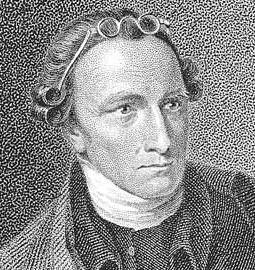
In fact, their true author is also credited on the web; and maybe with time the accurate citations will crowd out the error. True, the general observation does not lose its force by being misattributed. Yet credit should go where credit was due. The reference was first made in a celebrated speech by a Virginian planter-turned-lawyer, named Patrick Henry (1736-99).3 He was an exact contemporary of Gibbon. But they differed in their politics. Henry was an American critic of British rule. In 1765, he used his knowledge of legal precedents to argue that the Westminster government’s attempt at imposing the unpopular Stamp Tax upon the American colonists was unconstitutional.4

Lawyers, like historians, were accustomed to weighing and pondering evidence before making judgments. In this case, Henry was using the ‘lamp’ of past experience for radical purposes. His arguments, while rejected by Britain, were popular in the American colonies; and in 1776 Henry became the first Governor of Virginia post-Independence. Manifestly, his appeal to experience had not produced universal agreement. As already noted, studying history provides options, not a universal blueprint for what it to be done.

Fig.2 Engraved portrait of the intent figure of Patrick Henry (1736-99), his eye-glasses pushed up onto his lawyer’s wig: a Virginia planter who turned to law and politics, Patrick Henry served as first and also sixth post-colonial Governor of the State of Virginia.

What, then, is the appeal and power of the past? The truth is that Henry’s dictum, while evocative, does not go nearly far enough. Experience/history provides much, much more than a pool of light. It provides the entire bedrock of existence. Everything comes from the past. Everyone learns from the past. The cosmos, global biology, languages, thought-systems, the stock of knowledge, diseases, human existence …  arrive in the present from the past.5

All that is because Time is unidirectional. Humans live in the present but have to rely upon the collective databank of past human experience. That great resource is not just a lamp, sending out a single beam. Instead, collective experience provides the entire context and content of surviving successfully in Time. All humans, as living histories, are part of the process, and contribute their personal quota. The better, fuller and more accurate is that collective knowledge, the better the long-term prospects for the species.

Humans in history are restless problem creators. Yet they are also impressive problem solvers. It’s time, not just for renewed human escape from an obvious viral danger, but equally for urgent collective action to halt, and where possible to reverse, the accelerating environmental degradation, which is damaging the global climate and global biodiversity – let alone the global habitat of humans.

Now needed – not just a Lamp but a mental Sunburst, drawing upon experience and transmuting into sustained action. Stirring times! What comes from the past will have a mighty effect on the future. And decisions taken in the present contribute crucially too.
1 See e.g. M. Honigsbaum, A History of the Great Influenza Pandemics: Death, Panic and Hysteria, 1830-1920 (2013; ppbk 2020)..

2 D. Defoe, A Journal of the Plague Year (1722; and many later edns); A. Camus, La Peste (Paris, 1947), in Eng. transl. by S. Gilbert as The Plague (1960).

3 P. Henry, ‘Speech at 2nd Virginia Convention, 23 March 1775’, in L. Copeland and L.W. Lamm (eds), The World’s Great Speeches (New York, 1999), pp. 232-3; T.S. Kidd, Patrick Henry: First among Patriots (New York, 2011).

4 P.D.G. Thomas, British Politics and the Stamp Act Crisis: The First Phase of the American Revolution, 1763-9 (Oxford, 1975); E.S. and H.M. Morgan, The Stamp Act Crisis: Prologue to Revolution (1974; 1995).

5 P.J. Corfield, ‘All People are Living Histories’ (2007), available on PJC website www.penelopejcorfield.co.uk/essaysonwhatishistory/pdf1

For further discussion, see Twitter

To read other discussion-points, please click here

To download Monthly Blog 113 please click here

https://www.penelopejcorfield.com/wp-content/uploads/2020/05/2020-05-No1-C18-French-lantern.jpg 950 950 Penelope J. Corfield https://www.penelopejcorfield.com/wp-content/uploads/2020/12/P.J.C.png Penelope J. Corfield2020-05-01 18:05:032021-01-12 18:52:53MONTHLY BLOG 113, LIGHT FROM THE LAMP OF EXPERIENCE
Search Search

Monthly Blogs

  • MONTHLY BLOG 184, THE MOON – FAMILIAR FRIEND OR LONELY STRANGER? 2 April 2026
  • MONTHLY BLOG 183, HICKORY DICKORY DOCK! IN MEMORY OF MY LATE BROTHER JULIAN, OUR HAPPY CHILDHOOD TOGETHER, AND HIS LIFELONG SENSE OF DROLL HUMOUR 1 March 2026
  • MONTHLY BLOG 182, TO LAUGH OR CRY? RESPONDING TO ACADEMIC CRITICISMS 2 February 2026
  • MONTHLY BLOG 181, A YEAR OF POEMS 3 January 2026
  • MONTHLY BLOG 180, TIME & INSPIRATION 1 December 2025
  • MONTHLY BLOG 179, IDENTIFYING DIFFERENT ERAS OF TIME: POTENTIAL & PITFALLS … 1 November 2025
  • MONTHLY BLOG 178, THINKING THROUGH TIME AT ARTHUR’S STONE IN HEREFORDSHIRE 1 October 2025
  • MONTHLY BLOG 177, SONGS ABOUT TIME 3 September 2025

Categories

  • 2026 – Year of Poetry
  • Autobiography
  • Civics
  • Current Affairs
  • Family Memories
  • History
  • Monthly Blog
  • Notices
  • Personal
  • Reviews
  • Skills
  • Time

Archives

Tags

academics agenda ancestry battersea britain christianity continuity degree diagenesis dialectical discussion education eighteenth century ethnicity Georgian government historian historians history humanities humans knowledge labour labour party language London metamorphosis paradigm shift Penelope J Corfield poet policy politicians politics professor research students teachers time traditions transformation universities university vocational voters writing

Penelope J. Corfield

Penelope J. Corfield is a historian, lecturer and education consultant. She recently served as the President of the International Society for Eighteenth-Century Studies (ISECS).

Recent Posts

  • MONTHLY BLOG 184, THE MOON – FAMILIAR FRIEND OR LONELY STRANGER? 2 April 2026
  • MONTHLY BLOG 183, HICKORY DICKORY DOCK! IN MEMORY OF MY LATE BROTHER JULIAN, OUR HAPPY CHILDHOOD TOGETHER, AND HIS LIFELONG SENSE OF DROLL HUMOUR 1 March 2026

CONTACT

Penelope J. Corfield Historian
contact me here

SEARCH THIS SITE

Search Search

SHARE THIS

QUICK LINKS

© Copyright - Penelope J Corfield 2026. All rights reserved. | Dancing Dates Film by Edwina Hannam | Site by Starling Design
  • Link to X
  • Link to Rss this site
  • Link to Mail
Scroll to top Scroll to top Scroll to top

This site uses cookies. By continuing to browse the site, you are agreeing to our use of cookies.

OKLearn more

Cookie and Privacy Settings


How we use cookies

We may request cookies to be set on your device. We use cookies to let us know when you visit our websites, how you interact with us, to enrich your user experience, and to customize your relationship with our website.

Click on the different category headings to find out more. You can also change some of your preferences. Note that blocking some types of cookies may impact your experience on our websites and the services we are able to offer.

Essential Website Cookies

These cookies are strictly necessary to provide you with services available through our website and to use some of its features.

Because these cookies are strictly necessary to deliver the website, refusing them will have impact how our site functions. You always can block or delete cookies by changing your browser settings and force blocking all cookies on this website. But this will always prompt you to accept/refuse cookies when revisiting our site.

We fully respect if you want to refuse cookies but to avoid asking you again and again kindly allow us to store a cookie for that. You are free to opt out any time or opt in for other cookies to get a better experience. If you refuse cookies we will remove all set cookies in our domain.

We provide you with a list of stored cookies on your computer in our domain so you can check what we stored. Due to security reasons we are not able to show or modify cookies from other domains. You can check these in your browser security settings.

Google Analytics Cookies

These cookies collect information that is used either in aggregate form to help us understand how our website is being used or how effective our marketing campaigns are, or to help us customize our website and application for you in order to enhance your experience.

If you do not want that we track your visit to our site you can disable tracking in your browser here:

Other external services

We also use different external services like Google Webfonts, Google Maps, and external Video providers. Since these providers may collect personal data like your IP address we allow you to block them here. Please be aware that this might heavily reduce the functionality and appearance of our site. Changes will take effect once you reload the page.

Google Webfont Settings:

Google Map Settings:

Google reCaptcha Settings:

Vimeo and Youtube video embeds:

Other cookies

The following cookies are also needed - You can choose if you want to allow them:

Accept settingsHide notification only