
Penelope J Corfield
  • HOME
    • Index to Blogs
    • Monthly Blogs
    • CONTACT
    • Key to Dancing Dates Film
  • CURRENT
    • President International Association C18 Studies
    • Lectures on offer
    • London University’s Long C18 History Seminar
    • Living in Battersea
    • Career at a Glance
    • PJC Publications
  • BRITISH HISTORY
    • Long C18 Overviews
    • Society & Culture
    • Town Life
    • Electoral History
    • Radical Poets
    • The Professions
    • Religion & Irreligion
  • GLOBAL
    • Urban History Through Time
    • C18 European History Overviews
    • Gender History
    • ‘Racial’ Classifications as Pseudo-Science
    • Responding to Climate Change
    • Advance of the International Sphere
  • TIME & HISTORY
    • Time & The Shape of History (2007)
    • Rethinking Historical Periodisation
    • Dimensions of The Long Term
    • Returning to Big History
  • HISTORY-MAKING
    • Why History Matters
    • History of History
    • Fellow Historians
    • Arts of Academic Assessment
    • Pleasures of Intellectual Life
  • REVIEWS
    • History Book Reviews
      • Social History
      • Approaches to History
      • Big History
    • Theatre Reviews
    • Civic/Political Commentaries
    • Personal Portraits
  • Menu Menu

Tag Archive for: recurrent change

Fig.1 Arthur’s Stone (Herefordshire), constructed c. 3,000 BCE Photo © Tony Belton 2016

MONTHLY BLOG 178, THINKING THROUGH TIME AT ARTHUR’S STONE IN HEREFORDSHIRE

1 October 2025/in Monthly Blog, Time/by Penelope J. Corfield

If citing, please kindly acknowledge copyright © Penelope J. Corfield (2025)
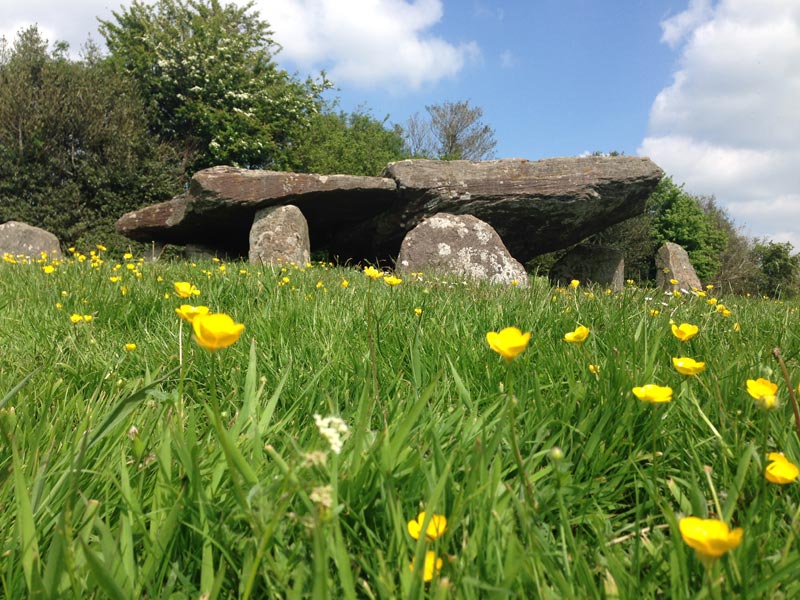
Fig.1 Arthur’s Stone (Herefordshire), constructed c. 3,000 BCE Photo © Tony Belton 2016

Fig.1 Arthur’s Stone (Herefordshire),
constructed c. 3,000 BCE
Photo © Tony Belton 2016

Great rings of giant standing stones, dating from primeval times – such as England’s Stonehenge and Brittany’s Carnac Stones – are wonderful prompts to sweeping thoughts about the length of Time and History.1  Yet small ancient monuments can be just as striking in their own way. On a very pleasant visit to Herefordshire in summer 2016, my partner and I decided, on the spur of the moment, to follow a signpost to view a historic burial tomb, named Arthur’s Stone. It proved to be wonderfully thought-provoking.

Arthur’s Stone (today guarded by English Heritage)2  is set high on a ridge between the Wye and Golden Valleys. The site is magnificent. The Stone burial chamber, which was constructed in c. 3,000 BCE, is somewhat dilapidated but that through-Time quality adds to its authenticity. Its impact is dignified without being grandiose. Interested visitors attend in small numbers rather than in great crowds. Yet the simplicity and venerability of the monument, and the tranquillity of its location, together give the Stone great resonance.

In the first place, it is evidence of serious intent on the part of those who placed the Stone high on the ridge. It may have been installed as an astronomical observation point – a function which is claimed (and debated) in the case of many ancient stone monuments. Certainly, none of these sites were constructed out of the blue. They indicate the existence of societies capable of planning, organising and implementing big communal projects. And they were ingenious makers and users of flint tools. Hence it’s not surprising that in the vicinity of Arthur’s Stone, there’s evidence of prior human labour in the form of numerous even older flint flakes and arrow-heads.

Whether this particular monument was built as a tomb, or instead as some form of storage chamber, is unknown. There are other similar monuments in the region, which are known as the ‘Severn-Cotswold’ group of chambered tombs. And there would have been regular communication links between these sites. Thus, while research has yet to reveal the precise functions of all these carefully-positioned great stones, it is clear that they had a significant role for those who manoeuvred them into their special sites. From the start, they had meaning.

A further intriguing train of thought is prompted by the attempts of later generations to ‘domesticate’ these historical markers by associating them with famous personages.3  So at some stage, long before the thirteenth century CE, this monument, like many other historic stones and relics, became associated in popular legend with the feats of King Arthur. Stories abounded. One reported that he had won a battle there. Another story recounted that he’d met a giant there and triumphantly slain him. Either way, Arthur’s Stone was being given a place in the epic history of the legendary British king. And the name has stuck.

Thereafter, the site has seen some real documented drama as well. In the fifteenth century, a knight was killed there in a fatal duel. And in September 1645 the embattled King Charles I dined at the Stone with his Royalist troops. Perhaps he intended the occasion as a symbolic gesture, although it did not confer upon him sufficient pseudo-Arthurian lustre to defeat Cromwell and the Roundheads. Charles I’s fleeting visit thus did not enter local folklore.

Then at some stage (the precise date is unknown), the site became a focal point for locally popular festivities at midsummer. Villagers in the nearby settlements of Dorstone and Bredwardine gathered in the sloping field in front of Arthur’s Stone, where they engaged in uninhibited drinking, dancing and ‘high jinks’  – away from the inquisitorial eye of the local clergy and magistrates. It was obviously fun, because the popular tradition continued well into Victorian times.

As a sober counter-balance, too, the local Baptists began in the nineteenth century to organise an ecumenical religious service there in high summer. Implicitly, they were saluting the Stone’s sacral reputation, whilst simultaneously purging its more recent pagan associations.

On my own visit there, I met by complete chance a charming senior citizen who lived locally.4   She told me of her personal memories, as a child before World War II, when she joined her school-fellows to sing hymns at the services held there each midsummer. It was a stirring occasion for them all.

The special nature of the place was (and is) undoubted. Throughout its five thousand years of existence, Arthur’s Stone has had multiple meanings and uses for the witnessing generations who both live nearby and visit from afar. Its story is protean. Whether the site is used for astronomy, royal burial, knightly duelling, open-air royal dining, unorthodox popular festivities, community religious services, or (today) for tourist visiting, Arthur’s Stone cannot be locked away into a wrongly named ‘pre-history’.

It does not spring from a long-gone era whose name implies that it pre-dates ‘real’ History.5  On the contrary. Arthur’s Stone has always been fully within History, which continues to unfold steadily, as long as Time itself does likewise. The great cosmic story is one that welds together both deep continuities and recurrent change. Local monuments do the same. In other words, Arthur’s Stone silently signals Time’s diachronic power to persist and to update simultaneously. And long may it continue to do so!

ENDNOTES:

1 For more on Time & History, see P.J. Corfield, Time-Space: We Are All in it Together (London, 2025).

2 See https://www.english-heritage.org.uk/visit/places/arthurs-stone.

3 For further information, see also A. Watkins, ‘Arthur’s Stone’, Transactions of the Woolhope Naturalists’ Field Club (1928), pp. 149-51; L.V. Grinsell, Folklore of Prehistoric Sites in Britain (1976); and J. Sant, Stone Spotting in Herefordshire (2000);

4 With reiterated thanks and warm appreciation to Ionwen E. Williams (née Davies).

5 For a further critique of the concept of ‘Prehistory’, see PJC, ‘Primevalism: Saluting a Renamed Prehistory’, in A. Baysal, E.L. Baysal and S. Souvatzi (eds), Problematising Time and History in Pre-History (2019), pp. 265-82.

For further discussion, see Twitter

To read other discussion-points, please click here

To download Monthly Blog 178 please click here

https://www.penelopejcorfield.com/wp-content/uploads/2025/10/THINKING-THROUGH-TIME-AT-ARTHURS-STONE-IN-HEREFORDSHIRE.jpg 600 800 Penelope J. Corfield https://www.penelopejcorfield.com/wp-content/uploads/2020/12/P.J.C.png Penelope J. Corfield2025-10-01 18:55:342025-10-02 00:24:16MONTHLY BLOG 178, THINKING THROUGH TIME AT ARTHUR’S STONE IN HEREFORDSHIRE
Search Search

Monthly Blogs

  • MONTHLY BLOG 184, THE MOON – FAMILIAR FRIEND OR LONELY STRANGER? 2 April 2026
  • MONTHLY BLOG 183, HICKORY DICKORY DOCK! IN MEMORY OF MY LATE BROTHER JULIAN, OUR HAPPY CHILDHOOD TOGETHER, AND HIS LIFELONG SENSE OF DROLL HUMOUR 1 March 2026
  • MONTHLY BLOG 182, TO LAUGH OR CRY? RESPONDING TO ACADEMIC CRITICISMS 2 February 2026
  • MONTHLY BLOG 181, A YEAR OF POEMS 3 January 2026
  • MONTHLY BLOG 180, TIME & INSPIRATION 1 December 2025
  • MONTHLY BLOG 179, IDENTIFYING DIFFERENT ERAS OF TIME: POTENTIAL & PITFALLS … 1 November 2025
  • MONTHLY BLOG 178, THINKING THROUGH TIME AT ARTHUR’S STONE IN HEREFORDSHIRE 1 October 2025
  • MONTHLY BLOG 177, SONGS ABOUT TIME 3 September 2025

Categories

  • 2026 – Year of Poetry
  • Autobiography
  • Civics
  • Current Affairs
  • Family Memories
  • History
  • Monthly Blog
  • Notices
  • Personal
  • Reviews
  • Skills
  • Time

Archives

Tags

academics agenda ancestry battersea britain christianity continuity degree diagenesis dialectical discussion education eighteenth century ethnicity Georgian government historian historians history humanities humans knowledge labour labour party language London metamorphosis paradigm shift Penelope J Corfield poet policy politicians politics professor research students teachers time traditions transformation universities university vocational voters writing

Penelope J. Corfield

Penelope J. Corfield is a historian, lecturer and education consultant. She recently served as the President of the International Society for Eighteenth-Century Studies (ISECS).

Recent Posts

  • MONTHLY BLOG 184, THE MOON – FAMILIAR FRIEND OR LONELY STRANGER? 2 April 2026
  • MONTHLY BLOG 183, HICKORY DICKORY DOCK! IN MEMORY OF MY LATE BROTHER JULIAN, OUR HAPPY CHILDHOOD TOGETHER, AND HIS LIFELONG SENSE OF DROLL HUMOUR 1 March 2026

CONTACT

Penelope J. Corfield Historian
contact me here

SEARCH THIS SITE

Search Search

SHARE THIS

QUICK LINKS

© Copyright - Penelope J Corfield 2026. All rights reserved. | Dancing Dates Film by Edwina Hannam | Site by Starling Design
  • Link to X
  • Link to Rss this site
  • Link to Mail
Scroll to top Scroll to top Scroll to top

This site uses cookies. By continuing to browse the site, you are agreeing to our use of cookies.

OKLearn more

Cookie and Privacy Settings


How we use cookies

We may request cookies to be set on your device. We use cookies to let us know when you visit our websites, how you interact with us, to enrich your user experience, and to customize your relationship with our website.

Click on the different category headings to find out more. You can also change some of your preferences. Note that blocking some types of cookies may impact your experience on our websites and the services we are able to offer.

Essential Website Cookies

These cookies are strictly necessary to provide you with services available through our website and to use some of its features.

Because these cookies are strictly necessary to deliver the website, refusing them will have impact how our site functions. You always can block or delete cookies by changing your browser settings and force blocking all cookies on this website. But this will always prompt you to accept/refuse cookies when revisiting our site.

We fully respect if you want to refuse cookies but to avoid asking you again and again kindly allow us to store a cookie for that. You are free to opt out any time or opt in for other cookies to get a better experience. If you refuse cookies we will remove all set cookies in our domain.

We provide you with a list of stored cookies on your computer in our domain so you can check what we stored. Due to security reasons we are not able to show or modify cookies from other domains. You can check these in your browser security settings.

Google Analytics Cookies

These cookies collect information that is used either in aggregate form to help us understand how our website is being used or how effective our marketing campaigns are, or to help us customize our website and application for you in order to enhance your experience.

If you do not want that we track your visit to our site you can disable tracking in your browser here:

Other external services

We also use different external services like Google Webfonts, Google Maps, and external Video providers. Since these providers may collect personal data like your IP address we allow you to block them here. Please be aware that this might heavily reduce the functionality and appearance of our site. Changes will take effect once you reload the page.

Google Webfont Settings:

Google Map Settings:

Google reCaptcha Settings:

Vimeo and Youtube video embeds:

Other cookies

The following cookies are also needed - You can choose if you want to allow them:

Accept settingsHide notification only