
Penelope J Corfield
  • HOME
    • Index to Blogs
    • Monthly Blogs
    • CONTACT
    • Key to Dancing Dates Film
  • CURRENT
    • President International Association C18 Studies
    • Lectures on offer
    • London University’s Long C18 History Seminar
    • Living in Battersea
    • Career at a Glance
    • PJC Publications
  • BRITISH HISTORY
    • Long C18 Overviews
    • Society & Culture
    • Town Life
    • Electoral History
    • Radical Poets
    • The Professions
    • Religion & Irreligion
  • GLOBAL
    • Urban History Through Time
    • C18 European History Overviews
    • Gender History
    • ‘Racial’ Classifications as Pseudo-Science
    • Responding to Climate Change
    • Advance of the International Sphere
  • TIME & HISTORY
    • Time & The Shape of History (2007)
    • Rethinking Historical Periodisation
    • Dimensions of The Long Term
    • Returning to Big History
  • HISTORY-MAKING
    • Why History Matters
    • History of History
    • Fellow Historians
    • Arts of Academic Assessment
    • Pleasures of Intellectual Life
  • REVIEWS
    • History Book Reviews
      • Social History
      • Approaches to History
      • Big History
    • Theatre Reviews
    • Civic/Political Commentaries
    • Personal Portraits
  • Menu Menu

Tag Archive for: teenagers

MONTHLY BLOG 122, PROPOSED ROOTS PROJECT FOR TEENAGERS

1 February 2021/in Civics, Monthly Blog/by Penelope J. Corfield

If citing, please kindly acknowledge copyright © Penelope J. Corfield (2021)
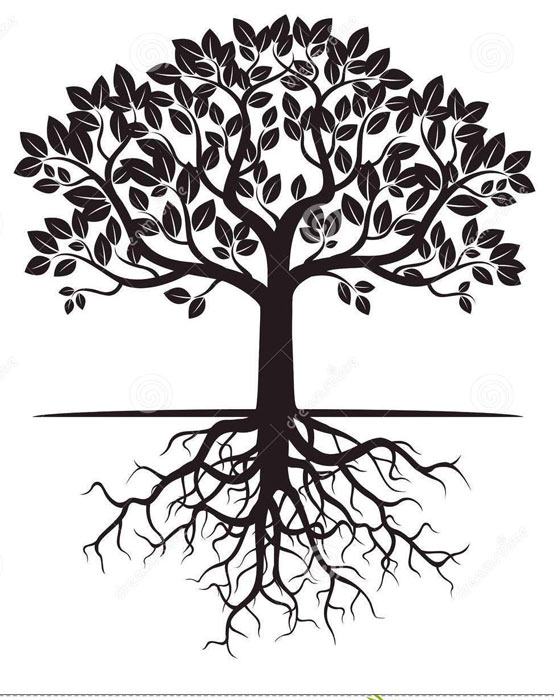
Line Drawing of Tree & Roots:
© Vector Illustrations (2020)
65691748

It’s important for individuals to know about their personal roots, Humans all live in Time-Space (also known as the Space-Time continuum).1 And knowing a bit about personal family roots helps to locate people in their own individual spot in history and geography.

So this short essay speculates about a possible School Roots Project for children in their mid-teens. (Perhaps in a Civics class; or a part of a contemporary History course). The aim is not in any way to encourage family- bragging, whether for ‘lofty’ aristocratic lineage or for ‘authentic’ proletarian roots. Instead, the value is chiefly for the individuals concerned, to know more about themselves – and to have the chance to talk seriously about their roots with parents/ grandparents/ influential family members/ and/or any others who played a significant role in their upbringings.

Clearly teachers need to organise all such Roots Projects with great sensitivity. Not all families are happy ones. Not all older relatives will be at ease talking about the past with people of a younger generation. And thoughtful arrangements have to be made for students who are adopted, who may know little or nothing about their biological background – but who share the same human need to be socially well rooted in Time-Space. Indeed, it can well be argued that those whose position is, outwardly at least, relatively unsettled have the greatest need for this exercise in rooting, both with their adoptive families and/or with their biological families, if they can be traced.2

The more that individuals know about their personal background, the more secure they feel – the more they understand their connections with others – the better their sense of self-esteem – and the more they feel in control of their own lives. Rootedness is a prime indicator of emotional health and happiness. And the more that people are secure in their own skin, the better they can relate to others.3 They can simultaneously see their own role as part of a wider human history, set in unfolding Time which links the generations.

What then should a Roots Project for teenagers entail? The details are best left to be specified by teachers who know the relevant age-group. There’s no magic formula. Just a desire to get children talking to their parents/ grandparents/ or any other significant figures in their upbringing. At infant school level, there are many good storybooks about families; and there are projects which invite children to ask grandparents (say) simple questions, such as ‘What sort of toys did you have as a child?’ For teenagers, the discussion can be more probing – but may be hampered by years of not talking about personal matters. Therefore Projects should start modestly: asking children which adults influenced them as they grew? And then asking the youngsters to think of questions to ask the grownups in their lives?

Students should also be briefed on asking for family help with their Roots Projects. It must be stressed that all information will be used exclusively by the students. These talks will not be ‘on the record’ – here contrasting with what can happen to taped interviews as the result of formal Oral History exercises.4 Instead, the Roots Projects are intended as launch-pads for informal chats, enabling the students to write a short account of one or more significant adults who influenced their upbringing.

Afterwards, the class can be invited to share their experiences of the process. Some families will already be talkers. Others not. In every case, there is always more to be learned. Did the students find it easy or difficult to get the adults to talk? If difficult, why was that? Was it that they themselves were embarrassed? Or the parents shy? Did the talking exercise make things any easier? Did they learn anything surprising? What might they ask next time that they have a family chat? To stress again, the exercise is not a competitive exercise in bragging about comparative social backgrounds. Instead, it is an exercise in Rooting – taking specific steps in what may become a longer series of family discussions.

Generally, it’s very common for people to exclaim, at the demise of a parent, grandparent or any other significant relative or carer: ‘I wish I’d asked them more about themselves, when they were alive to tell me’. Death locks the doors to personal memories of a shared past. Rooting Projects help to open the conversations while all the protagonists are alive to relate their own histories.

ENDNOTES:

1 Whether the chosen terminology is Time-Space or Space-Time, the proposition is the same: that Time and Space are integrally yoked. For further discussion, see P.J. Corfield, Time and the Shape of History (2007), pp. 15, 9-11, 17-18, 218, 220, 248-52; and PJC current research-in-progress.

2 See e.g. J. Rees, Life Story Books for Adopted Children: A Family-Friendly Approach (2009); J. Waterman and others, Adoption-Specific Therapy: A Guide to Helping Adopted Children and their Families Thrive (Washington DC, 2018); A. James, The Science of Parenting Adopted Children: A Brain-Based, Trauma-Informed Approach to Cultivating Your Child’s Social, Emotional and Moral Development (2019).

3 R. Coleman, ‘Why We Need Family History Now More than Ever’, FamilySearch, 26 Sept. 2017: https://www.familysearch.org/blog/en/family-history-2/

4 Oral History, professionally undertaken, provides a wonderful set of original resources for historical studies: among a huge literature, see e.g. A. Zusman, Story Bridges: A Guide for Conducting Intergenerational Oral History Projects (2016); F-A. Montoya and B. Allen, Practising Oral History to Connect University to Community (2018). These Schools Rooting Projects can be regarded as early stepping stones in the same process of tapping into the powers of the human memory – and sharing them with others.

For further discussion, see Twitter

To read other discussion-points, please click here

To download Monthly Blog 122 please click here

https://www.penelopejcorfield.com/wp-content/uploads/2021/02/122.1-Black-tree-roots-vector-illustration-graphic-element-65691748-001.jpg 700 554 Penelope J. Corfield https://www.penelopejcorfield.com/wp-content/uploads/2020/12/P.J.C.png Penelope J. Corfield2021-02-01 17:45:592021-02-02 23:26:35MONTHLY BLOG 122, PROPOSED ROOTS PROJECT FOR TEENAGERS
Search Search

Monthly Blogs

  • MONTHLY BLOG 184, THE MOON – FAMILIAR FRIEND OR LONELY STRANGER? 2 April 2026
  • MONTHLY BLOG 183, HICKORY DICKORY DOCK! IN MEMORY OF MY LATE BROTHER JULIAN, OUR HAPPY CHILDHOOD TOGETHER, AND HIS LIFELONG SENSE OF DROLL HUMOUR 1 March 2026
  • MONTHLY BLOG 182, TO LAUGH OR CRY? RESPONDING TO ACADEMIC CRITICISMS 2 February 2026
  • MONTHLY BLOG 181, A YEAR OF POEMS 3 January 2026
  • MONTHLY BLOG 180, TIME & INSPIRATION 1 December 2025
  • MONTHLY BLOG 179, IDENTIFYING DIFFERENT ERAS OF TIME: POTENTIAL & PITFALLS … 1 November 2025
  • MONTHLY BLOG 178, THINKING THROUGH TIME AT ARTHUR’S STONE IN HEREFORDSHIRE 1 October 2025
  • MONTHLY BLOG 177, SONGS ABOUT TIME 3 September 2025

Categories

  • 2026 – Year of Poetry
  • Autobiography
  • Civics
  • Current Affairs
  • Family Memories
  • History
  • Monthly Blog
  • Notices
  • Personal
  • Reviews
  • Skills
  • Time

Archives

Tags

academics agenda ancestry battersea britain christianity continuity degree diagenesis dialectical discussion education eighteenth century ethnicity Georgian government historian historians history humanities humans knowledge labour labour party language London metamorphosis paradigm shift Penelope J Corfield poet policy politicians politics professor research students teachers time traditions transformation universities university vocational voters writing

Penelope J. Corfield

Penelope J. Corfield is a historian, lecturer and education consultant. She recently served as the President of the International Society for Eighteenth-Century Studies (ISECS).

Recent Posts

  • MONTHLY BLOG 184, THE MOON – FAMILIAR FRIEND OR LONELY STRANGER? 2 April 2026
  • MONTHLY BLOG 183, HICKORY DICKORY DOCK! IN MEMORY OF MY LATE BROTHER JULIAN, OUR HAPPY CHILDHOOD TOGETHER, AND HIS LIFELONG SENSE OF DROLL HUMOUR 1 March 2026

CONTACT

Penelope J. Corfield Historian
contact me here

SEARCH THIS SITE

Search Search

SHARE THIS

QUICK LINKS

© Copyright - Penelope J Corfield 2026. All rights reserved. | Dancing Dates Film by Edwina Hannam | Site by Starling Design
  • Link to X
  • Link to Rss this site
  • Link to Mail
Scroll to top Scroll to top Scroll to top

This site uses cookies. By continuing to browse the site, you are agreeing to our use of cookies.

OKLearn more

Cookie and Privacy Settings


How we use cookies

We may request cookies to be set on your device. We use cookies to let us know when you visit our websites, how you interact with us, to enrich your user experience, and to customize your relationship with our website.

Click on the different category headings to find out more. You can also change some of your preferences. Note that blocking some types of cookies may impact your experience on our websites and the services we are able to offer.

Essential Website Cookies

These cookies are strictly necessary to provide you with services available through our website and to use some of its features.

Because these cookies are strictly necessary to deliver the website, refusing them will have impact how our site functions. You always can block or delete cookies by changing your browser settings and force blocking all cookies on this website. But this will always prompt you to accept/refuse cookies when revisiting our site.

We fully respect if you want to refuse cookies but to avoid asking you again and again kindly allow us to store a cookie for that. You are free to opt out any time or opt in for other cookies to get a better experience. If you refuse cookies we will remove all set cookies in our domain.

We provide you with a list of stored cookies on your computer in our domain so you can check what we stored. Due to security reasons we are not able to show or modify cookies from other domains. You can check these in your browser security settings.

Google Analytics Cookies

These cookies collect information that is used either in aggregate form to help us understand how our website is being used or how effective our marketing campaigns are, or to help us customize our website and application for you in order to enhance your experience.

If you do not want that we track your visit to our site you can disable tracking in your browser here:

Other external services

We also use different external services like Google Webfonts, Google Maps, and external Video providers. Since these providers may collect personal data like your IP address we allow you to block them here. Please be aware that this might heavily reduce the functionality and appearance of our site. Changes will take effect once you reload the page.

Google Webfont Settings:

Google Map Settings:

Google reCaptcha Settings:

Vimeo and Youtube video embeds:

Other cookies

The following cookies are also needed - You can choose if you want to allow them:

Accept settingsHide notification only