Penelope J Corfield
  • HOME
    • Index to Blogs
    • Monthly Blogs
    • CONTACT
    • Key to Dancing Dates Film
  • CURRENT
    • President International Association C18 Studies
    • Lectures on offer
    • London University’s Long C18 History Seminar
    • Living in Battersea
    • Career at a Glance
    • PJC Publications
  • BRITISH HISTORY
    • Long C18 Overviews
    • Society & Culture
    • Town Life
    • Electoral History
    • Radical Poets
    • The Professions
    • Religion & Irreligion
  • GLOBAL
    • Urban History Through Time
    • C18 European History Overviews
    • Gender History
    • ‘Racial’ Classifications as Pseudo-Science
    • Responding to Climate Change
    • Advance of the International Sphere
  • TIME & HISTORY
    • Time & The Shape of History (2007)
    • Rethinking Historical Periodisation
    • Dimensions of The Long Term
    • Returning to Big History
  • HISTORY-MAKING
    • Why History Matters
    • History of History
    • Fellow Historians
    • Arts of Academic Assessment
    • Pleasures of Intellectual Life
  • REVIEWS
    • History Book Reviews
      • Social History
      • Approaches to History
      • Big History
    • Theatre Reviews
    • Civic/Political Commentaries
    • Personal Portraits
  • Menu Menu

Tag Archive for: voting

MONTHLY BLOG 99, WHY BOTHER TO STUDY THE RULEBOOK?

1 March 2019/in Autobiography, Civics, Monthly Blog/by Penelope J. Corfield

If citing, please kindly acknowledge copyright © Penelope J. Corfield (2019)

Joining a public committee of any kind? Before getting enmeshed in the details, I recommend studying the rulebook. Why on earth? Such advice seems arcane, indeed positively nerdy. But I have a good reason for this recommendation. Framework rules are the hall-mark of a constitutionalist culture.
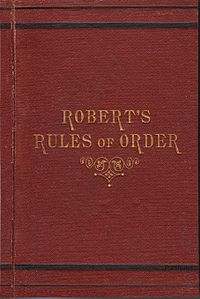
Fig.1 The handsome front cover of the first edition of Robert’s Rules of Order (1876): these model rules, based upon the practices of the US Congress, remain widely adopted across the USA, their updating being undertaken by the Robert’s Rules Association, most recently in 2011.

Once, many years ago, I was nominated by the London education authority – then in the form of the Inner London Education Authority or ILEA – onto a charitable trust in Battersea, where I live. I accepted, not with wild enthusiasm, but from a sense of civic duty. The Trust was tiny and then did not have much money. It was rumoured that a former treasurer in the 1930s had absconded with all the spare cash. But anyway in the early 1970s the Trust was pottering along and did not seem likely to be controversial.

My experience as a Trustee was, however, both depressing and frustrating. The Trust was then named Sir Walter St. John’s Trust; and it exists today in an updated and expanded guise as the Sir Walter St. John’s Educational Charity (www.swsjcharity.org.uk). It was founded in 1700 by Battersea’s local Lord of the Manor, after whom it is named. In the 1970s, the Trust didn’t do much business at all. The only recurrent item on the agenda was the question of what to do about a Victorian memorial window which lacked a home. The fate of the Bogle Smith Window (as it was known) had its faintly comic side. Surely somewhere could be found to locate it, within one or other of the two local state-sector grammar schools, for which the Trust was ground landowner? But soon the humour of wasting hours of debate on a homeless window palled.

I also found it irksome to be treated throughout with deep suspicion and resentment by most of my fellow Trustees. They were Old Boys from the two schools in question: Battersea Grammar School and Sir Walter St. John School. All the Trust business was conducted with outward calm. There were no rows between the large majority of Old Boys and the two women appointed by the ILEA. My fellow ILEA-nominee hardly ever attended; and said nothing, when she did. Yet we were treated with an unforgiving hostility, which I found surprising and annoying. A degree of misogyny was not unusual; yet often the stereotypical ‘good old boys’ were personally rather charming to women (‘the ladies, God bless’em’) even while deploring their intrusion into public business.

But no, these Old Boys were not charming, or even affable. And their hostile attitude was not caused purely by misogyny. It was politics. They hated the Labour-run ILEA and therefore the two ILEA appointees on the Trust. It was a foretaste of arguments to come. By the late 1970s, the Conservatives in London, led by Councillors in Wandsworth (which includes Battersea) were gunning for the ILEA. And in 1990 it was indeed abolished by the Thatcher government.

More than that, the Old Boys on the Trust were ready to fight to prevent their beloved grammar schools from going comprehensive. (And in the event both schools later left the public sector to avoid that ‘fate’). So the Old Boys’ passion for their cause was understandable and, from their point of view, righteous. However, there was no good reason to translate ideological differences into such persistently rude and snubbing behaviour.

Here’s where the rulebook came into play. I was so irked by their attitude – and especially by the behaviour of the Trust’s Chair – that I resolved to nominate an alternative person for his position at the next Annual General Meeting. I wouldn’t have the votes to win; but I could publicly record my disapprobation. The months passed. More than a year passed. I requested to know the date of the Annual General Meeting. To a man, the Old Boys assured me that they never held such things, with something of a lofty laugh and sneer at my naivety. In reply, I argued firmly that all properly constituted civic bodies had to hold such events. They scoffed. ‘Well, please may I see the Trust’s standing orders?’ I requested, in order to check. In united confidence, the Old Boys told me that they had none and needed none. We had reached an impasse.

At this point, the veteran committee clerk, who mainly took no notice of the detailed discussions, began to look a bit anxious. He was evidently stung by the assertion that the Trust operated under no rules. After some wrangling, it was agreed that the clerk should investigate. At the time, I should have cheered or even jeered. Because I never saw any of the Old Boys again.

Several weeks after this meeting, I received through the post a copy of the Trust’s Standing Orders. They looked as though they had been typed in the late nineteenth century on an ancient typewriter. Nonetheless, the first point was crystal clear: all members of the Trust should be given a copy of the standing orders upon appointment. I was instantly cheered. But there was more, much more. Of course, there had to be an Annual General Meeting, when the Chair and officers were to be elected. And, prior to that, all members of the Trust had to be validly appointed, via an array of different constitutional mechanisms.

An accompanying letter informed me that the only two members of the Trust who were correctly appointed were the two ILEA nominees. I had more than won my point. It turned out that over the years the Old Boys had devised a system of co-options for membership among friends, which was constitutionally invalid. They were operating as an ad hoc private club, not as a public body. Their positions were automatically terminated; and they never reappeared.

In due course, the vacancies were filled by the various nominating bodies; and the Trust resumed its very minimal amount of business. Later, into the 1980s, the Trust did have some key decisions to make, about the future of the two schools. I heard that its sessions became quite heated politically. That news was not surprising to me, as I already knew how high feelings could run on such issues. These days, the Trust does have funds, from the eventual sale of the schools, and is now an active educational charity.

Personally, I declined to be renominated, once my first term of service on the Trust was done. I had wasted too much time on fruitless and unpleasant meetings. However, I did learn about the importance of the rulebook. Not that I believe in rigid adhesion to rules and regulations. Often, there’s an excellent case for flexibility. But the flexibility should operate around a set of framework rules which are generally agreed and upheld between all parties.

Rulebooks are to be found everywhere in public life in constitutionalist societies. Parliaments have their own. Army regiments too. So do professional societies, church associations, trade unions, school boards, and public businesses. And many private clubs and organisations find them equally useful as well. Without a set of agreed conventions for the conduct of business and the constitution of authority, there’s no way of stopping arbitrary decisions – and arbitrary systems can eventually slide into dictatorships.

As it happens, the Old Boys on the Sir Walter St. John Trust were behaving only improperly, not evilly. I always regretted the fact that they simply disappeared from the meetings. They should at least have been thanked for their care for the Bogle Smith Window. And I would have enjoyed the chance to say, mildly but explicitly: ‘I told you so!’

Goodness knows what happened to these men in later years. I guess that they continued to meet as a group of friends, with a great new theme for huffing and puffing at the awfulness of modern womanhood, especially the Labour-voting ones. If they did pause to think, they might have realised that, had they been personally more pleasant to the intruders into their group, then there would have been no immediate challenge to their position. I certainly had no idea that my request to see the standing orders would lead to such an outcome.

Needless to say, the course of history does not hinge upon this story. I personally, however, learned three lasting lessons. Check to see what civic tasks involve before accepting them. Remain personally affable to all with whom you have public dealings, even if you disagree politically. And if you do join a civic organisation, always study the relevant rulebook. ‘I tried to tell them so!’ all those years ago – and I’m doing it now in writing. Moreover, the last of those three points is highly relevant today, when the US President and US Congress are locking horns over the interpretation of the US constitutional rulebook. May the rule of law prevail – and no prizes for guessing which side I think best supports that!

For further discussion, see Twitter

To read other discussion-points, please click here

To download Monthly Blog 99 please click here
https://www.penelopejcorfield.com/wp-content/uploads/2019/02/2019-03-No1-Roberts-Rules-of-Order-1876.jpg 299 200 Penelope J. Corfield https://www.penelopejcorfield.com/wp-content/uploads/2020/12/P.J.C.png Penelope J. Corfield2019-03-01 00:43:092021-01-12 18:52:56MONTHLY BLOG 99, WHY BOTHER TO STUDY THE RULEBOOK?

MONTHLY BLOG 79, 2017 – ANOTHER SUMMER OF LOVE?

1 July 2017/in Civics, Monthly Blog/by Penelope J. Corfield

If citing, please kindly acknowledge copyright © Penelope J. Corfield (2017)

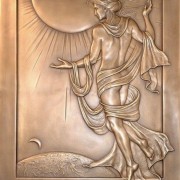
Youth, youth: ‘it’s wasted on the young’, etc. But not this time. Having in my BLOG/78 (June 2017) chastised the young for not voting,1 it’s only right now to applaud their mass re-entry into electoral politics at the June 2017 General Election. It makes a huge difference across the board. And I’m not writing that purely as a Labour Party grass-root (though the majority of new young voters did vote Labour). I’m writing that because systemic non-participation of those who can potentially play a role is bad for the wider community, generating a simmering mood of distrust, cynicism, negativism and alienation. Are we ready for another summer of love, fifty years after 1967?
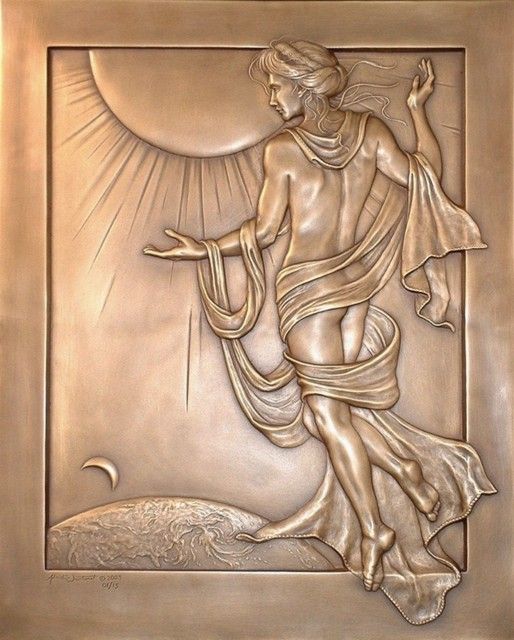
2017-07 No1 Aurora Goddess of Dawn by Heidi Wastweet 2003

Aurora Goddess of Dawn
© Heidi Wastweet (2003)

Of course, there is an electoral proviso. In 2017, youth turnout was 57 per cent among 18 to 19 year-olds, 59 per cent among 20 to 24 year-olds, and 64 per cent among 25 to 29 year-olds.2 All those figures marked significant increases over comparable levels in 2015, when turnout by those aged 18-24 was somewhere between 43-44 percent.3 Yet there is still room for more. And there was no doubt much regional variation, with especially high youth participation in constituencies with many students on the electoral roll, and lower participation elsewhere. But, hey, no complaints: it is a great development, from the point of view of a properly functioning democracy, full stop. And the return to the language of solidarity and love, after recent atrocities, is a splendid antidote to years of political emphasis upon atomised individuals.

Many of the young electors in their 20s who joined the Labour campaign in Battersea 2017 remind me of my own peer group in our 20s when we joined the Labour Party in the later 1960s.4 We too were full of energy and optimism. Also slightly naïve, in retrospect. But full of collective and individual confidence that we could resolve the problems of the world.5

In sociological terms, there are similarities too: lots of well educated activists, coming from middle-class backgrounds or from rising families, one generation up from the working class. However, one visible difference now, in London at any rate, is a welcome one: the ethnic composition of young Labour activists is much more relaxedly mixed than it was in our youth – reflecting long-term changes in the broader society – and changes among our friends and within our own families too.

What happened to the current of youth optimism and participation in the 1960s? It achieved quite a lot, especially in cultural, gender and ethnic politics. But it got diverted in the 1970s into a rampant individualism in lifestyles (‘tune in, drop out and do your own thing’) which eventually led to a form of anti-politics. Youth protests fizzled out. Moreover, the leftish youth politics of the 1960s triggered a militant counter-cultural resistance from the right, which fostered the successes in the 1980s of Thatcher in the UK and Reagan in the USA. Their hostility to ‘the Sixties’ was, in its way, a compliment to the impact of youth culture. Their successful counter-attack, however, simultaneously revealed how vulnerable, divided, and disorganised the Sixties cultural moment was and remained. It lacked the capacity to organise and survive.

Will the current youth involvement also fade away and eventually become dissipated? It’s an obvious risk. It’s hard for a mass movement to remain radiantly optimistic all the time, especially when encountering defeats as well as victories. On the other hand, there’s no necessity for history to repeat itself. The anti-state, anti-regulation, laissez-faire nostrums of the hard political right are now in trouble. The time is ripe for a Zeitgeist shift, which is already happening.

Furthermore, the young electorate today has a lot of really practical issues upon which to focus: the cost of education; the lack of available housing; the degradation of work conditions in the gig-economy; the need to surmount ethnic, class and religious divisions; and so forth. Such issues should help to keep the political focus strongly upon the immediate and the practical. I hope that lots of youthful activists will stand for office, locally and nationally; and/or work in community and political organisations on the ground, to prevent the current surge of involvement from becoming atomised and dissipated.

Oh yes, and another thing: those who really want to achieve changes have to dig in for the long haul. It means getting into organisations and sticking with them. And that means working with the continuing ‘golden oldies’ from successive generations, who were once themselves optimistic youth. Let everyone, who wishes to be a youthful activist, be allowed to be one, without age discrimination.

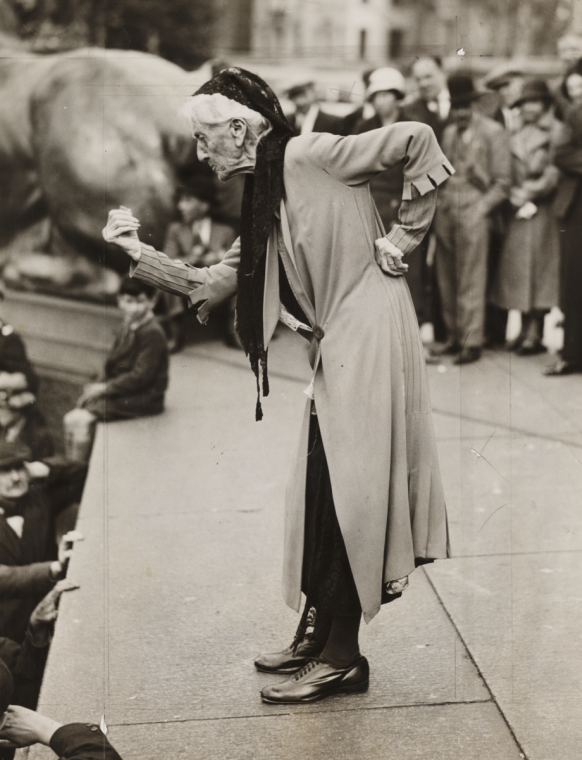
Battersea Labour provides a sterling example. Charlotte Despard (1844-1939) campaigned for many causes during her long lifetime, after becoming triggered into grass-roots activism at the age of 40. Among other things, she was a suffragette, a founder of Labour in Battersea, and an advocate of non-violent resistance, who influenced Gandhi and Martin Luther King.6 Charlotte Despard’s last public engagement saw her addressing a mass anti-fascist rally in Trafalgar Square in June 1933. She was then a young old lady aged 89. Let’s hope that we all stay as committed and indefatigable as was Despard, so that Solidarity and Love last for more than a summer.

2017-07 No2 Despard in Trafalgar Square 1933

Charlotte Despard, at the age of 89, addressing an Anti-Fascist Rally in Trafalgar Square in June 1933: photo by James Jarché for the Daily Herald

1 P.J. Corfield, ‘Who Cares? Getting People to Vote’, Monthly BLOG/78 (June 2017)

2 Voters by Age from YouGov survey, as reported in The Independent, 14 June 2017: http://www.independent.co.uk/news/uk/politics/election-2017-labour-youth-vote-under-40s-jeremy-corbyn-yougov-poll-a7789151.html

3 From Ipsos/MORI survey, as reported by Intergenerational Foundation (2015): http://www.if.org.uk/wp-content/uploads/2015/05/How-did-young-people-vote-at-the-2015-general-election.pdf

4 We appear in DVD Red Battersea: One Hundred Years of Labour, 1908-2008 (2008), directed by M. Marchant; scripted by P.J. Corfield. Available on YouTube: http://youtu.be/ahKt1XoI-II; and also via Battersea Labour Party website: http://www.battersealabour.co.uk/redbattersea

5 A. Marwick, The Sixties: Cultural Revolution in Britain, France, Italy and the United States, c.1958-74 (Oxford, 1998); T. Gitlin, The Sixties: Years of Hope, Days of Rage (New York, 1993); J.S. Baugess and A.A. Debolt (eds), Encyclopedia of the Sixties: A Decade of Culture and Counterculture (Oxford, 2012).

6 See P.J. Corfield, ‘Commemorating Battersea’s Charlotte Despard … in Battersea’, Battersea Matters, ed. J. Sheridan (Autumn, 2016), p. 11; M. Mulvihill, Charlotte Despard: A Biography (1989).

For further discussion, see Twitter

To read other discussion-points, please click here

To download Monthly Blog 79 please click here

https://www.penelopejcorfield.com/wp-content/uploads/2017/07/2017-07-No1-Aurora-Goddess-of-Dawn-by-Heidi-Wastweet-2003.jpg 640 514 Penelope J. Corfield https://www.penelopejcorfield.com/wp-content/uploads/2020/12/P.J.C.png Penelope J. Corfield2017-07-01 12:00:052021-01-12 18:53:03MONTHLY BLOG 79, 2017 – ANOTHER SUMMER OF LOVE?
Search Search

Monthly Blogs

  • MONTHLY BLOG 184, THE MOON – FAMILIAR FRIEND OR LONELY STRANGER? 2 April 2026
  • MONTHLY BLOG 183, HICKORY DICKORY DOCK! IN MEMORY OF MY LATE BROTHER JULIAN, OUR HAPPY CHILDHOOD TOGETHER, AND HIS LIFELONG SENSE OF DROLL HUMOUR 1 March 2026
  • MONTHLY BLOG 182, TO LAUGH OR CRY? RESPONDING TO ACADEMIC CRITICISMS 2 February 2026
  • MONTHLY BLOG 181, A YEAR OF POEMS 3 January 2026
  • MONTHLY BLOG 180, TIME & INSPIRATION 1 December 2025
  • MONTHLY BLOG 179, IDENTIFYING DIFFERENT ERAS OF TIME: POTENTIAL & PITFALLS … 1 November 2025
  • MONTHLY BLOG 178, THINKING THROUGH TIME AT ARTHUR’S STONE IN HEREFORDSHIRE 1 October 2025
  • MONTHLY BLOG 177, SONGS ABOUT TIME 3 September 2025

Categories

  • 2026 – Year of Poetry
  • Autobiography
  • Civics
  • Current Affairs
  • Family Memories
  • History
  • Monthly Blog
  • Notices
  • Personal
  • Reviews
  • Skills
  • Time

Archives

Tags

academics agenda ancestry battersea britain christianity continuity degree diagenesis dialectical discussion education eighteenth century ethnicity Georgian government historian historians history humanities humans knowledge labour labour party language London metamorphosis paradigm shift Penelope J Corfield poet policy politicians politics professor research students teachers time traditions transformation universities university vocational voters writing

Penelope J. Corfield

Penelope J. Corfield is a historian, lecturer and education consultant. She recently served as the President of the International Society for Eighteenth-Century Studies (ISECS).

Recent Posts

  • MONTHLY BLOG 184, THE MOON – FAMILIAR FRIEND OR LONELY STRANGER? 2 April 2026
  • MONTHLY BLOG 183, HICKORY DICKORY DOCK! IN MEMORY OF MY LATE BROTHER JULIAN, OUR HAPPY CHILDHOOD TOGETHER, AND HIS LIFELONG SENSE OF DROLL HUMOUR 1 March 2026

CONTACT

Penelope J. Corfield Historian
contact me here

SEARCH THIS SITE

Search Search

SHARE THIS

QUICK LINKS

© Copyright - Penelope J Corfield 2026. All rights reserved. | Dancing Dates Film by Edwina Hannam | Site by Starling Design
  • Link to X
  • Link to Rss this site
  • Link to Mail
Scroll to top Scroll to top Scroll to top

This site uses cookies. By continuing to browse the site, you are agreeing to our use of cookies.

OKLearn more

Cookie and Privacy Settings


How we use cookies

We may request cookies to be set on your device. We use cookies to let us know when you visit our websites, how you interact with us, to enrich your user experience, and to customize your relationship with our website.

Click on the different category headings to find out more. You can also change some of your preferences. Note that blocking some types of cookies may impact your experience on our websites and the services we are able to offer.

Essential Website Cookies

These cookies are strictly necessary to provide you with services available through our website and to use some of its features.

Because these cookies are strictly necessary to deliver the website, refusing them will have impact how our site functions. You always can block or delete cookies by changing your browser settings and force blocking all cookies on this website. But this will always prompt you to accept/refuse cookies when revisiting our site.

We fully respect if you want to refuse cookies but to avoid asking you again and again kindly allow us to store a cookie for that. You are free to opt out any time or opt in for other cookies to get a better experience. If you refuse cookies we will remove all set cookies in our domain.

We provide you with a list of stored cookies on your computer in our domain so you can check what we stored. Due to security reasons we are not able to show or modify cookies from other domains. You can check these in your browser security settings.

Google Analytics Cookies

These cookies collect information that is used either in aggregate form to help us understand how our website is being used or how effective our marketing campaigns are, or to help us customize our website and application for you in order to enhance your experience.

If you do not want that we track your visit to our site you can disable tracking in your browser here:

Other external services

We also use different external services like Google Webfonts, Google Maps, and external Video providers. Since these providers may collect personal data like your IP address we allow you to block them here. Please be aware that this might heavily reduce the functionality and appearance of our site. Changes will take effect once you reload the page.

Google Webfont Settings:

Google Map Settings:

Google reCaptcha Settings:

Vimeo and Youtube video embeds:

Other cookies

The following cookies are also needed - You can choose if you want to allow them:

Accept settingsHide notification only