
MONTHLY BLOG 8, THE BRITISH LABOUR PARTY: VIEWED SOCIOLOGICALLY, ORGANISATIONALLY AND IDEOLOGICALLY
If citing, please kindly acknowledge copyright © Penelope J. Corfield (2011)
What follows is an account of the British Labour Party, organised not by chronology but in answer to three broad thematic questions: who support it? how is the Party organised? and what ideology does it represent?
My commentary was first presented as a short talk at the Battersea Labour Party in late April 2011, where it provoked some interest. So I decided to expand it into my May Discussion-Point – for people of all parties – and not just those who, like me, have stuck with the Labour Party, often with very mixed emotions. As I wrote, the text expanded into a short essay, which can be read in the attached pdf file.
In summary, the arguments run as follows:
Who? The Labour Party has never been just the party of the ‘workers’. Instead, it’s a coalition between the organised and unionised workforce plus the professional middle class and the left-wing intelligentsia. Clause IV of the 1918 constitution cheerfully defined them as ‘workers by hand or by brain’. (These are generalisations, which don’t apply to all individuals, needless to say).
Ranked against them is the rival alliance of the patriarchal upper class with the now predominant commercial middle class and the right-wing intelligentsia (again a generalisation), seeking votes from working-class Tories. Meanwhile, the unskilled working class, which is non-unionised, very poor, politically inactive, and to an extent electorally non-registered, tends to be neglected on all sides.
On this basis, the Labour coalition has continuing strength in its urban and industrial heartlands, tho these are vulnerable to economic erosion (cf the disappearance of the mining industry). And the core alliance between the ‘industrial’ and ‘political’ wings of the movement needs constant renewal.
How organised? Political parties on the left (and on the far right) tend to be more fissiparous and liable to splits than are those on the centre-right. Labour has long experience with rival parties. After all, it was not the first in the field. The Independent Labour Party began in 1892 and operated as a left-wing ginger-group within the new Labour Party (formed 1906). Then in the political crisis of 1931, the ILP split from Labour, which was hammered at the polls. Only after the Labour landslide of 1945 did the remaining ILP MPs join the mainstream, leaving the ILP to dwindle into a quiet demise in 1975.
After that, there was a quite different crisis in 1981. This time the split was on the Labour right. The four senior politicians (quickly named as the Gang of Four by the press) left to form a moderate Social Democratic Party, now merged into the Liberal Democrats. In the event, the scale of the secession was not nearly as great as was feared. But internal arguments between left and right, later updated as debates between Old and New Labour, long continued. Little wonder that party leaders always stress the need for internal concord: ‘Unity is Strength, Brothers’. Considerable harmony was achieved in the 1990s, when all were united against the Thatcher/Major governments.
Then Labour in power from 1997-2010 continued a top-down command style that discouraged internal party debates. It worked up to a point, but alienated too many among the rank-and-file. Labour’s individual membership post-1980 (when reliable records start) reached a peak in 1997 but by 2010 had fallen to less than half that level. Now the party is not feuding; but it does need some rebalancing between unity and constructive debate.
What ideology? Both in power and in its programmes, Labour has tended in practice to be pragmatic. The remark ‘Socialism is what a Labour government does’ – regularly attributed to Herbert Morrison – marked an aversion to ideological purity that was characteristic, although not universal, among Labour’s leaders. However, political parties must have some sort of political compass. Debates cannot be avoided, both about aims and best means of implementation.
Two prominent strands within Labour thinking can be defined as the socialist and the social democratic, although actual policies have often blurred the differences. The first, sometimes also known as Old Labour, wanted radical redistribution of wealth and power, as well as public ownership of the ‘means of production and distribution’. (But, unlike the communist parties, this tradition did not advocate a one-party date). The second, or social democratic tradition (although not using that name, especially after the Gang of Four split) has also endorsed redistribution as an aim but has always been much more favourable to the market economy. In recent times, the New Labour formulation has become predominant, with its mantra of ‘choice’. That seemed to move away from state control, especially in the economy. On the other hand, the Blair/Brown governments proved to be increasingly fond of centralised direction, with attempts at micro-managing via the unpopular targets culture almost all aspects of central and local administration, and the work of many arms-length institutions as well. That contradiction generated more than a little tension.
Today things are moving on from the disputes between Old and New Labour. The first tradition has lost conviction; the second has lost momentum. People now want to debate, without tearing the Party apart. New recruits want action, not philosophy seminars. There is much to do. In its first century, Labour has waxed and waned and waxed again, in the characteristically episodic manner of left-wing movements. Between 1910 and 2010 it was in government for no more than 33 years.1 But Labour has helped to define British politics, both in and out of power. Above all, its mid-twentieth-century creation of the Welfare State was truly monumental. And, in a new guise in a new century, there is much yet to do …
1 This calculation is a crude year-count, totalling Labour governments in 1924, 1929-31, 1945-51, 1964-70, 1974-79, and 1997-2010 – but excluding Labour’s contribution to the wartime coalition 1940-45.
For further discussion, see Twitter
To read other discussion-points, please click here
To download Monthly Blog 8 please click here
 In fact, the reality is different in many ways. The tertiary sector is very variegated. It has faults, but they are often too neo-brutally managerialist rather than slumberingly Porterhousian.
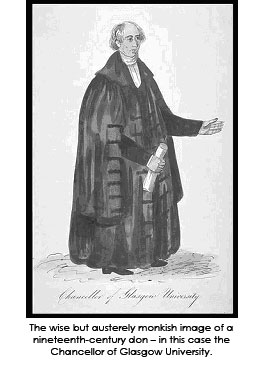
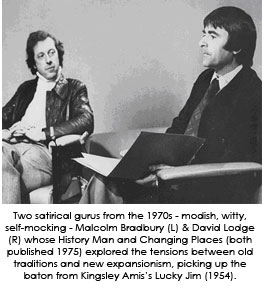 Divisions between Universities are now institutionalised into rival lobby organisations. The Russell Group (founded 1994) represents 20 Universities, self-defined as the research elite, constituting a limited company (no: 6086902), operating from a base in Cambridge. Feeling excluded, another 19 smaller research institutions created the 1994 Group to defend their research credentials. It operates with an Executive Board, chaired by an academic, with at least five permanent staff members. A similar corporate structure services the University Alliance, which represents 23 ‘major business-focused’ Universities. And from 1997 onwards the Campaign for Mainstream Universities (CMU) has organised 27 former Polytechnics and University colleges – then known as ‘new’ Universities although many already had long histories. This group now operates as a London-based Think-tank, known as the Million+ Group. These divisions mark a classic case of self-divide and be ruled.
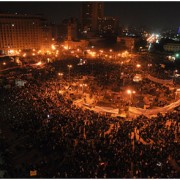
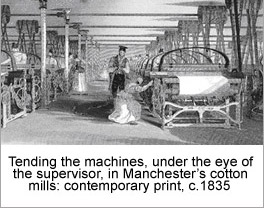 Secondly: political revolutions also need to be located within a spectrum of different sorts and degrees of change. It is very rarely, if ever, that everything is transformed all at once. The rhetoric of dramatic metamorphosis is both fearful and hopeful: ‘All changed, changed utterly;/ A terrible beauty is born’, as Yeats saluted the Irish Easter Rising in 1916. Yet, when the dust dies down, continuity turns out to have dragged at the heels of revolution after all. What is known as admirable heritage to its fans is deplorable inertia to its critics. Thus Karl Marx once denounced with righteous passion: ‘the tradition of all the dead generations [that] weighs like a nightmare on the brains of the living’.
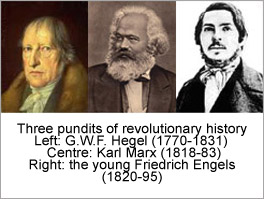 Yet no. Not only does fundamental change frequently develop via evolutionary rather than revolutionary means; but revolutions do not always introduce macro-change. They can fail, abort, halt, recede, fudge, muddle, diverge, transmute and/or provoke counter-revolutions. The complex failures and mutations of the communist revolutions, which were directly inspired in the twentieth century by the historical philosophy of Marx and Engels, make that point historically, as well as theoretically.
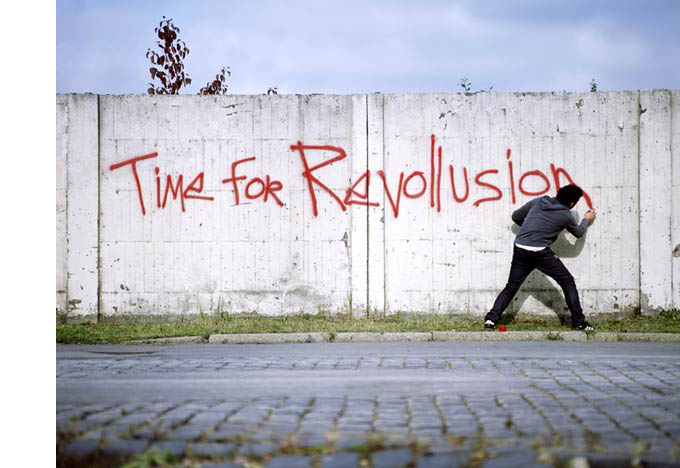
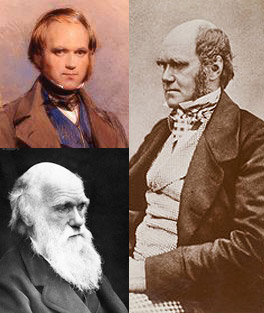 Lastly, for historians, it is also not surprising to find that gradual change is a powerful force in human history. There are many long-term trends that are slow and relatively imperceptible at the time. One example is the world-wide spread of literacy since circa 1700. Certainly there have been oscillations in the trend; but it is unlikely to be reversed, short of global catastrophe.

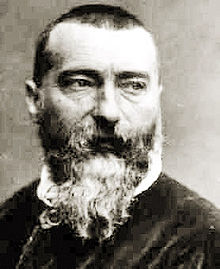 Of course, Karr was not completely right. Changes undoubtedly do happen, both gradually and dramatically. But they are always tempered by the power of Continuity. In fact, innovations may fail or prove to be counterproductive – either because opponents consciously strive to circumvent change – or because the innovations are imperfectly planned and/or implemented – or because the innovations have anyway little intrinsic chance of success.