
Tag Archive for: mathematics

MONTHLY BLOG 183, HICKORY DICKORY DOCK! IN MEMORY OF MY LATE BROTHER JULIAN, OUR HAPPY CHILDHOOD TOGETHER, AND HIS LIFELONG SENSE OF DROLL HUMOUR

If citing, please kindly acknowledge copyright © Penelope J. Corfield (2026)

Fig.1. ‘Hickory Dickory Dock!’ – classic nursery rhyme:

‘Hickory Dickory Dock!
The mouse ran up the clock.
The clock struck one!
The mouse ran down …
Hickory Dickory Dock!’

Hickory Dickory Dock! My late brother, Julian Corfield, who died on 1 January 2026 at the age of 77, loved clocks. So this is the rhyme that I choose to introduce my memories of him – not that I ever remember seeing a mouse on any of his clocks. (But that’s borrowing too much from Julian’s own literalism! … It’s totally childish song that infallibly reminds me of our happy childhood together).

Julian, also known as Jules, Julo, and (when we were very young) as Julie, was immensely consistent throughout his life. He was serious-minded, clever, meticulous, and focused. He loved mathematics, chess and precise music (eg. anything by Bach). He was personally reserved and reticent; and, as an adult, he spent long times on his own, content with his own company. At the same time, Jules was also kind, considerate, decent-minded, gentle, and caring. He worked well with others, and enjoyed the companionship of his colleagues and former students at the School where he taught maths; his friends in his chess club; his fellow workers in the charity Southend Age Concern; and his neighbours in St John’s Court.1

Above all, too, Julian had a droll and dry sense of humour, which initially could take people by surprise. He did not look like the sort of person who was constantly cracking jokes. (And his jokes were certainly not bawdy. Nor were they sardonic or hostile). But Jules could always see the funny side of life’s ups and downs – and manage to laugh, however dryly. He also loved shared jokes and shared catch-phrases, at which he could laugh knowingly with others.

My own shared joke-phrase with him was ‘Pawn to King4’, which is a classic opening move in chess.  Goodness knowns when and how this little sort-of-joke originated, But it remained our little joke-phrase. Therefore, whenever I phoned him, I would greet him: ‘Hello, Jules: Pawn to King4’, so that he knew immediately which sister was now plaguing him. And whenever, by phone or mail, I varied this phrase, by suggesting some other opening gambit, then Jules would instantly tell me, or send me an email, to let me know how much danger my pawn was in – and how many moves it would take for him to check-mate me. (I’m not a chess-player myself but I quickly learned which opening moves to avoid!)

One thing that always impressed me was how well Jules got on with the brother who came between the two of us in age. He was Adrian, usually known as Ady, who, sadly, died at the age of 44. The two of them could not have been more different. Adrian was out-going, gregarious, hating to be alone. Jules was the reverse. Adrian was very clever, but slapdash and casual about any task he was set. Julian – also very clever – was totally meticulous about everything he did. Adrian, as an adult, had a sequence of feisty girl-friends; and he loved passionately. By contrast, Julian was celibate by choice.

Yet, as kids, the two brothers – just two years apart by age – always got on very well and played happily together. Perhaps they appreciated their mutual ‘otherness’. As they got older, Julian did seek his own quiet space, away from Adrian, who was always restless and ‘on the go’. Yet that did not detract from their mutual affection, which was based on long familiarity. And certainly, when we heard of Ady’s death, Julian displayed the greatest distress and anguish that I have ever seen from him, throughout his life. (I was also distraught – and we shared our grief together).

Fig.2

A fine recent photo of
Julian Corfield (2025),
shared with the Corfield family by
a young Southend friend,
Olivia Holbrook-Morris

A final anecdote, which became a family classic. Jules, by the way, always disputed the details of this story. But I was a witness and I’m pretty confident that it’s correct. The context was an early morning Sunday ritual, when we kids went into the parental bedroom and shared a family snuggle, all of us together in or on the big bed. These were always happy times for us all. Our father made up amusing stories to recount to us; and he played silly games with us, such as tossing us up and down in the blankets. Meanwhile, our mother smiled benignly, and enjoyed the pot of tea that I (as the oldest child) brought up for them, as soon as I was old enough to be entrusted with the task. It was her special Sunday morning treat. Usually, she was the busy one, rushing around to look after us all. But on Sunday mornings, she savoured her tea in bed, whilst all the family sat close by, smiling at her!

Anyway, at some point on one Sunday morning our father asked Julian if he would turn on the taps to run him a bath. Julian unhesitatingly left for the nearby bathroom and came back reporting that he had obeyed. It was a big, deep, old-fashioned bathtub that would not fill instantly. So some slow moments passed before our father asked Julian to check whether the bathtub was full. He came back, saying: No. Two further trips followed, each time Julian returning with another negative verdict.

Finally, our exasperated father asked just how much water was in the both?. None replied Julian. And when the paterfamilias gave every sign of exploding with incredulity and wrath, Julian explained, simply: ‘Well, you said: turn on the taps! You didn’t say: put the plug in’.

What a triumph for Julian’s literalism! Was he doing it because that is how he copes with the world? Or was he being sly, in effect teaching our father the perils of not being fully explicit? Julian was aged about nine or ten at the time. I am sure that he was just being himself – that is, totally literal-minded – and certainly not consciously seeking to annoy. That was not his style! Eventually, our father, who was usually quick to laugh, was persuaded to see the funny side … and the story became a family classic. What’s more, it remains a testament to the quietly quirky individualism that Julian maintained, unbrokenly, all his life! Julian Corfield: RIP. [And Pawn to K4].

ENDNOTES:

1 It’s a great pleasure to acknowledge here the warmth and positive input from the fifty or so friends from Southend, who came to our local commemoration of Julian’s life. The event was held on Saturday 7 February 2026, at the Westcliff Hotel, Westcliff Parade, Southend. We started with an informal buffet lunch and then proceeded to an Open Session, when anyone who wished was welcome to stand up and share with us their thoughts and feelings about Julian. There was absolutely no shortage of speakers. And the outcome was truly moving. There was no doubt that we were all talking about the same unassuming, modest person, who was so widely loved and appreciated. He was a reticent person. But Julian lived not in isolation but within many networks of true friendships.

For further discussion, see

To read other discussion-points, please click here

To download Monthly Blog 183 please click here
MONTHLY BLOG 94, THINKING LONG – STUDYING HISTORY

If citing, please kindly acknowledge copyright © Penelope J. Corfield (2018)

History is a subject that deals in ‘thinking long’. The human capacity to think beyond the immediate instant is one of our species’ most defining characteristics. Of course, we live in every passing moment. But we also cast our minds, retrospectively and prospectively, along the thought-lines of Time, as we mull over the past and try to anticipate the future. It’s called ‘thinking long’.

Studying History (indicating the field of study with a capital H) is one key way to cultivate this capacity. Broadly speaking, historians focus upon the effects of unfolding Time. In detail, they usually specialise upon some special historical period or theme. Yet everything is potentially open to their investigations.

Sometimes indeed the name of ‘History’ is invoked as if it constitutes an all-seeing recording angel. So a controversial individual in the public eye, fearing that his or her reputation is under a cloud, may proudly assert that ‘History will be my judge’. Quite a few have made such claims. They express a blend of defiance and  optimism. Google: ‘History will justify me’ and a range of politicians, starting with Fidel Castro in 1963, come into view. However, there’s no guarantee that the long-term verdicts will be kinder than any short-term criticisms.

True, there are individuals whose reputations have risen dramatically over the centuries. The poet, painter and engraver William Blake (1757-1827), virtually unknown in his own lifetime, is a pre-eminent example. Yet the process can happen in reverse. So there are plenty of people, much praised at the start of their careers, whose reputations have subsequently nose-dived and continue that way. For example, some recent British Prime Ministers may fall into that category. Only Time (and the disputatious historians) will tell.

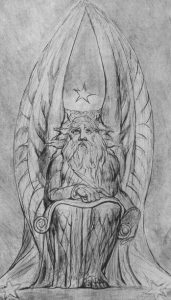
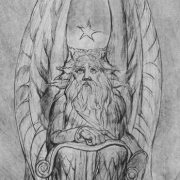
Fig. 1 William Blake’s Recording Angel has about him a faint air of an impish magician as he points to the last judgment. If this task were given to historians, there would be a panel of them, arguing amongst themselves.

In general, needless to say, those studying the subject of History do not define their tasks in such lofty or angelic terms. Their discipline is distinctly terrestrial and Time-bound. It is prone to continual revision and also to protracted debates, which may be renewed across generations. There’s no guarantee of unanimity. One old academic anecdote imagines the departmental head answering the phone with the majestic words: ‘History speaking’.1 These days, however, callers are likely to get no more than a tinny recorded message from a harassed administrator. And academic historians in the UK today are themselves being harried not to announce god-like verdicts but to publish quickly, in order to produce the required number of ‘units of output’ (in the assessors’ unlovely jargon) in a required span of time.

Nonetheless, because the remit of History is potentially so vast, practitioners and students have unlimited choices. As already noted, anything that has happened within unfolding Time is potentially grist to the mill. The subject resembles an exploding galaxy – or, rather, like the cosmos, the sum of many exploding galaxies.

Tempted by that analogy, some practitioners of Big History (a long-span approach to History which means what it says) do take the entire universe as their remit, while others stick merely to the history of Planet Earth.2 Either way, such grand approaches are undeniably exciting. They require historians to incorporate perspectives from a dazzling range of other disciplines (like astro-physics) which also study the fate of the cosmos. Thus Big History is one approach to the subject which very consciously encourages people to ‘think long’. Its analysis needs careful treatment to avoid being too sweeping and too schematic chronologically, as the millennia rush past. But, in conjunction with shorter in-depth studies, Big History gives advanced students a definite sense of temporal sweep.

Meanwhile, it’s also possible to produce longitudinal studies that cover one impersonal theme, without having to embrace everything. Thus there are stimulating general histories of the weather,3 as well as more detailed histories of weather forecasting, and/or of changing human attitudes to weather. Another overarching strand studies the history of all the different branches of knowledge that have been devised by humans. One of my favourites in this genre is entitled: From Five Fingers to Infinity.4 It’s a probing history of mathematics. Expert practitioners in this field usually stress that their subject is entirely ahistorical. Nonetheless, the fascinating evolution of mathematics throughout the human past to become one globally-adopted (non-verbal) language of communication should, in my view, be a theme to be incorporated into all advanced courses. Such a move would encourage debates over past changes and potential future developments too.

Overall, however, the great majority of historians and their courses in History take a closer focus than the entire span of unfolding Time. And it’s right that the subject should combine in-depth studies alongside longitudinal surveys. The conjunction of the two provides a mixture of perspectives that help to render intelligible the human past. Does that latter phrase suffice as a summary definition?5 Most historians would claim to study the human past rather than the entire cosmos.

Yet actually that common phrase does need further refinement. Some aspects of the human past – the evolving human body, for example, or human genetics – are delegated for study by specialist biologists, anatomists, geneticists, and so forth. So it’s clearer to say that most historians focus primarily upon the past of human societies in the round (ie. including everything from politics to religion, from war to economics, from illness to health, etc etc). And that suffices as a definition, provided that insights from adjacent disciplines are freely incorporated into their accounts, wherever relevant. For example, big cross-generational studies by geneticists are throwing dramatic new light upon the history of human migration around the globe and also of intermarriage within the complex range of human species and the so-called separate ‘races’ within them.6 Their evidence amply demonstrates the power of longitudinal studies for unlocking both historical and current trends.

The upshot is that the subject of History can cover everything within the cosmos; that it usually concentrates upon the past of human societies, viewed in the round; and that it encourages the essential human capacity for thinking long. For that reason, it’s a study for everyone. And since all people themselves constitute living histories, they all have a head-start in thinking through Time.7

1 I’ve heard this story recounted of a formidable female Head of History at the former Bedford College, London University; and the joke is also associated with Professor Welch, the unimpressive senior historian in Kingsley Amis’s Lucky Jim: A Novel (1953), although upon a quick rereading today I can’t find the exact reference.

2 For details, see the website of the Big History’s international learned society (founded 2010): www.ibhanet.org. My own study of Time and the Shape of History (2007) is another example of Big History, which, however, proceeds not chronologically but thematically.

3 E.g. E. Durschmied, The Weather Factor: How Nature has Changed History (2000); L. Lee, Blame It on the Rain: How the Weather has Changed History (New York, 2009).

4 F.J. Swetz (ed.), From Five Fingers to Infinity: A Journey through the History of Mathematics (Chicago, 1994).

5 For meditations on this theme, see variously E.H. Carr, What is History? (Cambridge 1961; and many later edns); M. Bloch, The Historian’s Craft (in French, 1949; in English transl. 1953); B. Southgate, Why Bother with History? Ancient, Modern and Postmodern Motivations (Harlow, 2000); J. Tosh (ed.), Historians on History: An Anthology (2000; 2017); J. Black and D.M. MacRaild, Studying History (Basingstoke, 2007); H.P.R. Finberg (ed.), Approaches to History: A Symposium (2016).

6 See esp. L.L. Cavalli-Sforza and F. Cavalli-Sforza, The Great Human Diasporas: The History of Diversity and Evolution, transl. by S. Thomas (Reading, Mass., 1995); D. Reich, Who We Are and Where We Got Here: Ancient DNA and the New Science of the Human Past (Oxford, 2018).

7 P.J. Corfield, ‘All People are Living Histories: Which is why History Matters’. A conversation-piece for those who ask: Why Study History? (2008) in London University’s Institute of Historical Research Project, Making History: The Discipline in Perspective www.history.ac.uk/makinghistory/resources/articles/why_history_matters.html; and also available on www.penelopejcorfield.co.uk/ Pdf1.

For further discussion, see

To read other discussion-points, please click here

To download Monthly Blog 94 please click here