
Penelope J Corfield
  • HOME
    • Index to Blogs
    • Monthly Blogs
    • CONTACT
    • Key to Dancing Dates Film
  • CURRENT
    • President International Association C18 Studies
    • Lectures on offer
    • London University’s Long C18 History Seminar
    • Living in Battersea
    • Career at a Glance
    • PJC Publications
  • BRITISH HISTORY
    • Long C18 Overviews
    • Society & Culture
    • Town Life
    • Electoral History
    • Radical Poets
    • The Professions
    • Religion & Irreligion
  • GLOBAL
    • Urban History Through Time
    • C18 European History Overviews
    • Gender History
    • ‘Racial’ Classifications as Pseudo-Science
    • Responding to Climate Change
    • Advance of the International Sphere
  • TIME & HISTORY
    • Time & The Shape of History (2007)
    • Rethinking Historical Periodisation
    • Dimensions of The Long Term
    • Returning to Big History
  • HISTORY-MAKING
    • Why History Matters
    • History of History
    • Fellow Historians
    • Arts of Academic Assessment
    • Pleasures of Intellectual Life
  • REVIEWS
    • History Book Reviews
      • Social History
      • Approaches to History
      • Big History
    • Theatre Reviews
    • Civic/Political Commentaries
    • Personal Portraits
  • Menu Menu

Tag Archive for: Stephen Hawking

MONTHLY BLOG 76, HUMANS AS COLLECTIVE TIME-TRAVELLERS

1 April 2017/in History, Monthly Blog/by Penelope J. Corfield

If citing, please kindly acknowledge copyright © Penelope J. Corfield (2017)

Particularly in troubled times, it’s enticing to think of escaping not just to another place but to another time: a temporal bridge over troubled waters. In the old folk stories, an individual falls very soundly asleep … and then awakens, to his or her surprise, in another epoch completely. What a relief? Or perhaps not. There’s a myriad of potential destinations both past and future.

Sleeping Beauty, cursed by an evil fairy, lies dormant for one hundred years.1 (Sometimes her hand-maids sleep alongside her too). When she awakes, the Beauty is as young and bonny as ever. The world has grown older but she has not. Moreover, she is being kissed by a young and handsome prince (technically, one hundred years her junior), with whom she falls in love. The story is charming, with many potential meanings, both erotic and otherwise. But what if (a) she recoils from the kiss? or (b) she suddenly shrivels and dies, since she must be well over one hundred years old. That fate befalls ‘She’ in Rider Haggard’s She (1886): the enigmatic and imperious beauty has lived, by dark magic, for endless aeons but, once her real age catches up with her, she ages with extreme rapidity and expires.2 So much for tarrying outside Time.
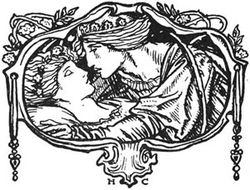
2017-04 No1 sleeping beauty william breakspeare
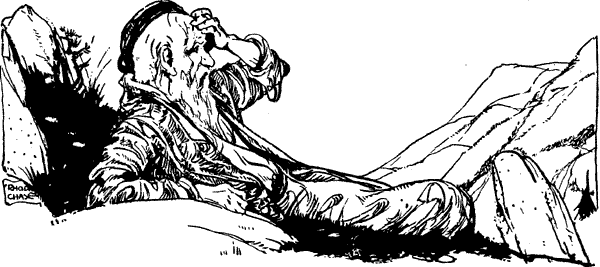
In another variant from an American author in 1819, Rip Van Winkle drinks too heavily and falls asleep for over twenty years. (Hangovers sometimes feel like that). But no-one is kissing him welcome. Van Winkle wakes to find that his beard is long and matted, his rifle rusty, his neighbours changed, and his faithful dog disappeared.3 The story is an updating of a very old folk tale, which appears in many variants in different cultures. It makes a personal drama about change over time. Rip falls asleep as a subject of George III but awakes to find that he an American citizen. There is another change too. His ‘nagging’ wife is dead. In the tale, other ‘henpecked’ husbands in the village wish that they had a similar chance to escape. Ho ho (sarcastically): the benefits of time travel.
2017-04 No2 RipvanwinkleInterestingly, however, there are very obvious conceptual limitations within this imaginary process. Time itself hasn’t actually been stopped or reversed or turned into something different. It’s the individual who has, notionally, jumped from one epoch to another. Within the entire time-travel genre, which was greatly boosted by H.G. Wells’s ingenious Time Machine (1895), it’s axiomatic that the travelling is done by humans while Time continues to unfold as a unidirectional force, in its own mysterious but unalterable style. Its trajectory is often referred to as temporal ‘flow’. Or, more poetically, as ‘Time’s arrow’.

That non-stop background quality is needed to make time-travel stories work. The individual time-jumpers arrive in a new temporal location, either in the past or in the future. Generally, they are unharmed, if sometimes shaken or bemused (or naked, as in the husband of The Time Traveller’s Wife).4 Their subsequent encounters with other humans in either earlier or later worlds then lend themselves to comedy, romance, adventure, satire, terror, political philosophy, prophesy, and/or any combination of such reactions.5

Nonetheless, once in the new situation, the time-travellers find that Time is still flowing on equably. The aberrant circumstances which have permitted their personal shift has not stopped or otherwise disrupted the rest of the cosmos.6

One experiment with reversed-time living was imagined enjoyably by Lewis Carroll in Alice Through the Looking Glass (1871). The scatty White Chess-Queen experiences some of her life backwards. She cries: ‘Oh, oh, oh!’ first, and then pricks her finger painfully. Yet the White Queen does her time-reversal only fitfully. She doesn’t cry ‘Ho, ho, ho!’, as she would if she were yelling in a completely reversed temporal framework. Instead, she carries on talking to Alice in the normal way – not sdrawkcab.7
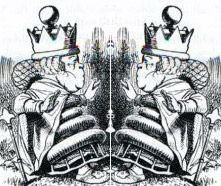
2017-04-No3-White-Queens-in-Looking-GlassIt’s virtually impossible to envisage absolutely everything in the world happening in total temporal reversal. When we run films backwards, often to amusing effect, we are still watching a sequence of images appear in the normal ‘onwards’ time-frame. We are not reversing Time or stepping outside our own temporal framework. If we were, then everything would be utterly transformed. Conversations, which unfold ‘onwards’, would be impossible in reverse-Time. We’d be getting younger, as well as speaking in reverse, thinking in reverse … including, no doubt, speaking before we think.8

Indeed, if Time did something totally astonishing, like disappearing down a cosmic black-plug-hole, then Space and everyone within Space-time would go there too. To our collective amazement and, no doubt, total consternation.

There is a cosmic ‘Chronology Protection Agency’, in the words of physicist Stephen Hawking.9 It binds each era into its own time, preventing it from overlapping or tangling with any other. And given that Time and Space constitute an integral continuum, it means that there is simultaneously a ‘Space-Time Protection Agency’ within the cosmos. Different experiences of motion and speed may occur within its ambit. At ultra-supersonic speeds, the process of time dilation will slow things down, affecting relative time measurements.10 None of those conditions, however, occur outside the framework Space-time.

Two observations follow. One is that we are all time-travellers, travelling collectively at the pace of Time, nano-second by nano-second – or, more accurately, at the pace of Space-time. We can’t jump off on our own. But we do have company for the ride.

And secondly, because we live in Space-time, we can study its manifestations. We are synchro-meshed into the immediate moment: the ever-changing Now! And we are also diachro-meshed into the long term, which means that we can think about both past and future.11 Time is our medium, around us, within us: in all our bodies and in our minds.

1  Sleeping Beauty began as a traditional folk tale, conveyed in classic form by Charles Perrault (1697), adapted by the Brothers Grimm (1812), and much reworked in literature, dance and film: see https://en.wikipedia.org/wiki/Sleeping_Beauty.

2  H. Rider Haggard, She: A History of Adventure, first published in The Graphic (1886/7).

3 From W. Irving, The Sketch Book of Geoffrey Crayon, Gent (1819). For antecedents and cultural variants, see also https://en.wikipedia.org/wiki/Rip_Van_Winkle.

4 A. Niffenegger, The Time Traveller’s Wife: A Novel (2004; 2014).

5 See A. Roberts, Science Fiction (2000); D. Wittenberg, Time Travel: The Popular Philosophy of Narrative (New York, 2013); J. Gleick, Time Travel: A History (2016).

6 P. Davies, How to Build a Time Machine (2001); J.R. Gott, Time Travel in Einstein’s Universe: The Physical Possibilities of Travel through Time (2001); E. Everett and T. Roman, Time Travel and Warp Drives: A Scientific Guide to Shortcuts through Time and Space (Chicago, 2012); and M. Rothman, A Physicist’s Guide to Skepticism: Applying Laws of Physics to Faster-than-Light Travel, Psychic Phenomena, Telepathy, Time Travel, UFOs and Other Pseudoscientific Claims (Buffalo, NY., 1988).

7 L. Carroll, Alice through the Looking Glass (1871).

8 Incidentally, not all cultural systems describe Time as flowing ‘onwards’ or ‘backwards’. Some reverse those directions, identifying Time as coming from ‘in front’ and disappearing ‘behind’. And others prefer ‘upwards’ and ‘downwards’. In all cases, however, there is one prime direction and its reverse.

9 S. Hawking, ‘The Future of the Universe’, in L. Howe and A. Wain (eds), Predicting the Future (Cambridge, 1993), p. 22.

10 P. Davies, About Time: Einstein’s Unfinished Revolution (1995), pp. 57-8.

11 P.J. Corfield, Time and the Shape of History (2007), pp. xiv-xv, 19-25.

For further discussion, see Twitter

To read other discussion-points, please click here

To download Monthly Blog 76 please click here

https://www.penelopejcorfield.com/wp-content/uploads/2017/04/2017-04-No3-White-Queens-in-Looking-Glass.jpg 186 221 Penelope J. Corfield https://www.penelopejcorfield.com/wp-content/uploads/2020/12/P.J.C.png Penelope J. Corfield2017-04-01 12:00:112021-01-12 18:53:04MONTHLY BLOG 76, HUMANS AS COLLECTIVE TIME-TRAVELLERS
Image/2: Not progressive order but chaotic disorder.

MONTHLY BLOG 51, TALKING ABOUT THE SHAPE OF HISTORY

1 March 2015/in History, Monthly Blog/by Penelope J. Corfield

If citing, please kindly acknowledge copyright © Penelope J. Corfield (2015)

The present ‘Temporal Turn’ in ideas and politics means reminding everyone, including all government policy-makers, that everything unfolds in historical context.1  There’s never a tabula rasa – a blank page on which to inscribe the future. The present comes from the past, and legacies from the past are all around us, let alone within us.

Well, that seems obvious enough. Yet insisting that we all have to look to history doesn’t advance things very far, especially since these days historians are (rightly) not giving out easy messages. It’s much easier to say that things are complex than to provide one-word answers.

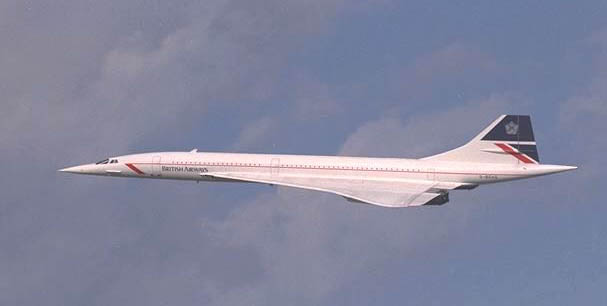
Above all, historians collectively are not saying (as many Victorians did): be optimistic, Progress will win through. Partly that’s because it’s not clear exactly what constitutes historical improvement. When the supersonic Concorde first buzzed the skies over London, Paris, New York and Washington in the 1970s, protesters were firmly told off, with the snappy dictum: ‘You can’t stop Progress’. Yet … thirty years on, it’s Concorde that has gone;2  and it’s the urban protesters over aircraft noise who are slowly winning the battle to get the aviation industry to produce quieter planes. A different sort of Progress, it could be argued. But in the 1970s it was far from clear which version was going to succeed.

It’s a pertinent reminder that technology, which is often cited as the driver of historical change, does not hold all the trump cards. Innovations have to fit in with what humans collectively will accept, even though it may take time/arguments for that decision to become apparent. So, no simple Progress. At best/worst, a struggle or friction between conflicting interests. It’s what Marxists and Hegelians would call an example of dialectical contradiction in operation.
Image/1: Concorde – Was it Progress?

Image/1: Concorde – Was it Progress?
It flew elegantly – and faster than the speed of sound, in commercial service from 1976-2003.

 But it was super-noisy when heard from below; it did not cater for mass transport; and, by the end, its own operational systems were becoming technologically outdated.

Likewise, historians today don’t generally tell the world that ‘it’s all really the Class Struggle’ (though some still do). Or ‘it’s all really the hand of God’ (though some, not usually professional historians, still do). Or ‘it’s all really biological/gender or racial or national destiny’ (ditto).

Instead, the mainstream messages about long-term history are complex, which reflects reality. Indeed, there is an in-built tendency towards finding complexity in professional research: the more one looks, the more one finds. That can be helpful. When talking about some historically-derived situation, the remark ‘Ah well, it’s all very complex!’ can certainly be a good first inoculation against over-simplified nostrums.

On the other hand, historians should be able to say more than that. The art of research is not only to find complexity but also to explain it. Hence if fascinating historical studies offer intricate detail but no overview in conclusion, readers are entitled to feel frustrated.

Sad to say one erudite and fascinating study of three seventeenth-century women falls into that category. Natalie Zemon Davis’s Women on the Margins (1997)3  starts inventively with an imaginary conversation between the protagonists, who never met and knew nothing of each other. They are a Catholic, a Protestant, a Jew – and they don’t want to appear in the same book together. Yet Zemon Davis overrides their (imagined) objection. For her, there is evident analytical interest in studying their very different lives in conjunction. Yet, in her conclusion, she expressly declines to locate these case-studies within any wider history of women. Why not? Who could do that better than Zemon Davis? And she won’t say, what are readers to conclude? That these micro-histories are individually fascinating but collectively meaningless?

Certainly, their stories are not uncomplicated tales of female advancement. But readers would surely welcome an assessment of the changing long-term balance between constraints and opportunities for women – a seventeenth-century dialectic which has hardly ceased in the twenty-first century.

When opening a discussion of these issues, one good exercise is to ask people to explore their own implicit assumptions. If you have to draw the shape of history as a diagram, what image would you draw? The outcome then requires discussion – and gives scope for people then to have second, maybe deeper, thoughts.

When I ask my MA students to undertake this exercise – putting pen to blank paper and letting inspiration flow – they usually respond with bafflement, plus exasperation. One of them told me crossly: ‘I just don’t think like that, Penny’. In response, I urged: ‘Try’. A small minority (these days) draw a line, sometimes pointing upwards or downwards. They may explain their choices either as an expression of faith in Progress, in a distinctly Victorian style, or of deep-grained ecological pessimism. Another minority, rather more fatalistically, declare the answer to be a circle: ‘what goes round comes round’. Such images lead to fruitful discussions of the pros and cons of linear and cyclical views of history.4

But the majority (these days) scribble a confused mass, like a tangled ball of wool, and explain their choice with comments like: ‘Oh, it’s all a mess’. ‘It’s chaos’. ‘There’s no pattern to it’. ‘It’s too complex to explain’. ‘Unexpected things happen’. ‘Contingency rules’. ‘It’s just one accident after another’.
Image/2: Not progressive order but chaotic disorder.

Image/2: Not progressive order but chaotic disorder.

The only Concorde crash, just outside Paris (July 2000), following accidental damage to the plane from debris on the runway.

Very shortly after this photo was taken, 113 people died, 109 airborne and 4 on the ground.

If testimonies were needed to confirm the current absence of agreed Grand Narratives, recounting the long-term course of history, then these responses would provide it. And they lead to good discussions, once these answers are further explored. Sometimes, the advocates of chaotic randomness are very firm in their views. Their arguments may verge upon the notorious Time-heresy, that Time itself lacks all continuity and that each one moment (however brief) is sundered from the following moment.5  At that point, I usually reply: ‘Well if that’s the case, I won’t bother to mark your essays carefully. I’ll throw them into the air and those settling at the top of the heap will get top marks, and those at the bottom will be failed.’ To a man and woman, the students chorus: ‘But, Penny, that’s unfair’. So there is enough through-time coherence and order in the world to encourage people to expect a just assessment of their earlier efforts at some subsequent date.

In fact, those who see history as messy chaos don’t usually mean that there are absolutely no continuities or holding systems which operate through Time. But they do mean that things are so messy that they cannot be reduced to simplicity (except insofar as stating that ‘It’s all chaos’ is in itself a simple answer).

So we are back to encouraging historians, and all others interested in the long term, not just to report but to explain the complications. These are likely to feature an ever-changing mix not only of different forms of change and competing trends, but also deep continuities. As physicist Stephen Hawking predicted, approvingly in 2000: ‘The next [twenty-first] century will be the century of complexity’.6  For historians, the old simplicities of linear or cyclical history may have been outgrown. Yet the Temporal Turn commands us not only to engage in the study of the past (which stretches up to the present moment) but also to explain to the wider world its underlying logic. It’s a big challenge.

1 On the Temporal Turn, see P.J. Corfield, ‘What on Earth is the Temporal Turn and Why is it happening Now?’ BLOG/ 49 (Jan. 2015) and idem, ‘What does the Temporal Turn mean in Practice – for Historians and Non-Historians Alike? BLOG/ 50 (Feb. 2015).

2 Following its first flight in 1969, the supersonic Concorde was used in commercial service from 1976 to 2003: see references in http://en.wikipedia.org/wiki/Concorde

3 N. Zemon Davis, Women on the Margins: Three Seventeenth-Century Lives (Cambridge, Mass., 1997).

4 For an indication of the many possibilities, see E. Zerubavel, Time Maps: Collective Memory and the Social Shape of the Past (Chicago, 2003); and for linear and cyclical histories, see P.J. Corfield, Time and the Shape of History (2007), pp. 49-56, 80-8.

5 See, for example, a publication with an aptly fin-de-millennium title, J. Barbour, The End of Time: The Next Revolution in our Understanding of the Universe (1999).

6 S.W. Hawking, ‘“Unified Theory” is Getting Closer, Hawking Predicts’, interview in San Jose Mercury News (23 Jan. 2000), p. 29A, quoted in A. Sengupta (ed.), Chaos, Nonlinearity, Complexity: The Dynamical Paradigm of Nature (Berlin, 2006), p. vii. See also M. Gell-Mann, Adventures in the Simple and the Complex: The Quark and the Jaguar (New York, 1994).

For further discussion, see Twitter

To read other discussion-points, please click here

To download Monthly Blog 51 please click here

https://www.penelopejcorfield.com/wp-content/uploads/2015/03/2015-3-No2-Concorde-crash.png 194 259 Penelope J. Corfield https://www.penelopejcorfield.com/wp-content/uploads/2020/12/P.J.C.png Penelope J. Corfield2015-03-01 12:00:172021-01-12 18:53:14MONTHLY BLOG 51, TALKING ABOUT THE SHAPE OF HISTORY
Search Search

Monthly Blogs

  • MONTHLY BLOG 184, THE MOON – FAMILIAR FRIEND OR LONELY STRANGER? 2 April 2026
  • MONTHLY BLOG 183, HICKORY DICKORY DOCK! IN MEMORY OF MY LATE BROTHER JULIAN, OUR HAPPY CHILDHOOD TOGETHER, AND HIS LIFELONG SENSE OF DROLL HUMOUR 1 March 2026
  • MONTHLY BLOG 182, TO LAUGH OR CRY? RESPONDING TO ACADEMIC CRITICISMS 2 February 2026
  • MONTHLY BLOG 181, A YEAR OF POEMS 3 January 2026
  • MONTHLY BLOG 180, TIME & INSPIRATION 1 December 2025
  • MONTHLY BLOG 179, IDENTIFYING DIFFERENT ERAS OF TIME: POTENTIAL & PITFALLS … 1 November 2025
  • MONTHLY BLOG 178, THINKING THROUGH TIME AT ARTHUR’S STONE IN HEREFORDSHIRE 1 October 2025
  • MONTHLY BLOG 177, SONGS ABOUT TIME 3 September 2025

Categories

  • 2026 – Year of Poetry
  • Autobiography
  • Civics
  • Current Affairs
  • Family Memories
  • History
  • Monthly Blog
  • Notices
  • Personal
  • Reviews
  • Skills
  • Time

Archives

Tags

academics agenda ancestry battersea britain christianity continuity degree diagenesis dialectical discussion education eighteenth century ethnicity Georgian government historian historians history humanities humans knowledge labour labour party language London metamorphosis paradigm shift Penelope J Corfield poet policy politicians politics professor research students teachers time traditions transformation universities university vocational voters writing

Penelope J. Corfield

Penelope J. Corfield is a historian, lecturer and education consultant. She recently served as the President of the International Society for Eighteenth-Century Studies (ISECS).

Recent Posts

  • MONTHLY BLOG 184, THE MOON – FAMILIAR FRIEND OR LONELY STRANGER? 2 April 2026
  • MONTHLY BLOG 183, HICKORY DICKORY DOCK! IN MEMORY OF MY LATE BROTHER JULIAN, OUR HAPPY CHILDHOOD TOGETHER, AND HIS LIFELONG SENSE OF DROLL HUMOUR 1 March 2026

CONTACT

Penelope J. Corfield Historian
contact me here

SEARCH THIS SITE

Search Search

SHARE THIS

QUICK LINKS

© Copyright - Penelope J Corfield 2026. All rights reserved. | Dancing Dates Film by Edwina Hannam | Site by Starling Design
  • Link to X
  • Link to Rss this site
  • Link to Mail
Scroll to top Scroll to top Scroll to top

This site uses cookies. By continuing to browse the site, you are agreeing to our use of cookies.

OKLearn more

Cookie and Privacy Settings


How we use cookies

We may request cookies to be set on your device. We use cookies to let us know when you visit our websites, how you interact with us, to enrich your user experience, and to customize your relationship with our website.

Click on the different category headings to find out more. You can also change some of your preferences. Note that blocking some types of cookies may impact your experience on our websites and the services we are able to offer.

Essential Website Cookies

These cookies are strictly necessary to provide you with services available through our website and to use some of its features.

Because these cookies are strictly necessary to deliver the website, refusing them will have impact how our site functions. You always can block or delete cookies by changing your browser settings and force blocking all cookies on this website. But this will always prompt you to accept/refuse cookies when revisiting our site.

We fully respect if you want to refuse cookies but to avoid asking you again and again kindly allow us to store a cookie for that. You are free to opt out any time or opt in for other cookies to get a better experience. If you refuse cookies we will remove all set cookies in our domain.

We provide you with a list of stored cookies on your computer in our domain so you can check what we stored. Due to security reasons we are not able to show or modify cookies from other domains. You can check these in your browser security settings.

Google Analytics Cookies

These cookies collect information that is used either in aggregate form to help us understand how our website is being used or how effective our marketing campaigns are, or to help us customize our website and application for you in order to enhance your experience.

If you do not want that we track your visit to our site you can disable tracking in your browser here:

Other external services

We also use different external services like Google Webfonts, Google Maps, and external Video providers. Since these providers may collect personal data like your IP address we allow you to block them here. Please be aware that this might heavily reduce the functionality and appearance of our site. Changes will take effect once you reload the page.

Google Webfont Settings:

Google Map Settings:

Google reCaptcha Settings:

Vimeo and Youtube video embeds:

Other cookies

The following cookies are also needed - You can choose if you want to allow them:

Accept settingsHide notification only