MONTHLY BLOG 31, ON SCRIPTING AND CO-DIRECTING AN HOUR-LONG HISTORY DVD
If citing, please kindly acknowledge copyright © Penelope J. Corfield (2013)
At first, it seemed simple. Based on research by myself and a keen group of historically-minded comrades, I gave an illustrated public lecture in June 2006 to mark the centenary of the Labour Party, with special reference to Battersea. There was much interest and applause, followed by the seductive enquiry: ‘Why don’t we make a DVD?’ Yes, we trilled collectively. Let’s do that. Rashly, I agreed to take the lead.
And we did it. In December 2008, we hired a screen in Clapham Picture House for a public viewing of the finished product: Red Battersea 1908-2008. Over 120 people turned out for the event. We got lots of praise, as well as some inevitable criticisms. Although the script runs right up to contemporary politics (in 2008), it hasn’t dated too much. So during the last four years, Battersea Labour Party has sold or distributed over 1,200 copies (more than many an academic publication) and still counting. Not bad going.
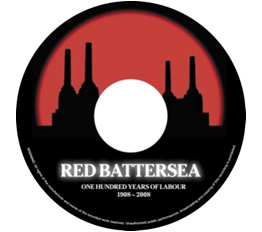 But very hard work. If I’d known at the start what it all entailed, I’d have declined to take on the octopus task of script-writing, co-directing, and organising lots of other people. Especially as I was doing all this in my so-called spare time, as a busy academic historian. Not that I can complain about the Battersea comrades, who shared in the research, the editing, the performances and the design of the DVD cover and publicity. The voices on the DVD are all those of local activists and residents, led by the celebrated actors Tim West and Prunella Scales. One and all were positive and very patient, during the 18 months of protracted effort.
Three points of note follow for budding historians, who might want to script and direct a lengthy video or DVD on recent history. The first is obvious. You have to have something to say and an authorial point of view. I provided that, happily enough, but my approach didn’t please all those who had collectively urged the making of a DVD. Nonetheless, it was apparent that scripts can’t be successfully written by committee. I tried to make the authorial tone as relatively cool and objective as possible, although obviously the DVD starts with a presumption of broad sympathy with the Labour Party. And there are a number of points within the grass-roots-based script that I think stand the test of time. (View it and see).
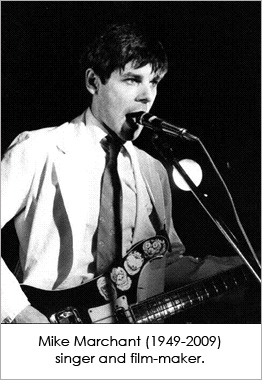
Much more tricky for me was the second point that I’d highlight: the need to find continuous visuals to accompany the script. Of course, I’m used to giving illustrated lectures. Most academics are these days. I generally enjoy documenting a point visually and also playing counterpoint to my words with a contrasting or joking image. That’s not the same, however, as providing a continuously flowing stream of relevant and non-repetitious visual materials for an entire hour. I loved working with my co-director Mike Marchant. He was the techie of the outfit: the co-director and producer who actually made the film. Wonderfully creative and utterly meticulous, as film-makers have to be. At times, however, I found Mike’s requests for ‘another two minutes of images’ to demonstrate this or that historical point very trying, since I think from the script to the visual, while he was really wanting non-stop visuality to come first – or at least to have equal parity with the script.
We worked it out eventually. As in the case of all collaborative effort, we had to find ways of communicating in terms that we could mutually understand. Mike, like many film-makers, took the view that ‘you can’t be too literal’. If you mention a cow, you show a cow. I thought that was far too patronising, protesting: ‘but people know what a cow looks like’. He also much preferred moving pictures to stills, whereas I’m quite happy with stills. On that we agreed to compromise, since we obviously had no early twentieth-century film footage. Mike managed very creatively, by zooming in and out of still pictures, and by moving them across the screen. He found some marvellous mid-century film footage (but The Lavender Hill Mob (1951), although named after a key feature of Battersea, turned out to have no local material). Mike also took his own videos of the current scene to illustrate past history. His busy, hooting traffic scene from Balham High Road went well with Peter Sellars’s famous joke about ‘Bal-Ham, gateway to the south’, as we introduced the areas within the Battersea constituency.
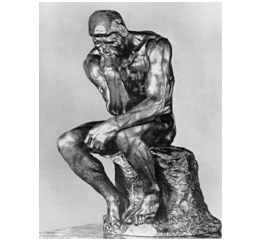
Much the most complex question with reference to the visuals related to illustrating abstractions. Here Mike at times protested. He wanted all discussions of abstract points removed from the script. But I couldn’t accept that, either theoretically, or, more importantly, in practice. I was writing about the impact of Battersea upon Labour (with lots of great visuals of the old industrial riverfront) but, equally, about the impact of Labour upon Battersea. That included discussing, for example, the party’s early debates between Fabian gradualists and revolutionary Marxists. Eventually, we illustrated those arguments by superimposing a picture of Rodin’s Thinker (1902) upon a contemporaneous map of pre-war Battersea. In context, the compound image works well enough. But this example highlighted our constant debates between the visually-led and textually-led approach.
 The third and final point relates to the challenge of bringing a historical script up until the present day, without making the conclusion too dated. I decided to make the narrative gradually speed up, with a more leisurely style for the exciting early years and a more staccato survey of the later twentieth century. That manoeuvre was devised to generate narrative drive. But one result was that various sections had to be axed, late in the day. Hence one serious criticism was that the role of pioneering women in Battersea Labour Party, which had appeared in the first Powerpoint lecture, was cut from the DVD. It was a shame but artistically necessary, because too long a retrospective review undermined the narrative momentum. (With the later resources of my website, I could have published the entire script, including axed sections, as a way of making amends).
Another problem was making the ending ‘timeless’. As script-writer in 2007, I made the right decision to be relatively cool about Tony Blair, then Prime Minister and now a much less hegemonic figure. But other time-neutral changes proved to be technically tricky. For example, I had a sentence, which declared correctly that ‘the MP is Martin Linton’. But Labour might not hold the seat for ever. (Indeed, it lost in 2010). Therefore I asked Mike Marchant to cut the verb ‘is’ from the recorded sentence. Ever helpful, he agreed. But he told me later that cutting such a short word took him many hours, since the fiddly task had to be done without any loss of sound-continuity. Listening to the DVD now, one would never know that the sentence had ever referred to anything other than ‘the MP Martin Linton’.
All last-minute cuts to the script were, in theory, absolutely forbidden. The production sequence requires the sound-track to be laid down first and the image-track to follow. We did do that in outline. However, Mike Marchant allowed numerous late revisions to the script, basically because I was a beginner – and we both realised that in practice some of my original ‘bright ideas’ didn’t work. His creativity, meticulous dedication, technical virtuosity, and infectious gusto helped with the endless viewings and reviewing that we undertook together. At times, we were exasperated, though luckily not both at the same time. The result was that, working part-time, we took a year to create a DVD, which could have been made by a large team of experts in two months – though probably not with the same commitment.
Personally, I was very fortunate to have been initiated into the art of film-making by Mike. I wouldn’t do it again; but overall the experience was a positive one. The great tragedy was that the DVD turned out to be Mike Marchant’s swansong. We were unaware that he had a fatal cancer, which was diagnosed just as we were completing the final touches. As a result, we had to rush the finale and credits. Mike did come to the showing at the Clapham Picture House in December 2008 and was cheered by the plaudits. He died the following summer. Once he told me that he didn’t like doing things unless he could do them well. And the DVD confirms how splendidly he lived his own philosophy.
 Copies of the DVD Red Battersea, 1908-2008 are obtainable for £5.00 (in plastic cover) from Tony Belton = .
For further discussion, see Twitter
To read other discussion-points, please click here
To download Monthly Blog 31 please click here