
MONTHLY BLOG 33, CONTRACTING OUT SERVICES IS KILLING REPRESENTATIVE DEMOCRACY
If citing, please kindly acknowledge copyright © Penelope J. Corfield (2013)
‘Contracting out’ is a policy mantra especially of financial/services capitalism (as opposed to industrial capitalism or landowner capitalism), which has been gaining greater support year by year. As an ideal, it was succinctly formulated by Nicholas Ridley (1929-93), who held various ministerial posts under Margaret Thatcher government. Theoretically, he hated government expenditure of all kinds: ‘I was against all but the most minimal use of the taxpayer’s purse’.1
For Ridley – himself from a titled family with business interests in ship-owning – the ideal form of local democracy would be one in which the Councillors met no more than once yearly. At the annual meeting, they should set the rate and agree the fees for contracting out municipal services. Then they could all go home. His was an extreme version of what is known in political theory as a preference for the minimal ‘night-watchman state’.2
 No mention from Ridley of Town Hall debates as providing a sounding-board for local opinion. No mention of community identity and pride in collective institutions. No mention of a proper scope for in-house services. No mention of elected control of key tasks, including regulatory and quasi-judicial functions. No mention even of scrutinising the contracted-out services. No mention therefore of accountability.
Above all, no mention from Ridley of what Edmund Burke called the ‘little platoons’3 (‘local platoons’ would have been better, as their sizes are variable) that bridge between private individuals and the central state. Hence no mention of representative democracy at a local level. This was aristocratic disdain worthy of Marie Antoinette before the French Revolution. Moreover, without representative politics at all levels of society, then popular democracy will, when provoked, burst through into direct action. Often, though not invariably, in an uncoordinated and violent manner.
France, in fact, provides an excellent historical example of the eventual follies of contracting out. The absolute monarchs before 1789 presided over a weak central bureaucracy. As a result, one of the key functions of the state, the collection of taxes, was ‘farmed out’, in the jargon of the eighteenth century. The Ferme Générale undertook the humdrum tasks of administration, absorbing the risks of fluctuating returns, while assuring the monarchy of a regular income. And, to be sure, this system survived for many years. Nonetheless, the French monarchy faced chronic financial problems by the later eighteenth century. And the great political problem was that all the tax profits went to the Tax Farmers, while popular hatred at high payments and harsh collection methods remained directed at the kings.4
In twenty-first century Britain, something of the same situation is developing. The state still has to provide basic services; and remains the guarantor of last resort, if and when private service firms fail. Thus the faults of the system are still the government’s faults, while the profits go to private companies. The other long-term costs are borne by the general public, left to face cut-to-the-bone services, provided by poorly-paid and demoralised casual labour. No-one is popular, in such a system. But the secretive and unaccountable world of the private providers, sheltered by commercial ‘secrecy’, saves them for a while from the wrath to come.
One notorious example is known to everyone. It occurred in July 2012, just before the start of the Olympic Games. The private firm G4S promised but failed to deliver security. The contract was worth £284 million. Two weeks before the opening ceremony, the same role was transferred to the publicly-funded army. It did the task well, to tremendous applause. G4S forfeited £88 million for its failure on this part of the contract.5 Yet, despite this ‘humiliating shambles’ in the words of its chief executive, who resigned just over six months later with a huge payoff,6 the firm remains a major player in the world of security services.
 So G4S today advertises itself as ‘the world’s leading international security solutions group, which specialises in secure outsourcing in countries and sectors where security and safety risks are considered a strategic threat’.7 No mention of regular overview and scrutiny, because there is none. It’s another of those businesses which are considered (wrongly, in practice) as ‘too big to fail’. The point of scrutiny comes only after an embarrassing failure or at the renewal of the contract, when nervous governments, having invested their prestige and money in privatisation programmes, don’t care or dare to rethink their strategy. In August 2013, G4S is being investigated by the Ministry of Justice for alleged over-charging on electronic ‘tagging’ schemes for offenders.8 Yet, alas, this costly imbroglio is unlikely to halt the firm’s commercial advance for long.
Overall, there is a huge shadow world of out-sourced businesses. They include firms like Serco, Capita, Interserve, Sodexo, and the Compass Group. As the journalist John Harris comments: ‘their names seem anonymously stylised, in keeping with the sense that they seemed both omni-present, and barely known’.9 Their non-executive directors often serve on the board of more than one firm at a time, linking them in an emergent international contractocracy. Collectively, they constitute a powerful vested interest.
Where will it end? The current system is killing representative democracy. Elected ministers and councillors find themselves in charge of dwindling bureaucracies. So much the better, cry some. But quis custodiet? The current system is not properly accountable. It is especially dangerous when private firms are taking over the regulatory functions, which need the guarantee of impartiality. (More on that point in a later BLOG). Successful states need efficient bureaucracies, that are meritocratic, impartial, non-corrupt, flexible, and answerable regularly (and not just at contract-awarding intervals) to political scrutiny. The boundaries between what should be state-provided and what should be commercially-provided are always open to political debate. But, given that the state often funds and ultimately guarantees many functions, its interest in what is going on in its name cannot be abrogated.
The outcome will not be the same as the French Revolution, because history does not repeat itself exactly. Indeed, the trend nowadays is towards contracting-out rather than the reverse. Yet nothing is fixed in stone. Wearing my long-term hat, I prophecy that eventually many of the profit-motive ‘Service Farmers’ will have to go, rejected by democratic citizens, just as the ‘Tax Farmers’ went before them.
1 Patrick Cosgrave, ‘Obituary: Lord Ridley of Liddesdale’, Independent, 6 March 1993.
2 Another term for this minimal-government philosophy is ‘Minarchism’ or limited government libertarianism, often associated with free-marketry. Minarchism should be distinguished from anarchism or no-government, which has different ideological roots.
3 ‘To be attached to the subdivision, to love the little platoon we belong to in society, is the first principle (the germ as it were) of public affections. It is the first link in the series by which we proceed towards a love to our country and to mankind’: E. Burke, Reflections upon the Revolution in France (1790), ed. C.C. O’Brien (Harmondsworth, 1969), p. 135.
4 E.N. White, ‘From Privatised to Government-Administered Tax-Collection: Tax Farming in Eighteenth-Century France’, Economic History Review, 57 (2004), pp. 636-63.
5 Reported in Event, 14 Feb. 2013.
6 Daily Mail, 21 May 2013, from Mail-online: www.dailymail.co.uk, viewed 9 Aug. 2013.
7 See ‘Who we are’ in website www.g4s.com.
8 Daily Telegraph, 6 August 2013, from Telegraph-online: www.telegraph.co.uk, viewed on 9 Aug. 2013.
9 John Harris on Serco, ‘The Biggest Company you’ve never heard of’, Guardian, 30 July 2013: supplement, pp. 6-9.
For further discussion, see Twitter
To read other discussion-points, please click here
To download Monthly Blog 33 please click here
 The second recommendation links with the first. We should define the subject as the study not of the ‘dead past’ but of ‘living history’.
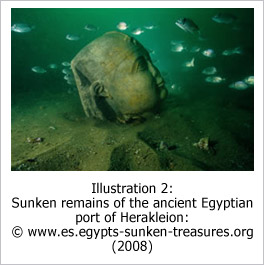 On the other hand, while some elements of history are ‘lost’, past cultures are not necessarily inaccessible to later study. Just as travellers can make an effort to understand foreign countries, so historians and archaeologists have found many ingenious ways to analyse the ‘dead past’.
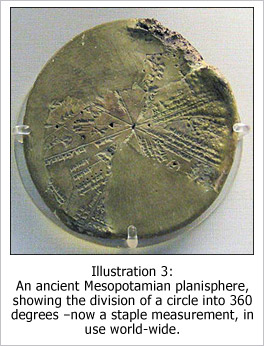 So there is an alternative quotation of choice for those who stress the connectivity of past and present. It too comes from a novelist, this time from the American Deep South, who was preoccupied by the legacies of history. William Faulkner’s Requiem for a Nun (1951) made famous his dictum that:
 By the way, so notorious has that advertisement become that it is strangely difficult to find the originals image on the web. It seems to have been self-censored by both the Museum and the ad agency – probably in shame.
 Why then has the subject matter of History been comparatively undervalued in recent years? It can’t just be the power of the Skills agenda and the influence of ministers fussing about every subject’s contribution to the economy.
 Did the ancient University really lack trust in its own staff and its invited external examiner? In this case, common sense prevailed; and, after a protest, the instruction was withdrawn.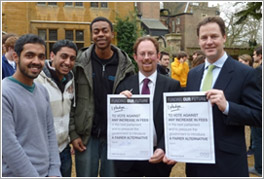
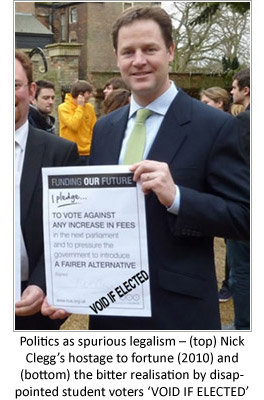 Unfairness is written into the proposed contract from the start, by asking the elected members to attend a specified percentage of all public meetings in their constituencies. Those whose political patches contain many residents’ associations, neighbourhood watches, and other local gatherings will be required to jump over a much higher hurdle than those in sleepy Clochemerles, where nothing happens.
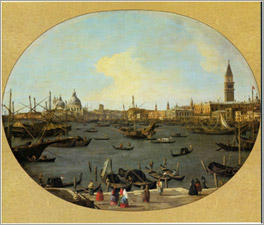 Okay, so not everywhere can look like Venice. Cities have to adapt and change. Venice itself is not immune from innovations. Yet, in the relentless processes of urban development, much more effort is needed to save each place’s distinctive identity – and to introduce or reintroduce such qualities, if they have been lost. If every omni-urban scene looks like every other omni-urban scene, humans have collectively lost something vital.
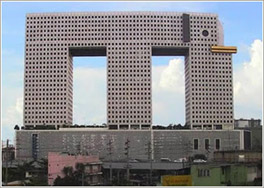 But my partner saw this image on screen, grinned, and said ‘Great’. I suspect that he was trying to annoy me, although this building is not in fact my personal nomination for the world’s architectural black-spot. Anyhow, a much more important consideration would be to understand the impact of these buildings upon the immediate locality and the wider city environment – and what visitors and locals think in reality.
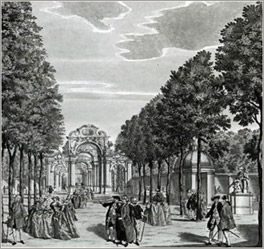 • A musical focus. The Vauxhall Gardens in their prime attracted open-air audiences for summer evening concerts of song and music at both popular and classical levels. Now London has many specialist venues and the bifurcation between high-brow and low-brow can’t easily be undone. But why should the area not host a musical venue of some sort? Maybe a low-cost hall for hire? Plus a link from the Proms in the Park to Vauxhall where London’s open-air summer concerts began?
 This illustration flatters the proposed Market Towers. The sky is deep blue, shading to lighter sky and lights at ground level. The Towers seem to cast no shadows. The surviving Grade I listed building at their feet (centre R) is merged into the background, foretelling its coming obscurity. The traffic at a major traffic interchange is strangely reduced to give the picture harmony. The struggling commuters battling through the wind funnel at the feet of high-rise buildings by the exposed riverside don’t exist. Bah! Humbug! And … more anon.

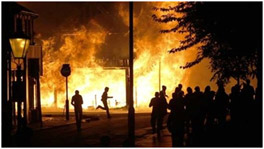
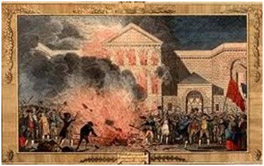 However, the authorities needed – and still need – to strike a balance. On the one hand, they had to restore civil peace. On the other hand, it’s always wise not to provoke more people to join the mayhem. The use of troops today remains a reserve power. But riot control, in a democracy, is essentially viewed as a task for policing – and, ultimately, for community self-control.