

MONTHLY BLOG 51, TALKING ABOUT THE SHAPE OF HISTORY
If citing, please kindly acknowledge copyright © Penelope J. Corfield (2015)
The present ‘Temporal Turn’ in ideas and politics means reminding everyone, including all government policy-makers, that everything unfolds in historical context.1 There’s never a tabula rasa – a blank page on which to inscribe the future. The present comes from the past, and legacies from the past are all around us, let alone within us.
Well, that seems obvious enough. Yet insisting that we all have to look to history doesn’t advance things very far, especially since these days historians are (rightly) not giving out easy messages. It’s much easier to say that things are complex than to provide one-word answers.
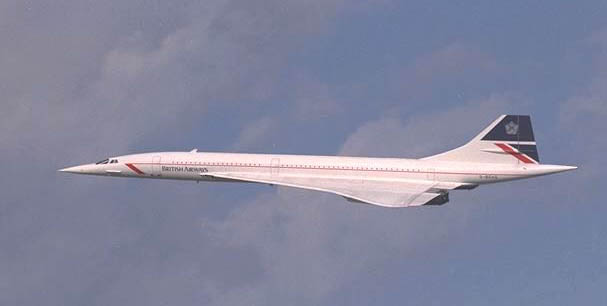
Above all, historians collectively are not saying (as many Victorians did): be optimistic, Progress will win through. Partly that’s because it’s not clear exactly what constitutes historical improvement. When the supersonic Concorde first buzzed the skies over London, Paris, New York and Washington in the 1970s, protesters were firmly told off, with the snappy dictum: ‘You can’t stop Progress’. Yet … thirty years on, it’s Concorde that has gone;2 and it’s the urban protesters over aircraft noise who are slowly winning the battle to get the aviation industry to produce quieter planes. A different sort of Progress, it could be argued. But in the 1970s it was far from clear which version was going to succeed.
It’s a pertinent reminder that technology, which is often cited as the driver of historical change, does not hold all the trump cards. Innovations have to fit in with what humans collectively will accept, even though it may take time/arguments for that decision to become apparent. So, no simple Progress. At best/worst, a struggle or friction between conflicting interests. It’s what Marxists and Hegelians would call an example of dialectical contradiction in operation.
|
Image/1: Concorde – Was it Progress? But it was super-noisy when heard from below; it did not cater for mass transport; and, by the end, its own operational systems were becoming technologically outdated. |
Likewise, historians today don’t generally tell the world that ‘it’s all really the Class Struggle’ (though some still do). Or ‘it’s all really the hand of God’ (though some, not usually professional historians, still do). Or ‘it’s all really biological/gender or racial or national destiny’ (ditto).
Instead, the mainstream messages about long-term history are complex, which reflects reality. Indeed, there is an in-built tendency towards finding complexity in professional research: the more one looks, the more one finds. That can be helpful. When talking about some historically-derived situation, the remark ‘Ah well, it’s all very complex!’ can certainly be a good first inoculation against over-simplified nostrums.
On the other hand, historians should be able to say more than that. The art of research is not only to find complexity but also to explain it. Hence if fascinating historical studies offer intricate detail but no overview in conclusion, readers are entitled to feel frustrated.
Sad to say one erudite and fascinating study of three seventeenth-century women falls into that category. Natalie Zemon Davis’s Women on the Margins (1997)3 starts inventively with an imaginary conversation between the protagonists, who never met and knew nothing of each other. They are a Catholic, a Protestant, a Jew – and they don’t want to appear in the same book together. Yet Zemon Davis overrides their (imagined) objection. For her, there is evident analytical interest in studying their very different lives in conjunction. Yet, in her conclusion, she expressly declines to locate these case-studies within any wider history of women. Why not? Who could do that better than Zemon Davis? And she won’t say, what are readers to conclude? That these micro-histories are individually fascinating but collectively meaningless?
Certainly, their stories are not uncomplicated tales of female advancement. But readers would surely welcome an assessment of the changing long-term balance between constraints and opportunities for women – a seventeenth-century dialectic which has hardly ceased in the twenty-first century.
When opening a discussion of these issues, one good exercise is to ask people to explore their own implicit assumptions. If you have to draw the shape of history as a diagram, what image would you draw? The outcome then requires discussion – and gives scope for people then to have second, maybe deeper, thoughts.
When I ask my MA students to undertake this exercise – putting pen to blank paper and letting inspiration flow – they usually respond with bafflement, plus exasperation. One of them told me crossly: ‘I just don’t think like that, Penny’. In response, I urged: ‘Try’. A small minority (these days) draw a line, sometimes pointing upwards or downwards. They may explain their choices either as an expression of faith in Progress, in a distinctly Victorian style, or of deep-grained ecological pessimism. Another minority, rather more fatalistically, declare the answer to be a circle: ‘what goes round comes round’. Such images lead to fruitful discussions of the pros and cons of linear and cyclical views of history.4
But the majority (these days) scribble a confused mass, like a tangled ball of wool, and explain their choice with comments like: ‘Oh, it’s all a mess’. ‘It’s chaos’. ‘There’s no pattern to it’. ‘It’s too complex to explain’. ‘Unexpected things happen’. ‘Contingency rules’. ‘It’s just one accident after another’.
|
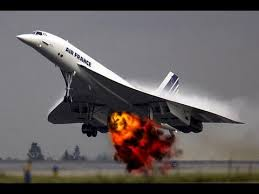
Image/2: Not progressive order but chaotic disorder. The only Concorde crash, just outside Paris (July 2000), following accidental damage to the plane from debris on the runway. Very shortly after this photo was taken, 113 people died, 109 airborne and 4 on the ground. |
If testimonies were needed to confirm the current absence of agreed Grand Narratives, recounting the long-term course of history, then these responses would provide it. And they lead to good discussions, once these answers are further explored. Sometimes, the advocates of chaotic randomness are very firm in their views. Their arguments may verge upon the notorious Time-heresy, that Time itself lacks all continuity and that each one moment (however brief) is sundered from the following moment.5 At that point, I usually reply: ‘Well if that’s the case, I won’t bother to mark your essays carefully. I’ll throw them into the air and those settling at the top of the heap will get top marks, and those at the bottom will be failed.’ To a man and woman, the students chorus: ‘But, Penny, that’s unfair’. So there is enough through-time coherence and order in the world to encourage people to expect a just assessment of their earlier efforts at some subsequent date.
In fact, those who see history as messy chaos don’t usually mean that there are absolutely no continuities or holding systems which operate through Time. But they do mean that things are so messy that they cannot be reduced to simplicity (except insofar as stating that ‘It’s all chaos’ is in itself a simple answer).
So we are back to encouraging historians, and all others interested in the long term, not just to report but to explain the complications. These are likely to feature an ever-changing mix not only of different forms of change and competing trends, but also deep continuities. As physicist Stephen Hawking predicted, approvingly in 2000: ‘The next [twenty-first] century will be the century of complexity’.6 For historians, the old simplicities of linear or cyclical history may have been outgrown. Yet the Temporal Turn commands us not only to engage in the study of the past (which stretches up to the present moment) but also to explain to the wider world its underlying logic. It’s a big challenge.
1 On the Temporal Turn, see P.J. Corfield, ‘What on Earth is the Temporal Turn and Why is it happening Now?’ BLOG/ 49 (Jan. 2015) and idem, ‘What does the Temporal Turn mean in Practice – for Historians and Non-Historians Alike? BLOG/ 50 (Feb. 2015).
2 Following its first flight in 1969, the supersonic Concorde was used in commercial service from 1976 to 2003: see references in http://en.wikipedia.org/wiki/Concorde
3 N. Zemon Davis, Women on the Margins: Three Seventeenth-Century Lives (Cambridge, Mass., 1997).
4 For an indication of the many possibilities, see E. Zerubavel, Time Maps: Collective Memory and the Social Shape of the Past (Chicago, 2003); and for linear and cyclical histories, see P.J. Corfield, Time and the Shape of History (2007), pp. 49-56, 80-8.
5 See, for example, a publication with an aptly fin-de-millennium title, J. Barbour, The End of Time: The Next Revolution in our Understanding of the Universe (1999).
6 S.W. Hawking, ‘“Unified Theory” is Getting Closer, Hawking Predicts’, interview in San Jose Mercury News (23 Jan. 2000), p. 29A, quoted in A. Sengupta (ed.), Chaos, Nonlinearity, Complexity: The Dynamical Paradigm of Nature (Berlin, 2006), p. vii. See also M. Gell-Mann, Adventures in the Simple and the Complex: The Quark and the Jaguar (New York, 1994).
For further discussion, see Twitter
To read other discussion-points, please click here
To download Monthly Blog 51 please click here

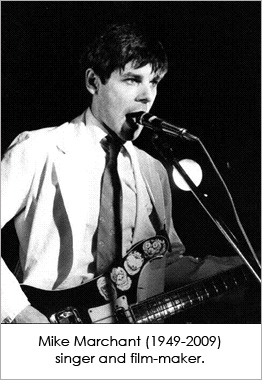
 Matching images to script: People in general express great appreciation of the visuals within the DVD. Credit here goes especially to the picture research of graphic designer Suzanne Perkins and to the film research of the producer/director Mike Marchant. Together they found masses of previously unknown material. Brilliant. It’s a great encouragement for researchers to realise exactly how much remains to be discovered (or sometimes rediscovered) in local archives and film libraries. Visual material is now getting a proper share of attention, transforming how history can be presented. That’s now being taken for granted, although there are still some bastions to fall before the incoming tide.
 On the other hand, it’s very good to show a striking image just before it’s mentioned in the script. Then as the narrator stresses something or other, viewers share a sense of realisation. Whereas if the images follow just too late, the reverse effect is achieved. Viewers feel slightly insulted: ‘why are you showing me an XXX now, I already know that, because the narrator has just told me’.
 But very hard work. If I’d known at the start what it all entailed, I’d have declined to take on the octopus task of script-writing, co-directing, and organising lots of other people. Especially as I was doing all this in my so-called spare time, as a busy academic historian. Not that I can complain about the Battersea comrades, who shared in the research, the editing, the performances and the design of the DVD cover and publicity. The voices on the DVD are all those of local activists and residents, led by the celebrated actors Tim West and Prunella Scales. One and all were positive and very patient, during the 18 months of protracted effort.
 The third and final point relates to the challenge of bringing a historical script up until the present day, without making the conclusion too dated. I decided to make the narrative gradually speed up, with a more leisurely style for the exciting early years and a more staccato survey of the later twentieth century. That manoeuvre was devised to generate narrative drive. But one result was that various sections had to be axed, late in the day. Hence one serious criticism was that the role of pioneering women in Battersea Labour Party, which had appeared in the first Powerpoint lecture, was cut from the DVD. It was a shame but artistically necessary, because too long a retrospective review undermined the narrative momentum. (With the later resources of my website, I could have published the entire script, including axed sections, as a way of making amends).
 Copies of the DVD Red Battersea, 1908-2008 are obtainable for £5.00 (in plastic cover) from Tony Belton =
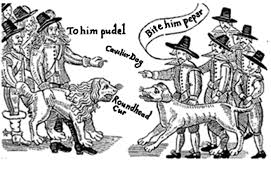





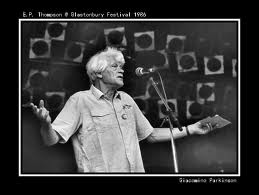
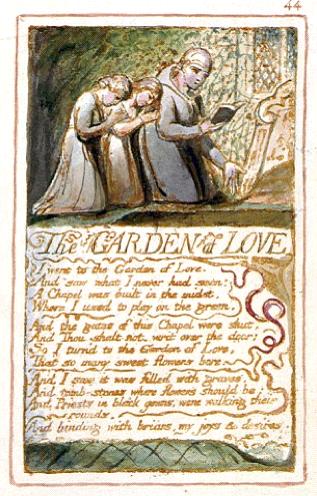
 The second recommendation links with the first. We should define the subject as the study not of the ‘dead past’ but of ‘living history’.
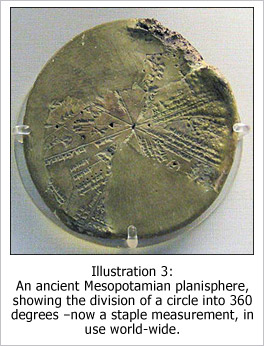
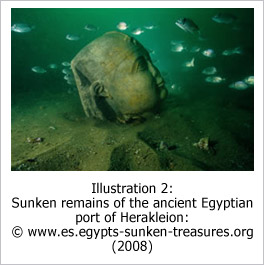 On the other hand, while some elements of history are ‘lost’, past cultures are not necessarily inaccessible to later study. Just as travellers can make an effort to understand foreign countries, so historians and archaeologists have found many ingenious ways to analyse the ‘dead past’.
 So there is an alternative quotation of choice for those who stress the connectivity of past and present. It too comes from a novelist, this time from the American Deep South, who was preoccupied by the legacies of history. William Faulkner’s Requiem for a Nun (1951) made famous his dictum that: