

MONTHLY BLOG 182, TO LAUGH OR CRY? RESPONDING TO ACADEMIC CRITICISMS
If citing, please kindly acknowledge copyright © Penelope J. Corfield (2026)
|
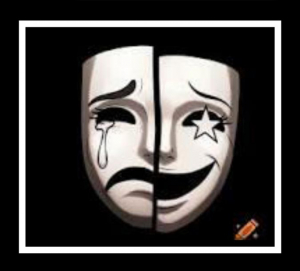
Fig.1. Laugh or Cry – song lyrics by Roger Taylor (1981): ‘You just gotta laugh or cry |
A few days ago, I had the strange experience of hearing my life’s work dissected by a panel of critical experts, in front of a large and knowledgeable audience, and in my presence. I was part thrilled, part gobsmacked. The speakers were excellent – incisive and thoughtful. Hearing my work put into the historical context of the evolution of History as a research subject was also salutary.
The whole experience has given me much to think about. One striking theme is the relationship of academics to debate and criticism. Of course, the world of academe is not the only one that thrives upon continual arguments. Politicians, for example, have to become quickly accustomed to debates on all sides. They regularly argue not only with rivals in other political parties but also with colleagues within their own. And they may too be assailed on all sides by the general public.
So academics are not unique. But they have an interesting double relationship with assessment. They themselves are constant assessors. They regularly have piles of students’ essays to mark, as well as occasional examination scripts. Many academics also review new books, whether in published journals or in confidential pre-publication assessments for publishers. The task requires giving an objective summary of each book’s contents plus a favourable or critical response, as appropriate. And it goes on: when listening to lectures, academics try to be ready with at least one pertinent question – again, favourable or hostile, according to taste.
Simultaneously, however, academics are also on the receiving end of a constant stream of criticism. If they seek to publish a book or an essay (and the pressures to publish are these days very great), academics get a double whammy of debate. Before a book or essay is accepted for publication, it goes to anonymous readers (usually fellow academics) for prior assessment. Then, once past that potential barrier, published books and essays are often publicly reviewed in print – sometimes by more than one critical colleague. Such assessments can again be either favourable or hostile. And the barrage of responses can continue for a long period.
Meanwhile, all academics are subject to yearly internal reviews. Many institutions regularly survey student opinion about the skills and abilities of their lecturers. And academic promotion generally depends upon getting good reports not only for teaching but also for publishing well-received books and essays in sufficient quantity.
Without doubt, the old days of the doddering don, who did absolutely nothing whilst enjoying the status of being an eminent professor, have long gone.
As a result, academics live in a permanent atmosphere of potential criticism – which they both give and receive. It all helps to brace the intellect. Indeed, really good criticism can ultimately be very helpful – particularly it if arrives before the research work in question has got into print. An accurate critique, phrased tactfully, allows academics to clarify and/or to sharpen the expression of their thoughts; to remove inconsistencies; to strengthen (or perhaps to adapt) their arguments; and, if need be, to insert a rousing defence of their case against fundamental objections.
In all, to repeat a phrase: it’s bracing. Whether a given individual’s response is to laugh or to cry is a matter for personal judgment. Pointed criticisms, if they are really spot-on, can be taken badly. Colleagues sometimes cry or sulk; and refuse to continue with any further revisions of their work. (Mistakenly).
Anonymous criticisms in particular are supposed to be worded kindly, even if critically. Every now and then, however, assessors get carried away by the cloak of anonymity. They launch into personal attacks, alongside the criticisms. But all assessments, whether anonymous or otherwise, are supposed to be couched in impartial and objective terms. So if, every now and then, someone takes unfair advantage of the system of anonymity, much the best response is to ignore it completely. Laugh it off!
(By the way, anyone seeking an audit of their own personal behaviour should talk to a frank but trusty friend, who can deliver home truths constructively).
All in all, living in a bracing barrage of potential criticism is something that I personally enjoy. As a research student, I was influenced by two doughty arguers. One was the social/cultural historian, E.P, Thompson;1 and the other my PhD supervisor at the LSE, F.J. Fisher, who was an expert in London economic history.2
With each one of these two masters of dialectics, I engaged in lengthy and searching debates. And, gradually, I learned to hold my own – though I don’t think that, in either case, I ever delivered an intellectually knock-out blow.
To laugh or cry at pointed criticisms? First of all, don’t cry. It drives one into loops of negativism and does not improve the work in question. So laugh instead. Laugh because someone cared sufficiently to engage with your work. And, simultaneously, don’t ignore the criticisms. They may not always be right. But they challenge the recipients to assess for themselves. Then, if needed, corrections can be made. And, if corrections are not needed, then a rousing defence of the core argument can be inserted instead. Academic debates can be both fun and fruitful. Laugh loudly; and keep the debates going – without personal abuse – but with the critical intellect fully engaged!
ENDNOTES:
1 See P.J.C., ‘E.P. Thompson, The Historian\: An Appreciation’, first pub. in New Left Review, 201 (1993), pp. 10-17; and in slightly amplified text (2018) in PJC website: https://www.penelopejcorfield.com/history-making/fellow-historians/6.3.5 PDF45.
2 See P.J.C., ‘F.J. Fisher (1908-88) and the Dialectic of Economic History’, first pub. in P.J. Corfield and N.B. Harte (eds), London and the English Economy, 1500-1700: Essays by F.J. Fisher (London, 1990), pp. 3-22; and in shorter and punchier text (2018) in PJC website: https://www.penelopejcorfield.com/history-making/fellow-historians/6.3.1 PDF46.
For further discussion, see Twitter
To read other discussion-points, please click here
To download Monthly Blog 182 please click here










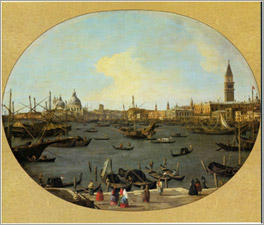 Okay, so not everywhere can look like Venice. Cities have to adapt and change. Venice itself is not immune from innovations. Yet, in the relentless processes of urban development, much more effort is needed to save each place’s distinctive identity – and to introduce or reintroduce such qualities, if they have been lost. If every omni-urban scene looks like every other omni-urban scene, humans have collectively lost something vital.
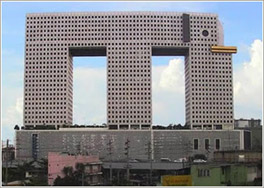 But my partner saw this image on screen, grinned, and said ‘Great’. I suspect that he was trying to annoy me, although this building is not in fact my personal nomination for the world’s architectural black-spot. Anyhow, a much more important consideration would be to understand the impact of these buildings upon the immediate locality and the wider city environment – and what visitors and locals think in reality.
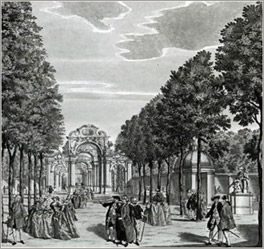 • A musical focus. The Vauxhall Gardens in their prime attracted open-air audiences for summer evening concerts of song and music at both popular and classical levels. Now London has many specialist venues and the bifurcation between high-brow and low-brow can’t easily be undone. But why should the area not host a musical venue of some sort? Maybe a low-cost hall for hire? Plus a link from the Proms in the Park to Vauxhall where London’s open-air summer concerts began?
 This illustration flatters the proposed Market Towers. The sky is deep blue, shading to lighter sky and lights at ground level. The Towers seem to cast no shadows. The surviving Grade I listed building at their feet (centre R) is merged into the background, foretelling its coming obscurity. The traffic at a major traffic interchange is strangely reduced to give the picture harmony. The struggling commuters battling through the wind funnel at the feet of high-rise buildings by the exposed riverside don’t exist. Bah! Humbug! And … more anon.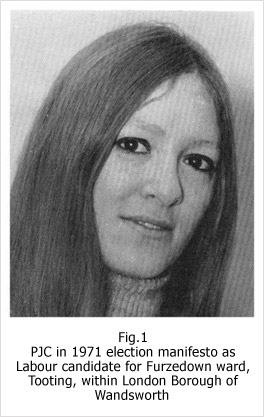

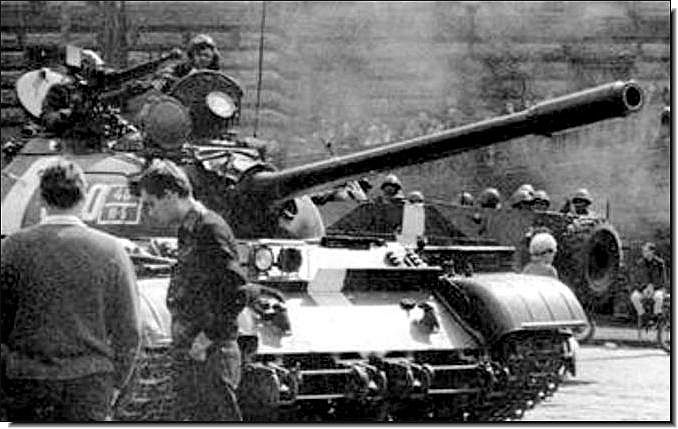 In the aftermath of Czechoslovakia, the response in Britain was not so drastic. I personally wasn’t so blind about the faults of the Soviet system. And I was not a member of the British CP, so couldn’t resign in protest. Nonetheless, the general effect was dispiriting. The political and cultural left,1 which at that time were still in synchronisation, were angered but also depressed.
 So 1968 was an educative moment for me. Vague utopianism had to be rejected as much as totalitarianism. Indeed, utopianism had to be treated with even more suspicion, since it seemed the more seductive. The answer – between brute force and empty rhetoric – had to be more humdrum and more realistic. In company with my partner Tony Belton, I became more active within the Labour Party. In 1971, we were both elected as councillors in the London Borough of Wandsworth. The outcome of that experience also proved to be stimulating but far from simple – see my next month’s discussion-piece.